
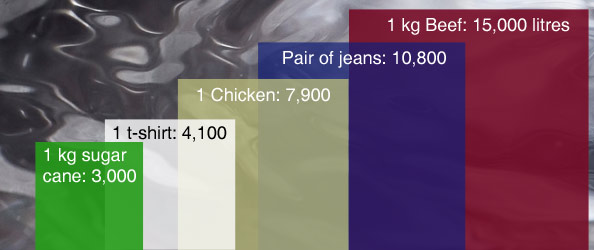
Embodied water, or virtual water, is the water used in production of an item, either in growing or manufacturing. Everything we ever buy has a hidden water footprint. A new house might have required millions of litres of water, a cup of tea needs 30 litres. They are fiendishly complex to work out, but there are good reasons why it’s worth it.
One reason is that different parts of the world are more water efficient. It takes six times more water to grow cotton in India than in China, for example. Rising global water demand requires us to steward our water resources more carefully, and that means producing things where it makes sense to produce them. The Aral Sea is a good example of what not to d0. The Soviet Union wanted a cotton-producing area of its own, and diverted tributary rivers into the Kazahkstani desert to create irrigated plantations. The port of Moynaq now lies twenty miles from the water’s edge.
Water footprints also represent a hidden export. When we import thirsty products from countries that have water shortages, we compound the problem for local people. Peru grows asparagus for export to Europe. We eat 6.5 million kilos of Peruvian asparagus a year in the UK, most of it from the Ica valley. The water table is the valley is falling at a rate of up to 8 metres a year, one of the fastest depletion rates in the world. It’s an unsustainable business practice that will deliver long term drought for the residents of the Ica Valley in exchange for our out-of-season side dishes.
For more on virtual water, visit waterfootprint.org. For lots more about water, see what everyone else is writing about on the Blog Action Day website.
 The Earthbound Report