
Portugal had a goal of ending coal power by 2030, but this month it closed its last coal power station, nine years ahead of schedule. It’s the fourth European country to stop using coal, joining Sweden, Austria and Belgium.
Can you raise Christmas turkeys through regenerative farming practices? This company in California is claiming that by using native grasses rather than farmed feeds, their turkey farms are a net gain for nature.
Credit Suisse have been fined £147 million for fraudulent loans to Mozambique, which have cost the country billions. But since it was the London branch of Credit Suisse, the fine will be collected by the FSA and given to the UK Treasury to spend as they like. Sign the petition from the Jubilee Debt Campaign to send the money to Mozambique where it belongs.
“We need to be alert to context and not ask ‘what will work, generically?’ but ‘what will work and be right for this place and contribute to the bigger picture?’ – because population size, landscape, climate, skills, identity and culture all hold opportunities and barriers for change.” Josie Warden at the RSA asks questions about making global change in specific places, something I often consider here in Luton.
An upcoming talk for this week – in conversation about climate and race with Greta Arena, for the Festival for Change, on Youtube at 9:50am on Wednesday 1st of December.
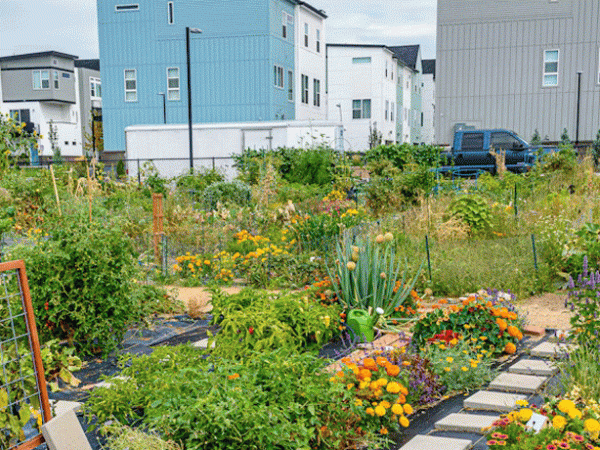
How to run projects that create bigger change
Now, more than ever, people need to see that environmental action makes a tangible improvement to their lives. These are febrile times. People want certainty and the safety of what they know. Politicians and the media can easily scapegoat climate policy and erode support for ‘new and untested’ low carbon technologies. Despite the urgency of…
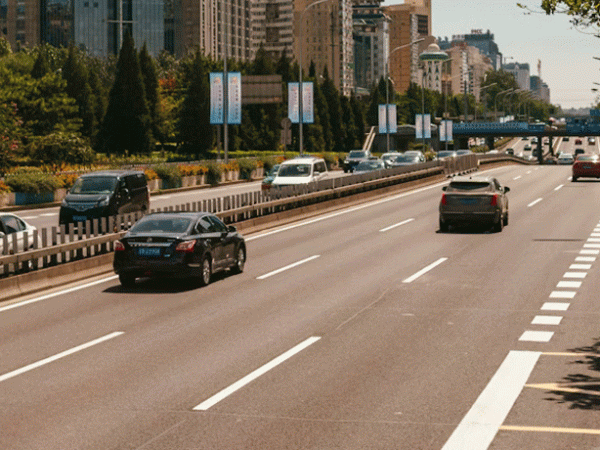
The globalisation of electric vehicles
Not so long ago Norway was the big story in electric vehicles. They were one of the earliest movers, with subsidies for EVs and privileged access to parking and bus lanes. It was the first country to cross the rubicon and sell more EVs than petrol and diesel cars. In a graph of global EV…
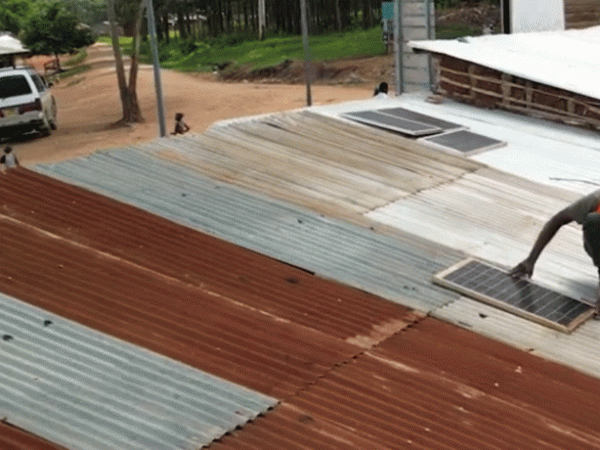
Clean energy for Uganda’s refugees
In the long walk towards universal energy access, refugees are among the hardest to reach. Across the world there are 120 million people living in refugee camps, and 94% of them don’t have clean and affordable power. That’s something that my colleagues at Ashden are working on, as part of a project called Transforming Humanitarian…
 The Earthbound Report