Last week I bought a new drill. I was planning to walk to my co-working space that day, so I chose to pick it up from the Sainsburys in town on the way. It’s not somewhere I go very often, and it was only once I was close that I remembered why. There’s really no easy route in and out of the Sainsburys if you’re on foot.
Because nothing quite joins up, it makes a good case study in the importance of walking routes. Starting in the top right, the blue line below shows the route I had to take to get in and out of the shop.

One of the annoying things about this journey is that the Luton to Dunstable busway runs right where I want to go. It’s got a beautiful path alongside it, and it’s one of the best walking or cycling routes in the town.
Unfortunately there’s no way on or off it anywhere nearby. It cuts straight through the middle. So even though it goes right past the Sainsburys and I could practically jump off it onto the roof of the supermarket, there’s no way down. So here, in green, is the ideal route I’d like to have taken – a walking route that would be about a third of my actual journey.

The problem here is that the busway was designed for buses, and nobody gave any real thought to walking or cycling at the time. It was built as a through route, with little time spent on analysing the journeys that people make in the area. It’s not the only missed connection in the area either.
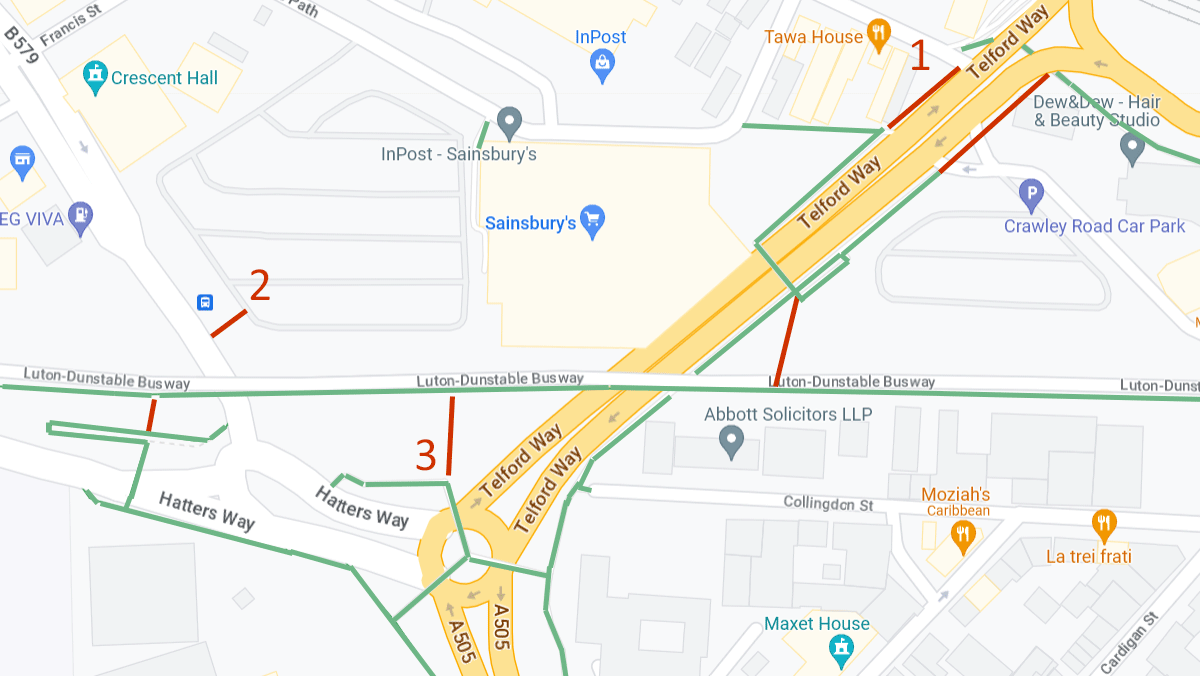
Telford Way is a major road in the town and forms part of the inner ring road. There are no pavements on this part of it, and instead there are footbridges and paths and an underpass. I’ve marked those in green below. Unfortunately there are several missing links, which I’ve marked in red.

To mention a few of them specifically:
1 – There’s an underpass that takes pedestrians under the junction at the top, and then no connection to the paths a little further down. Technically there is an alley right where my number one is, but local residents keep their bins there and you’d have no idea that it’s a footpath.
2 – This one’s really annoying. If you’re leaving Sainsburys on foot, you have to walk all the way across the car park and leave as if you’re a car. The pavement is just the other side of the fence. There’s even a gate and stairs right where my number 2 is located – but it’s locked!
3 – Anyone who’s familiar with Luton will know the Telford Way footbridge, as it makes for a kind of iconic roundabout. But why didn’t we add a spur from it when the busway was built?
As a result of all these gaps and oversights, it’s much easier to get to Sainsburys by car. I’m committed to active transport myself, but I would hesitate to go there again on foot. If we want to encourage more walking and cycling, things have to be a lot better than that.
Pedestrians can use cut-throughs and shortcuts that cars can’t, so if the walking route is longer for someone on foot than it is for a car, something has gone wrong in the design. A walking route should always be shorter, and it’s frustrating to have obvious access points unused, to have the busway right there and inaccessible.
Here’s the good news though, and another reason why it’s a good case study. Luton Borough Council have done some research into journeys through the town on foot and by bike. They have identified key corridors for active transport, and where they don’t work. This particular point is one of those routes, and there are plans to improve it.
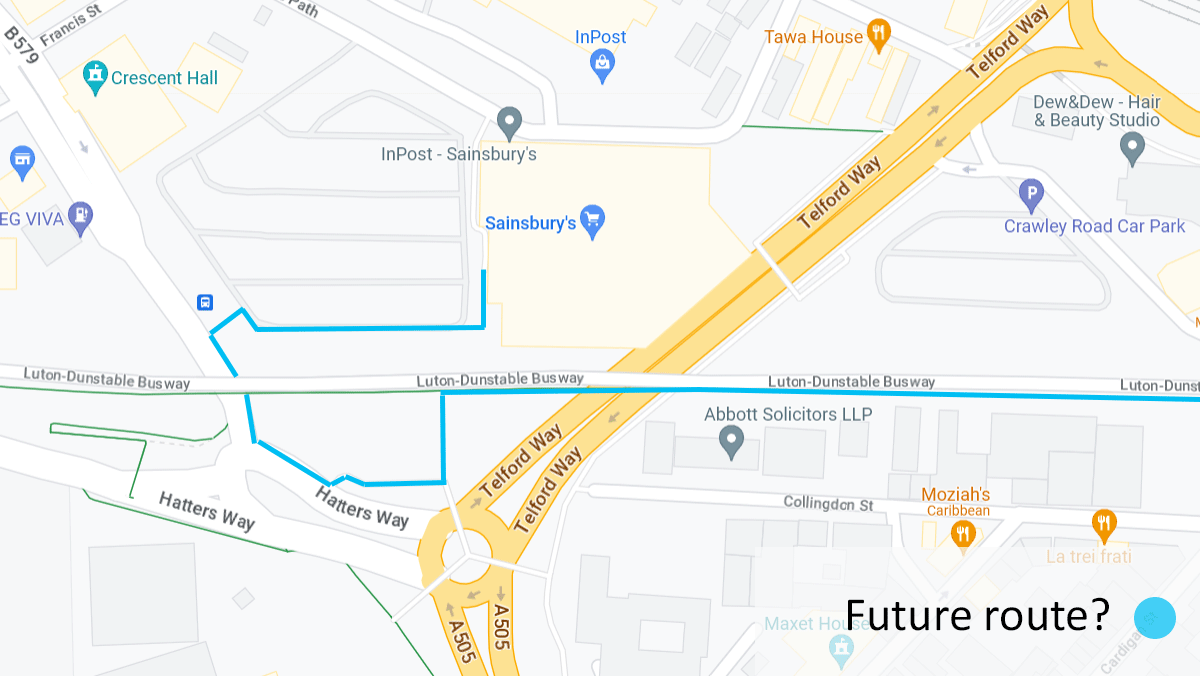
Provided Sainsburys can be persuaded to unlock that gate (and I’ll send them this post and ask), here’s the route I hope to be able to take there in future.
See all the council’s plans for cycling and walking here.
 The Earthbound Report