Last month I wrote about waste solar panels, and how the ‘mountains’ of old solar panels are a drop in the ocean compared to the waste from coal and other sources. We still want to reduce it to as little as possible, and invest now in the growing solar recycling market.
But what about secondhand panels? One reader asked what the possibilities were for a secondary market, as we should always try to reuse things before recycling them. My reply was that the price of the panels is only one part of a solar installation, and so saving money on panels doesn’t necessarily mean a big discount on solar power. That’s the conventional wisdom on these things, and my own solar roof would bear that out.
Here’s how the price of my solar system broke down:
- Panels: £2,379
- Inverter: £1,033
- Labour: £1,450
- Scaffolding: £650
- Other: £1,219 (Cables, attachments, wifi connection, delivery, admin)
Given the costs of removing and refurbishing the solar panels, it’s hard to know exactly what kind of a discount one could offer. If I’d been able to buy secondhand panels and an inverter, perhaps I would be able to save a thousand pounds on the total price. For some people that might be the difference that makes it affordable. However, older panels will be less efficient. “Given that used panels don’t generate as much electricity,” warns MIT Technology Review in an article on the subject, “the money saved by buying them might not be worth it.”
Having replied to this effect, it occurred to me that the conventional wisdom might not be correct. Or at least, it might not be the whole story.
If we’re thinking mainly of domestic solar, then it’s hard to imagine a secondary market for used PV. But that’s not where most used solar panels are going to come from – they’re going to be coming from solar farms.
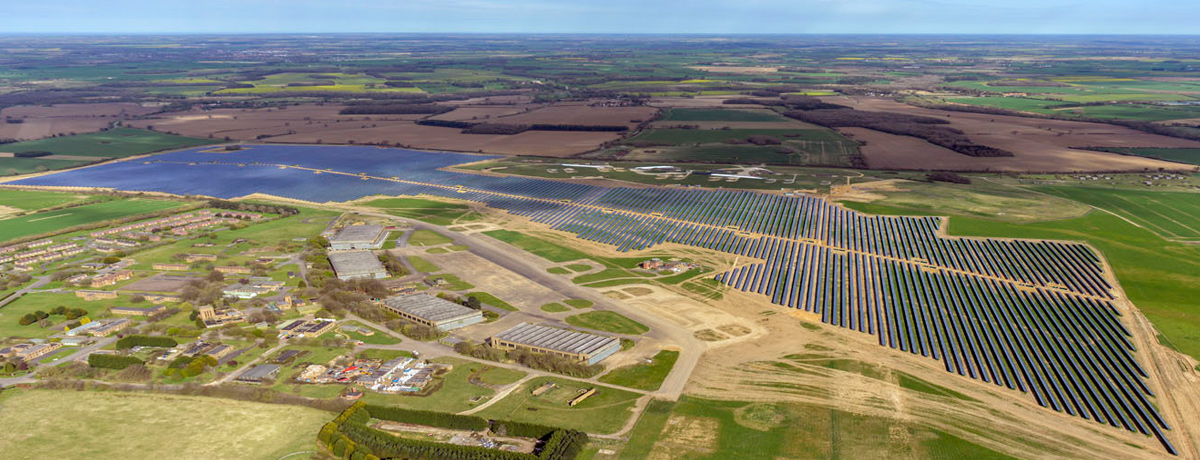
As an example, take this solar farm that was built on a former RAF base in Norfolk (pictured above). It opened in 2015 with 196,627 panels. Although they have a lifespan of 25 years or more, there’s a good chance the operator will replace them much sooner than that in order to maintain generating capacity. It may be replacing them right about now, releasing a very large number of used panels.
It’s much cheaper to take down ground-mounted solar – no scaffolding or working at height. You’ve got economies of scale that you’re not going to get from lots of individual homes. And you’ve got panels being replaced much earlier in their working lives. This makes a secondhand market much more possible.
A recent article from Inside Climate News confirms this suspicion. We Recycle Solar is the biggest PV recycler in the US. The majority of the panels sent to them come from solar farms or large scale industrial buildings. Of what they receive, about 60% is inspected, refurbished and resold. “Energy upgrades and changes in regulatory standards often cause businesses to decommission their solar projects long before they’ve exhausted their ability to generate electricity,” says the article. “The solar industry has found that there is indeed a market for used solar panels.”
Solar farms are relatively new in the UK, with the first large one only dating from 2012. It’s early days yet, and it’s only as businesses start taking down or replacing large numbers of used solar panels that a secondhand market will become viable. Panels from big installations could serve another decade on farm buildings or on the roof of a warehouse, or indeed on homes.
Here’s an update to the conventional wisdom on secondhand solar panels: no, it isn’t quite possible in the UK just yet. (There’s only one solar recycling company in the country and they don’t mention reuse). That will change, and it is already becoming more common in the US, Germany and elsewhere. Just give it a few more years – we are at the infancy of a secondary market for solar.
 The Earthbound Report
This can certainly be said for batteries as well. In my Happy-Simply tiny houses I’ve used batteries from water or security systems that get replaced when they are less than 80% new so that still gives them a wonderful next life for my needs! We wired them up into series and all my electricity needs come from those batteries while all the rest get thrown out or hopefully recycled… Plenty out there if we have time to go looking 🙂 http://happysimply.wordpress.com
There are certainly lots of companies giving a second life to electric car batteries. Water and security systems are something I’m less familiar with, but I’m pleased to hear you were able to make use of them in your tiny homes!