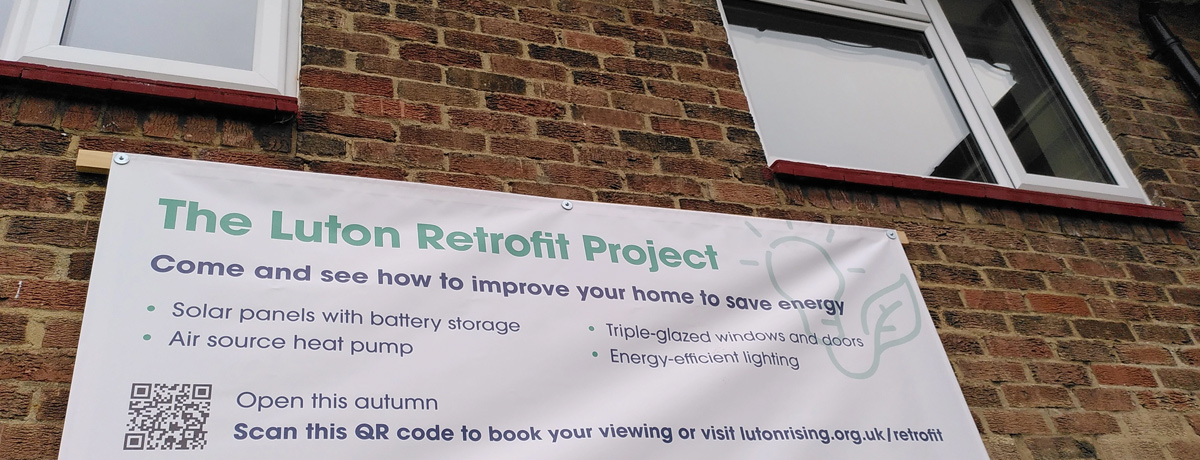
I’m going to go local for this week’s highlighted building. Very local – about a thirty second stroll from my house. Just round the corner from me is a Luton council house that has been retrofitted to zero carbon standard and opened to the public. You can visit the retrofit open home throughout the Autumn, tour the property and see some low carbon technologies for yourself.
The property has been fitted with solar panels and a storage battery. It has a heat pump and heating controls in each room. The building has been fully insulated and has tripled-glazed windows. Outside you’ll find a compost demonstration as well, courtesy of Edible High Town.
Compared to some of the buildings I’ve featured here, this isn’t particularly special. But that’s kind of the point – these things need to become very ordinary. Within a fairly short frame of time, all-electric homes with no gas connection need to be unremarkable and boring.
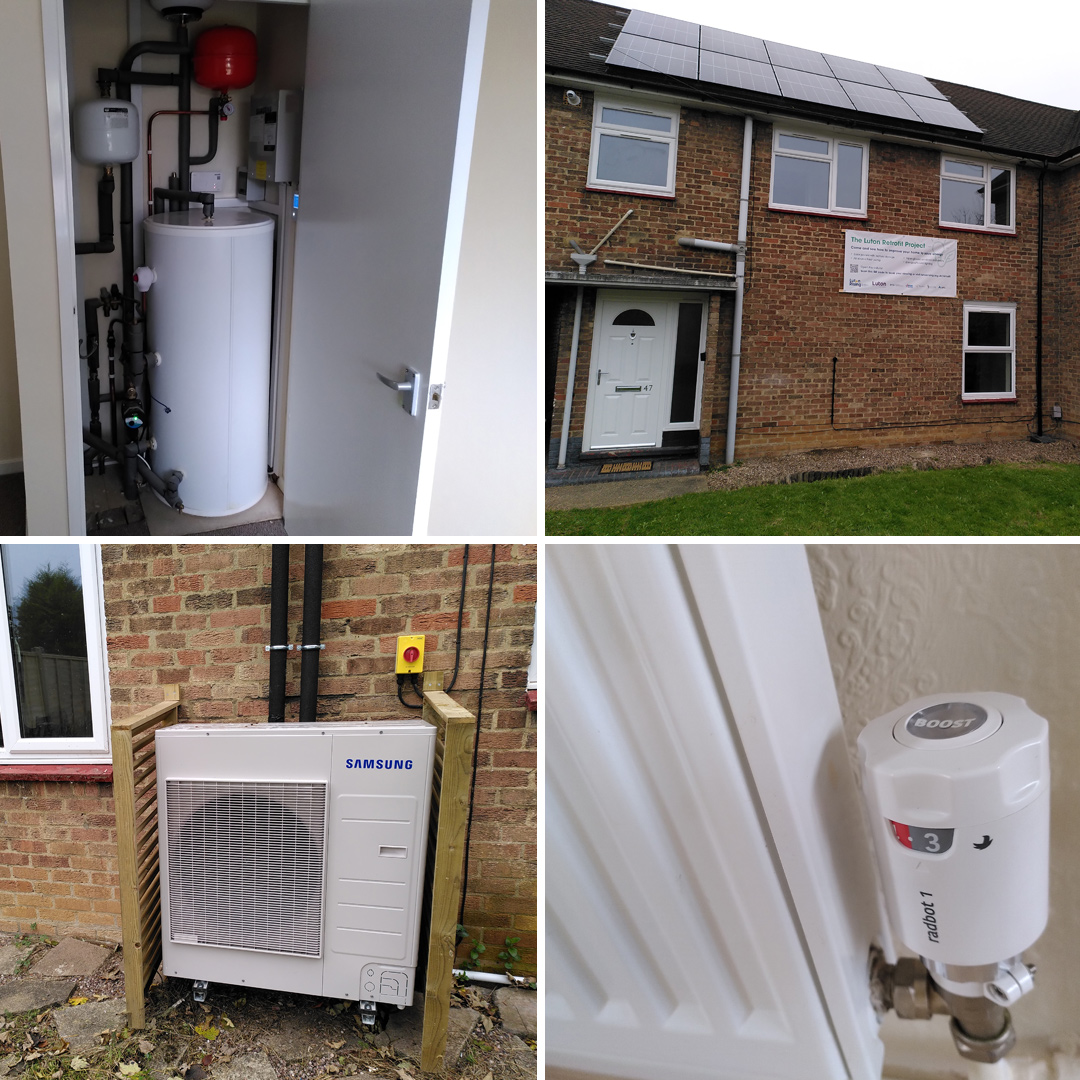
Councils have a role to play here because they are such big home-owners. One in ten households in Luton is in a council property, and they manage a portfolio of over 8,000 homes. That’s a figure that’s rising, as Luton is proactive and relatively ambitious when it comes to housing. The town has a target of reaching net zero by 2040, and to do that the council will need to retrofit every one of those 8,000+ homes.
The retrofit open home is a way of piloting the technologies that we’ll need. It’s a way of explaining the tech to residents, who need to understand how to work their heat pumps and heating controls. And it’s a way of helping to skill up local building firms to deliver the transition.
The local skills factor is really important – councils can use their big purchasing power to raise the skills base. If you’re a local builder or contractor in the area and you want to be able to bid for council contracts, you’re going to have to do it to zero carbon standard. You will need to train your staff as necessary.
My favourite example of this is Exeter council, who stipulated that all their future buildings needed to meet Passive House standard. Local builders stepped up, even delivering the world’s first passive house leisure centre. This new skills base has lowered costs for everyone, and Exeter is now the cheapest place in the country to build a passive house.
It’s early days for sustainable housing in Luton, but the retrofit show home is a useful learning exercise. If you want to visit, it’s easy to book a spot and have a look around. But be quick – the housing shortage in the town is too acute to leave a council house empty. There will be new residents in January, enjoying a warmer, cheaper, low carbon home.
 The Earthbound Report