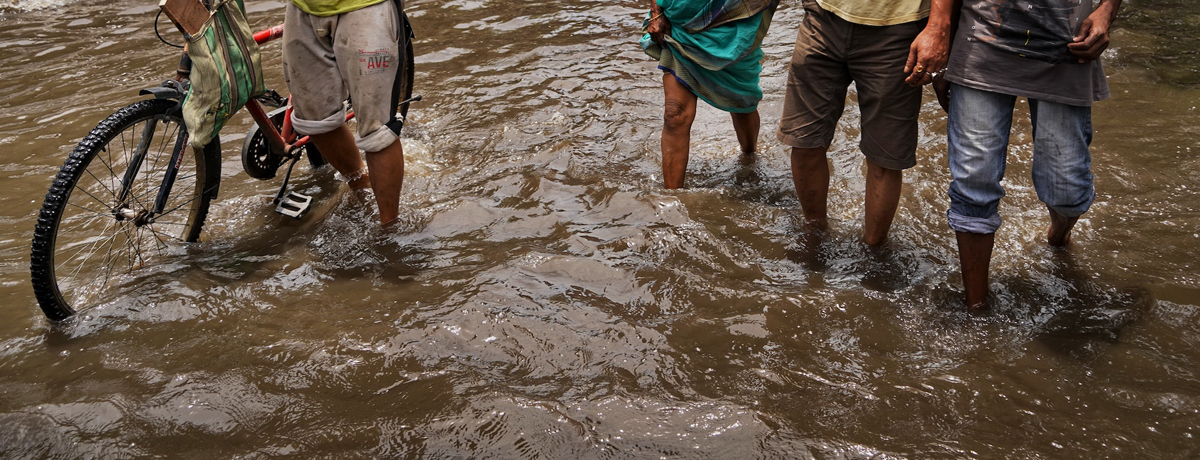
“The new normal” is a phrase that often gets used in climate circles to describe the changing weather patterns the world is exploring. Big storms that might happen once every century now come around every decade. Heat records tumble so often that they’re hardly worth mentioning. The stability of the climate has been eroded, and change and unpredictability are what we have come to expect.
I’ve never used the phrase ‘new normal’ before, because it feels complacent to me. It’s too easy to say it with a shrug. But it came to mind when reading a report on extreme weather in India this year. The NGO Down to Earth has compiled a study of extreme weather that shows how common it has become:
“India recorded extreme weather events on 235 of the 273 days from January 1 to September
30, 2023. This means that in 86 per cent of the first nine months of this year, India had an
extreme weather event breaking in one or more parts of the country.”
What counts as an extreme weather event, one might ask from that stat? That’s a tricky question when things are changing. The IPCC’s definition is that extreme weather is “rare at a particular place and time of year”, but the whole problem is that it isn’t so rare any more. You have to look at historical trends to establish whether or not something is ‘extreme’.
Using the India Meteorological Department and the Home Ministry’s Disaster Management databases, the report includes heatwaves, duststorms, cyclones, floods, landslides, cold snaps and more. The most familiar extreme weather to most of us – though undoubtedly still extreme – is lightning and storms, which accounted for 176 of the weather events. These won’t usually make the news, but others have received globally attention, especially the heatwaves that have struck the country recently. Last year, when temperatures in Delhi reached 49C, a study by the UK’s Met Office reported that climate change had made such extremes a hundred times more likely.

Altogether, by September extreme weather events in India had taken “2,923 human lives, affected 1.84 million hectares (ha) of crop area, destroyed over 80,563 houses and killed close to 92,519 livestock.” This is the kind of thing people mean when they talk about ‘loss and damage’ in climate negotiations. But how much of it could be attributed to climate change? What would be fair compensation, and who should pay? These are questions that will be argued over for a long time to come.
For now, Down to Earth highlight the need to keep track of extreme weather and its effects, and they show where some of the gaps are in reporting. Understanding weather events better helps to monitor climatic change, and identify areas of vulnerability. That will ultimately save lives as old patterns of weather continue to be disrupted.
- Header photo by Dibakar Roy / Unsplash
 The Earthbound Report