
The Economics of Arrival, the book I co-authored with Katherine Trebeck, is five years old this month. A lot has happened in the world since then, but a lot of things have remained the same. Politicians are still beholden to economic growth above all else. GDP remains the one metric to rule them all. Economies dependent on growth remain as vulnerable as ever to its disruption.
Which means that if you haven’t read it yet, why not? Pick it up from Earthbound Books UK or US.
In honour of the book’s birthday, here are a selection of posts exploring themes from the book. Scroll down for a re-publishing of a post that Katherine and I wrote to explain what we mean by that title.
What is this ‘arrival’ of which you speak?






Arrival is the idea that sparked our book and gives it its title: The Economics of Arrival: Ideas for a Grown Up Economy. But what do we mean by it? What is arrival?
(Besides being a rather good sci-fi film that came out while we were writing the book and drank our Google juice, obviously.)
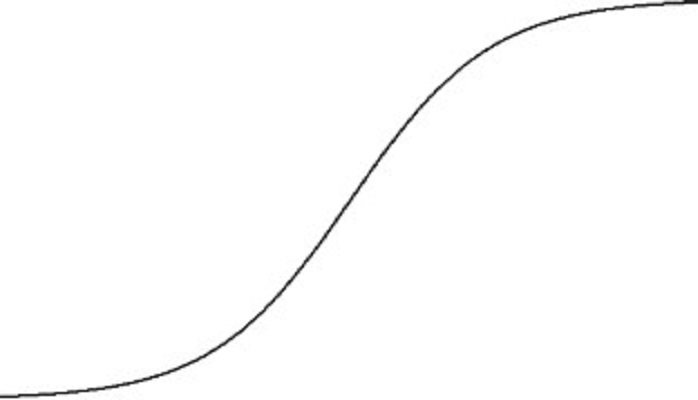
Arrival is the notion that development has a destination. Growth is a means to an end, and at some point its work is done.
Arrival is about having enough to, in theory, have one’s basic needs met, and having all the resources required for a good life. To use a phrase that Jeremy’s grandma regularly said at the end of a good meal, we could describe it as reaching a point of ‘ample sufficiency’ in terms of wealth and resources in the economy as a whole.
In the context of national economies, a country has arrived if it has a high enough wealth and resources to theoretically provide a high quality of life for all its citizens. It has the finances and the materials to ensure everyone has what they need. Whether everyone has a good life in reality is, of course, a matter of access and distribution. Those are questions of politics and institutional design. Having enough resources collectively doesn’t necessarily mean everyone individually has enough. But it could, if a nation chose to make it so.
With that in mind, reaching a point of Arrival doesn’t mean that all problems are solved. We’re not suggesting that there’s a magical threshold where everyone’s needs are automatically provided for. But we can imagine Arrival as a moment when a society has the means for this. Growth has reached a point at which a good life could, theoretically, be universal.
Arrival is therefore a possibility, not a promise.

We’re using a journey metaphor, where rising economic growth and human development take us ever closer to our destination. You could, as in the sub-title of our book in fact, also consider Arrival to be a process of maturing and reaching adulthood, a metaphor captured in the German word for ‘postgrowth’, ausgewachsen. Or a tree reaching its full size, finding its niche among its neighbours, optimized to the rainfall, soil conditions and sunlight in the place where it stands.
This growth towards maturity is present all through nature. What if we extend the principle towards the economy? What does an economy look like when it is all grown up?
That does beg the question of how we know if and when a country has Arrived – and which of the world’s nations might already be there. It also raises the important question of what a country’s priorities should be once arrival is reached (and recognized). That’s something we call ‘making ourselves at home’, and we’ll look at that tomorrow.
Arrival is useful as a concept because it unlocks these kinds of questions. It’s a provocative notion, one that prompts us towards new lines of thinking. And those are positive questions – maturity is to be celebrated. Arrival is a success story. It delivers on the hopes of our ancestors, and promises a less stressful, more secure future for the next generation. But that would require us to recognize it and embrace it, or risk losing the gains so far in the scramble for more.
Let’s ask those questions, and see where they take us next. Welcome to the Arrivals Lounge.
- Feature image by Kipras Štreimikis, tree by Jeremy Bishop
 The Earthbound Report
The Economics of Arrival seems to be a crucial concept. The need to drive towards arrival is equally critical and must be pursued by nations. However, it is only a means to an end that may or may not be achieved even after attaining arrival. Congenial policies and strong institutions are called for to make good of the arrival.