
The Sustainable Transport Award goes to just one city each year, and this year’s winner is Tianjin in China.
Lego Replay, the scheme where you can donate bricks you’re done with to be redistributed in new free sets for schools, has launched in the UK. It’s been available in the US and elsewhere for a while.
This idea to turn CO2 into a powder that can be indefinitely stored, is an interesting one that I’d like to hear more about.
The latest issue of the Zero Carbon Luton Newsletter celebrates our green university, Luton Town hosting the first warm space in a football stadium, and other local news.
Scroll down for a little question you can help me out with – thanks!
Highlights from this week
What is ‘arrival’ anyway?
The Economics of Arrival, the book I co-authored with Katherine Trebeck, is five years old this month. A lot has happened in the world since then, but a lot of things have remained the same. Politicians are still beholden to economic growth above all else. GDP remains the one metric to rule them all. Economies…
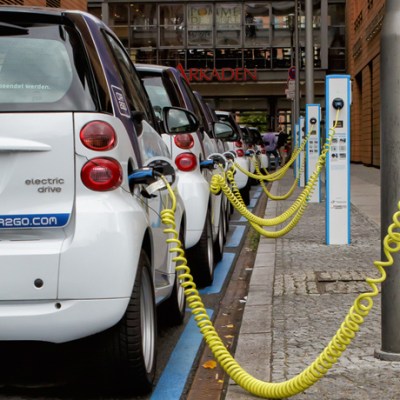
Peak ICE: the decline of petrol and diesel cars
Here’s something I hadn’t really thought about in these terms, and learned about in Hannah Ritchie’s book Not the End of the World: we are witnessing peak ICE. Sales of cars with internal combustion engines peaked in 2017. That’s highlighted by Bloomberg New Energy Finance, who track such things in their annual Electric Vehicle Outlook.…
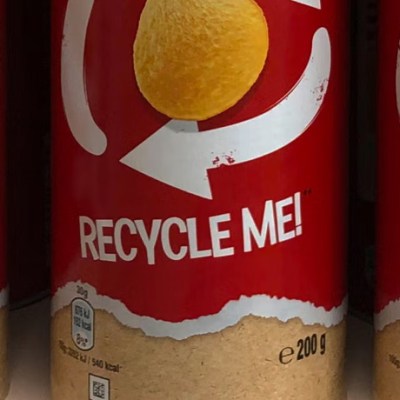
Oh look, a new Pringles can
When I was at boarding school in Kenya, there was a memorable moment when Pringles arrived in the student snack shop. They were imported and cost the equivalent of a month’s pocket-money, so I never bought any. Richer friends did, and they kind of blew our minds. Nothing tasted like them. Fake, naturally, but industrialised…
- Oh look, a new Pringles can
- What is ‘arrival’ anyway?
- Peak ICE: the decline of petrol and diesel cars
What next?
Something you might be able to help me with, especially if you’re a regular or long term reader:
It being January and all, I find myself thinking about plans for the year. That includes this website and its role in the world.
There are a number of reasons to consider the site’s role today – perhaps starting with the word ‘blog’. This website launched at a time when there was a clear role for blogging as part of the media landscape. That changed as social media took off, and it has since changed again. I’ve carried on regardless, but nothing can stay relevant forever.
To put it another way, I started sharing what I was learning about sustainability around 2005, and so I launched a blog. If I’d had the same idea in 2010, I’d probably have just done it on Twitter. In 2015 it would have been Instagram or a podcast, and if I was starting in 2020 I might have launched a Substack newsletter.
A whole story has unfolded around social media since I wrote my first articles, a story of increasing openness and then a gradual closing down. At first, social media was a tool that served blogs like this one rather well. The power dynamic switched as Facebook and Twitter grew, and the algorithms were re-written so that content creators served the platform first.
I won’t go into detail about all of this. Lots of independent writers have found similar diminishing returns. For me, it begs the question of whether I should shift focus. I don’t have time to start more things, so I would need to stop doing others. So can you help me out with a little question? No promises – it would just be useful to have a sense of what might be most useful.
 The Earthbound Report
I’ll read whatever you write Jeremy, providing I can access it!
Thanks for the vote of confidence!
Morning Jeremy
Just a comment on your poll, where I’ve voted for ‘keep it the same’. I get your blog by email, so in effect it comes to me as a newsletter anyway. Not sure what substack adds as I haven’t used it before. Perhaps the ‘subscribe’ invitation could be a bit more prominent, I remember not being able to find it before when I was recommending it to someone – though looking now it seems obvious enough.
All the best Andrew
http://www.comriecroft.com
Hi Jeremy,
I do read your weekly email newsletter and I actually like the format of not having to go to another website to continue reading the whole thing. I voted to keep the same. I guess if your newsletter is with Substack, your readers would have to click and continue reading your articles there instead of on the email message itself?
I expect I’d include the full text in the Substack emails, so that it’s a genuine alternative to visiting the website. I haven’t fully thought through the idea at this stage. I could be a monthly or fortnightly ‘best of’ kind of thing, perhaps with audio elements. But I agree, ideally an email would be it’s own thing, rather than a bunch of links.
I am the same as all the above Jeremy, I am really grateful to receive your weekly email, keeping me up to date, very grateful for all your research and diligence and comment, so appreciative. I wonder if we (your subscribers) are over a certain age and therefore, not so keen on change? Just asking.
I’d really miss it – easy to catch up with as it only takes a couple of minutes to read but I don’t use Twitter, Instagram or know what Substack is and only rarely find time to find a podcast. I am amazed at your knowledge and energy getting it out so often and writing so sparingly and well. Fantastic job!