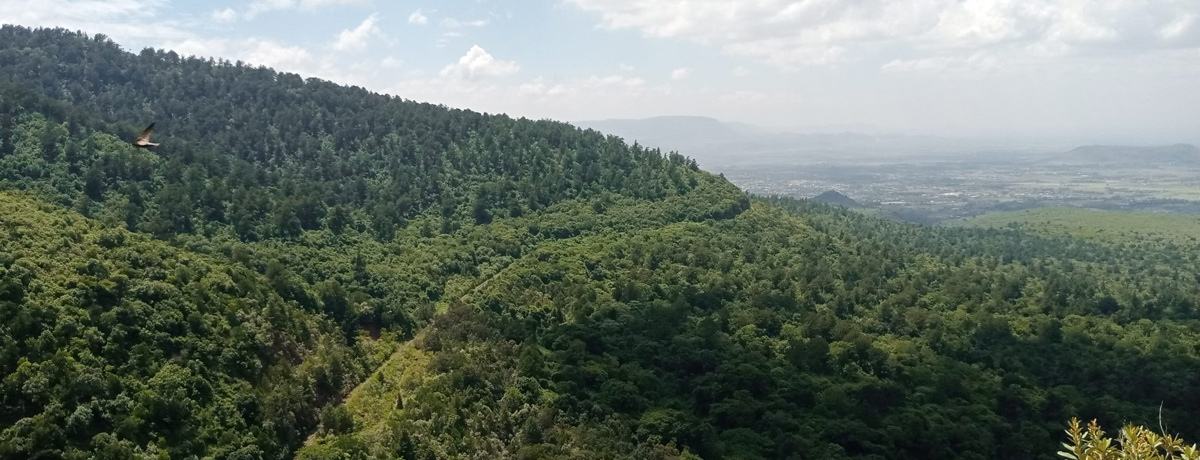
When I was a teenager I attended a high school on the slopes of the Rift Valley in Kenya, and we used to go hiking in the Kijabe Forest. We would climb over the fence at the back of school and scramble up onto the railway tracks. Then we’d follow them around the contours of the hills, and cut off into the woods.
One favourite spot was where a river came down the escarpment. You could jump from rock to rock up the river and come to a series of waterfalls. Or could you climb down from the tracks on the other side and there were hot springs. In between, the river ran through a low and dark tunnel where we used to go looking for bats. Occasionally we camped on the far side of the tunnel, making a small fire and sleeping on the ground. Here’s a nice little video made by some hikers last year that will give you a sense of the place:
As teenage boys out in the woods, we were mainly just messing about – climbing trees, making dens, boiling up water for chai. Sometimes, depending on which of my friends was on the hike, we looked for wildlife. Creatures like the elusive colobus monkeys, which you could hear from afar but rarely saw up close. One friend with naturalist instincts could identify all the orchids, and resolutely declined to tell us which ones were rare and valuable.
In my final year at school I had back-to-back free periods in the middle of the afternoon when nobody else did, and I went into the forest by myself most days. This was strictly against the rules, but I didn’t go far and I never broke the most important rule of boarding school, which is not to get caught. I had two or three favourite places to go, and I would sit and watch, and listen. It wasn’t an easy year, and a hour a day of watching ants or listening to birds was medicine to my teenage mind at a time of upheaval.
It was also in the Kijabe Forest that I understood the interplay of poverty and the environment. Though it was illegal, we came across trees felled for charcoal. Deforestation was a creeping threat to the forest and the biodiversity it contained. I saw the effects of drought, and of forest fires, and the landslides that could occur when tree cover was removed. My first environmental direct actions occurred here, when we used to follow deer trails and look for poachers’ snares to dismantle.
It’s fair to say that the Kijabe Forest left its mark on me, shaping my decisions about what to study at university and to work on issues of environmental justice. So it was a bit of a shock this week to see this exact location in the international news.
That tunnel that allowed the water to pass under the railway tracks had become blocked with rocks and dirt, flushed into the valley by the heavy rains that have affected Kenya in recent weeks. The water backed up into the valley, forming a deep lake behind the railway embankment. As the rains kept coming, the sheer weight of water had its way and the entire hillside slipped away. A torrent of mud rushed down the steep side of the Rift Valley, uprooting trees and sweeping away the railway, homes, farms and vehicles. It hit small villages downstream in the middle of the night, reaching as far as the town of Mai Mahiu on the valley floor. 50 people have lost their lives.
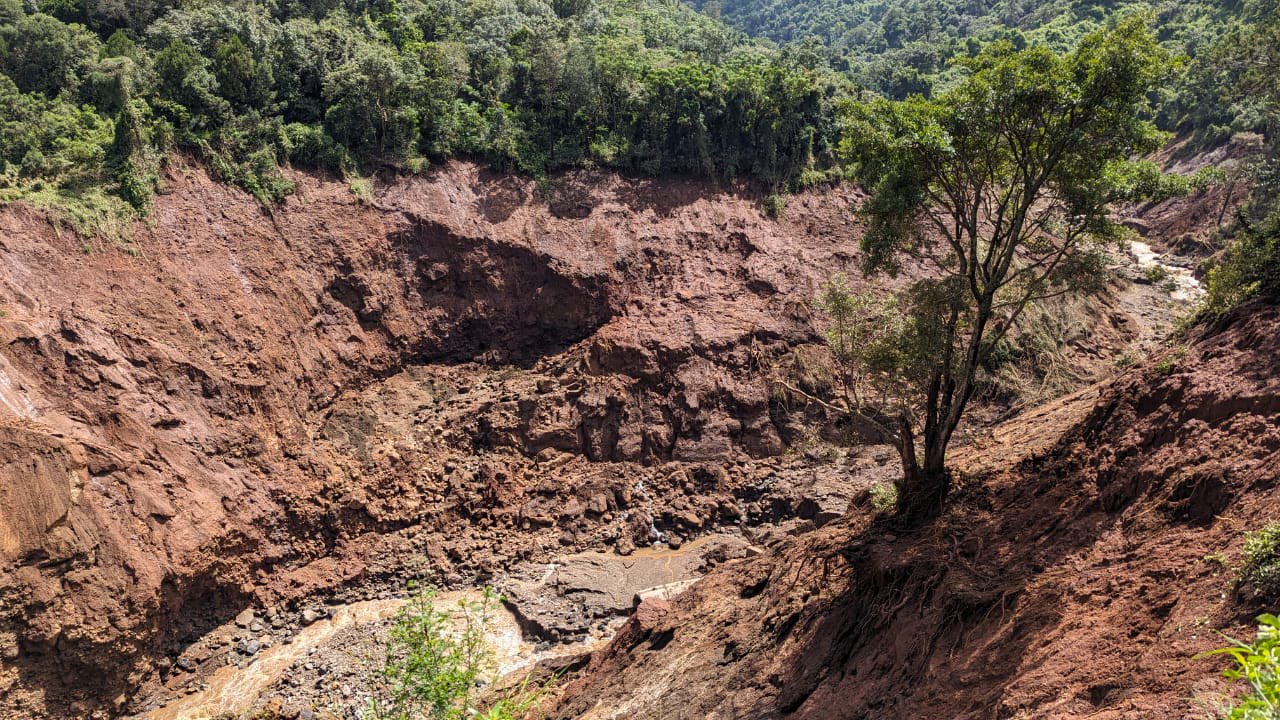
It’s a stark example of how environmental and human impacts can combine and lead to disaster. Deforestation had made landslides more likely. Add extreme weather on top of that risk, and it can lead to tragedy.
It’s also an example of how land restoration faces an uphill battle. Friends of mine started the Kijabe Forest Trust to protect what remained and reforest the slopes through community based conservation. They hired a team of rangers to prevent poaching and charcoal burning, and started nurseries to raise the saplings they needed for planting. They have worked with the Kenya Forest Service and with local people to protect the forest even as development progressed all around it. With this week’s landslide, KFT warns that its work may have been set back by a decade.
Most of all, it’s a tragedy in the heart of the community where I spent my teenage years. I’ll be looking at what I can do from here, but if you can make a donation to relief efforts in the area, that would be much appreciated. My friend who could identify the orchids is Bryan Adkins, now the CEO of Eden Reforestation Projects and chair of the Kijabe Forest Trust. He is on the ground in Kijabe, working with the team of rangers to respond with practical help, including identifying other spots in the valley that are at risk of flash floods. He is directing people to donate to the Trust through Paypal, or to an emergency fund set up by Eden projects.
That donation will make a real difference to a small team of people working under very difficult circumstances right now. It will go towards immediate relief efforts, and also to long term restoration. I hope you can stand with me for Kijabe Forest and the people who call it home.
 The Earthbound Report