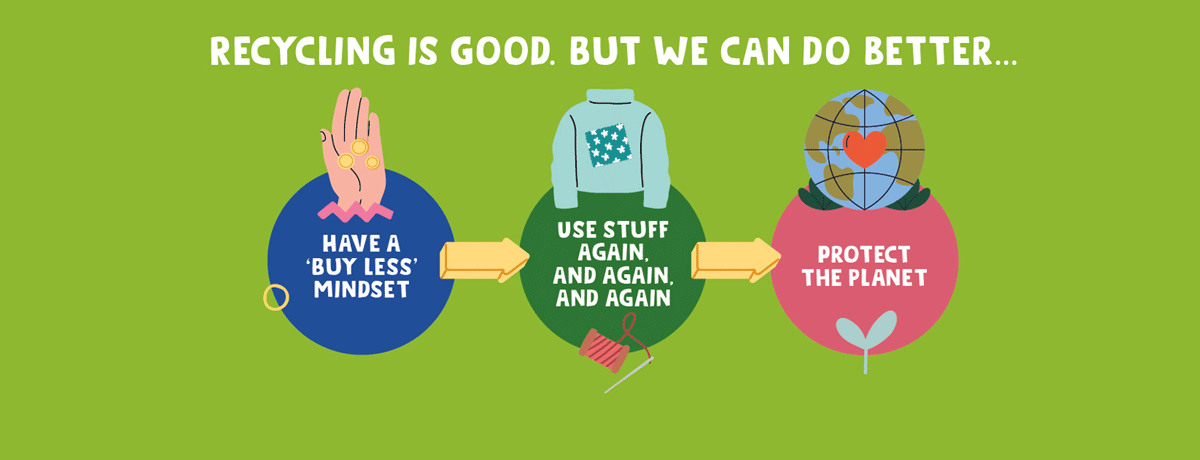
The ‘three Rs’ are well lodged in people’s brains when it comes to waste. As public messaging goes, reduce, reuse, recycle been rather successful in its reach – so it’s unfortunate that it isn’t actually understood. That’s according to research by Keep Britain Tidy and partners.
“Recycling is firmly engrained in people’s minds as the best thing they can do to reduce the environmental impact of the things they buy,” they say, and that is certainly borne out by the conversations I have on the topic. “Current communications are not sending the necessary message that people need to instead prioritise reducing what they buy, and extending the life of the things they have, above recycling.”
A lot of people have understood the three Rs to be three ways to deal with waste, rather than a hierarchy of priorities with recycling at the bottom. Some think all three are more or less synonymous – so re-using a plastic bottle would count as recycling, and that has reduced waste. Perhaps most of all, the three Rs have lost their impact through repetition.
Is there something we can say instead? Keep Britain Tidy have run focus groups to investigate how people respond to language around waste. They’ve workshopped different ways of talking about it, and then user-tested some alternative messages. This is what they’ve come up with as a new waste hierarchy:
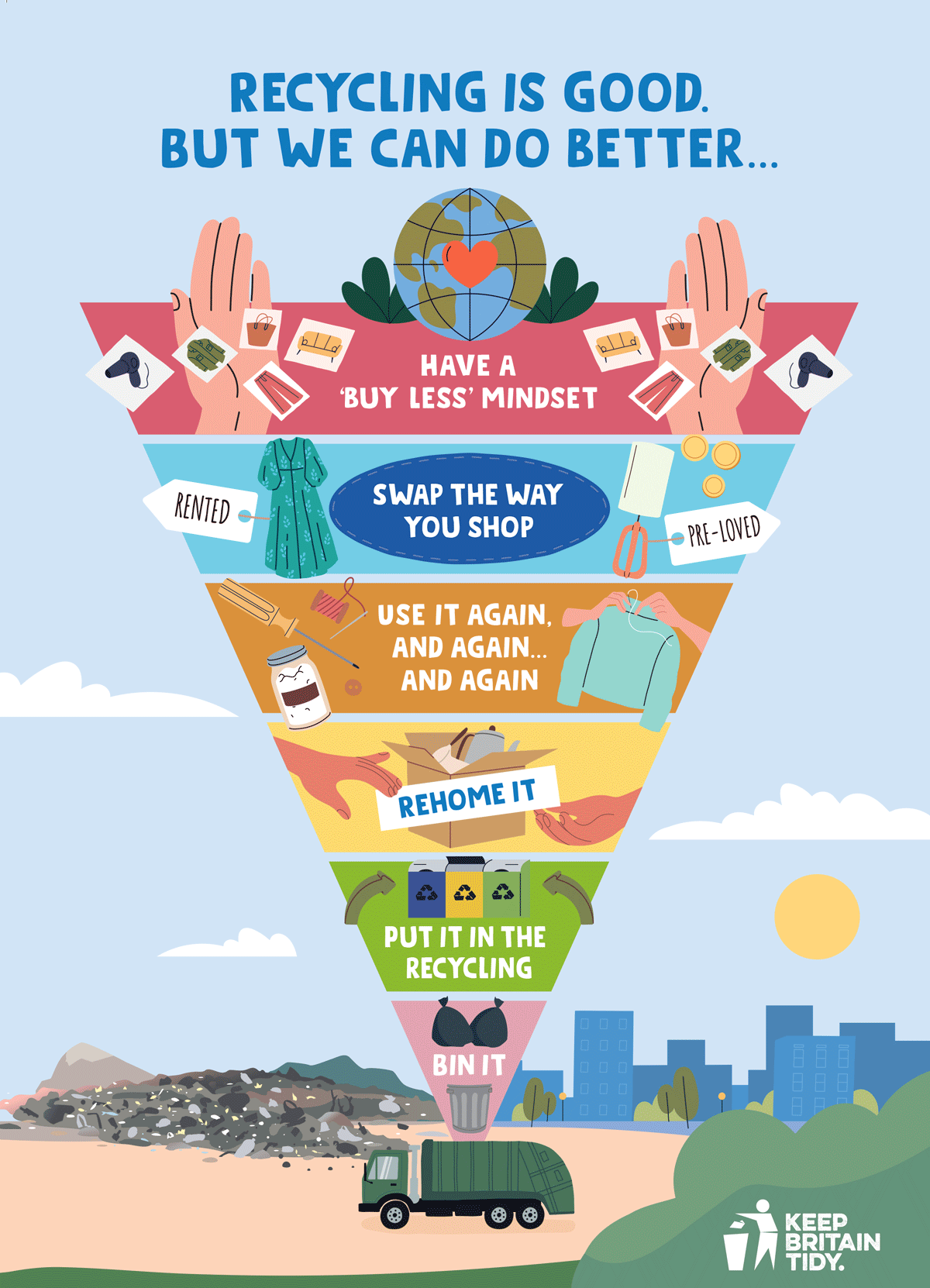
There’s a balance to strike here. People need to understand that recycling isn’t the virtuous option that some might think it is, but you still want them to recycle when appropriate. Hence the central message of doing ‘better than recycling’.
Reduce has been reframed here as a ‘buy less mindset’. Re-use has become a simple invitation to use things again, and recycling is now at the bottom, just above binning it. Together it’s quite a clearer and more specific approach to minimising waste.
Keep Britain Tidy have released their report, along with a selection of posters and media assets, to councils and authorities interested in improving public understanding of waste. We’ve been talking about it at work to see if it’s something we should be recommending to schools. Hopefully it will find its way out into the world, so keep an eye out. See if you spot some of this messaging filtering through where you are.
 The Earthbound Report
I like these concepts. I think buying less but better quality so that items last would be a good addition. These messages (along with anti-littering ones) need to find their way into local communities through various media, real and virtual.
That’s a good point – too many things are such poor quality that they are practically disposable.
This week I was offered four garden chairs by a neighbour who is moving away. Even though the chairs are only a couple of years old, the material is frayed and the frame is loose and I wouldn’t sit on them. I declined and I expect they’ve gone in the bin, and that’s such a waste of materials, as well as the energy needed to make them and ship them from China.