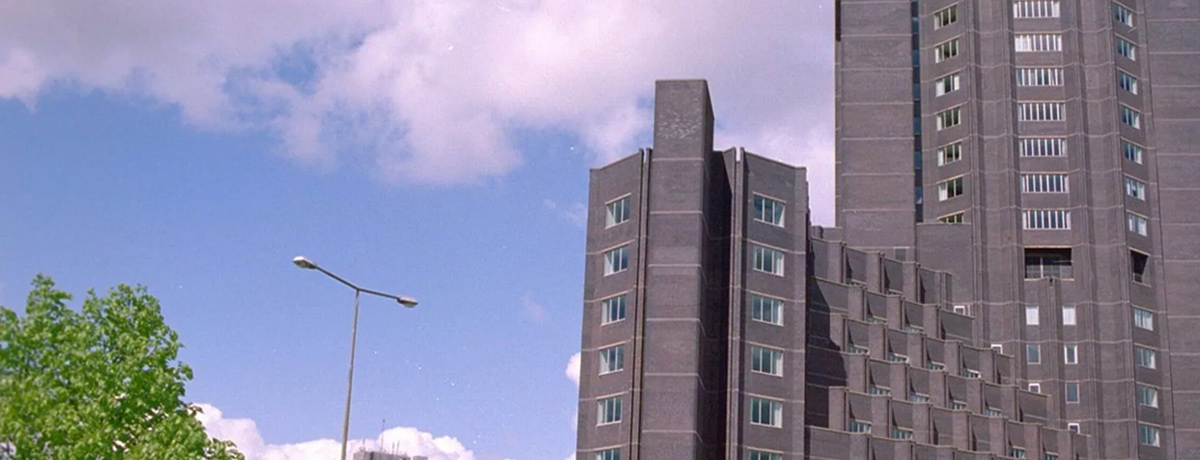
When I lived in Stoke on Trent, there was a notorious 18 storey building in the town centre that was known locally as ‘Gotham City’. It was built for the council in 1973 and it never quite worked. It had ‘sick building syndrome‘ and was a miserable place to work. The council occupied it for 20 years, and then it sat empty and derelict for a decade. Unity House, as it was officially called, stood for a grand total of 32 years before it was torn down.
Meanwhile, the old Stoke on Trent Town Hall was built in 1834. It has hosted royal visits. The Beatles once played there. It’s still in use as offices today and a recent refurbishment will see it well past it’s 200th birthday. It is Grade II listed, which means people have liked it enough to make sure it is protected for future generations to enjoy.
The fate of these two council offices illustrate why beautiful buildings matter to climate change. Yes, we need architects to design buildings that are low carbon and made to last, are well insulated and use sustainable materials. But all of that doesn’t count for much if people don’t like the look of the building. If it isn’t popular, it won’t stand the test of time.
This is a point that the designer and architect Thomas Heatherwick makes in his book Humanise. He points out that it took 92,210 tonnes of carbon to build the Leadenhall building in London (the ‘cheese grater’ to Londoners). All that steel and concrete and glass has the same carbon footprint as around 19,600 British citizens.
“Once we’ve spent the carbon costs necessary to put a new building up,” Heatherwick argues, “it’s crucial that it stays there being useful for as long as humanly possible. The worst thing we can do is knock the building down after just a few decades and put something new up. This is why boring buildings are much worse for the environment than interesting ones. They’re worse because they’re unpopular.”
Nobody will mourn the boring and boxy buildings constructed all over the world in the last half century. Few people like them enough to advocate for them when they’re threatened. There’s little incentive to pay to refurbish them and extend their lives. The opposite is true for beautiful and interesting buildings – people will fight to preserve them, take pride in them and open up them up to visitors. And therefore they stay standing, locking up their embodied carbon and saving on the emissions of new construction.
This is an under-appreciated aspect of sustainability, and it’s true for lots of things beyond architecture. Furniture, clothes, toys, tools, artwork – good and beautiful things get shared and swapped and passed down.
In other words, sustainability isn’t just a technical matter. It’s about aesthetics too. Demand more beauty in the world!
 The Earthbound Report