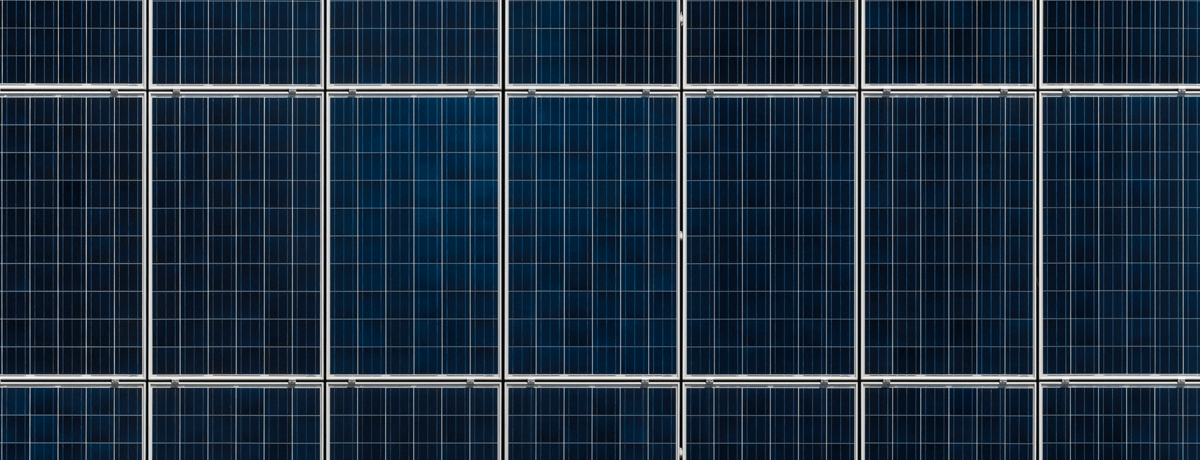
A few years ago now I had the opportunity to take part in a solar PV workshop where we made our own solar panels. It was a painstaking process of soldering together individual solar cells, which are wafer thin and extremely fragile. Then they were smothered in glue and pressed under a sheet of rainproof plastic so we could take home our own solar chargers.
Although ours were scrappy and DIY, the process is similar for making a commercial panel. The silicon cells are in a sandwich of materials: aluminium on the back, glass at the front, and layers of thermoplastic glue holding it all together. It’s compact and durable enough to sit outside in all weather for a quarter of a century, but the very thing that makes it so durable also makes it very hard to recycle.
End of life solar panels can’t exactly be dismantled. There’s nothing to pull apart. They need to be dissolved, shredded, or split in elaborate ways. With more and more solar panels being taken down and entering the waste stream, there’s a growing incentive to find a profitable way to do this. Multiple companies have taken up the challenge. I’ve written before about the first PV recycling plant in Europe, and there are now others. A company in the USA is making new solar panels from the recovered glass from recycled PV, helping to close the loop.
Since it is the biggest manufacturer and installer of solar, I suspect the breakthroughs will come in China. There’s a dedicated R&D facility called the PV Recycle Industry Development Center in Jiaxing, and it has 79 different companies signed on. The developers of winning technologies will have a huge waste stream to draw on in years to come, and fortunes will be made creating a circular economy for China’s solar.
In the meantime, here’s a start-up in France that recently opened its doors to Deutsche Welle for their Planet A Youtube series, which I regularly recommend. Called Rosi, they have pioneered a process where retired panels are placed in an oven hot enough to vaporise the plastic. It turns it into a gas which the oven can then burn, conveniently. It’s not carbon free, but it does capture a high percentage of the materials for reuse. You can see inside the plant in the video below.
There will be a lot more plants like this one, and bigger ones to come. Solar became economical at large scale around 20 years ago, and panels last 20-25 years. Germany introduced its feed-in tarriff in 2004, with several other countries following suit in the mid-00s. The panels put up in that solar boom are coming down, and it’s only now that a recycling industry has a sizeable and reliable waste stream to work with. The challenge is to get recycling to scale and make it profitable, and it will be interesting to see who gets there first.
 The Earthbound Report