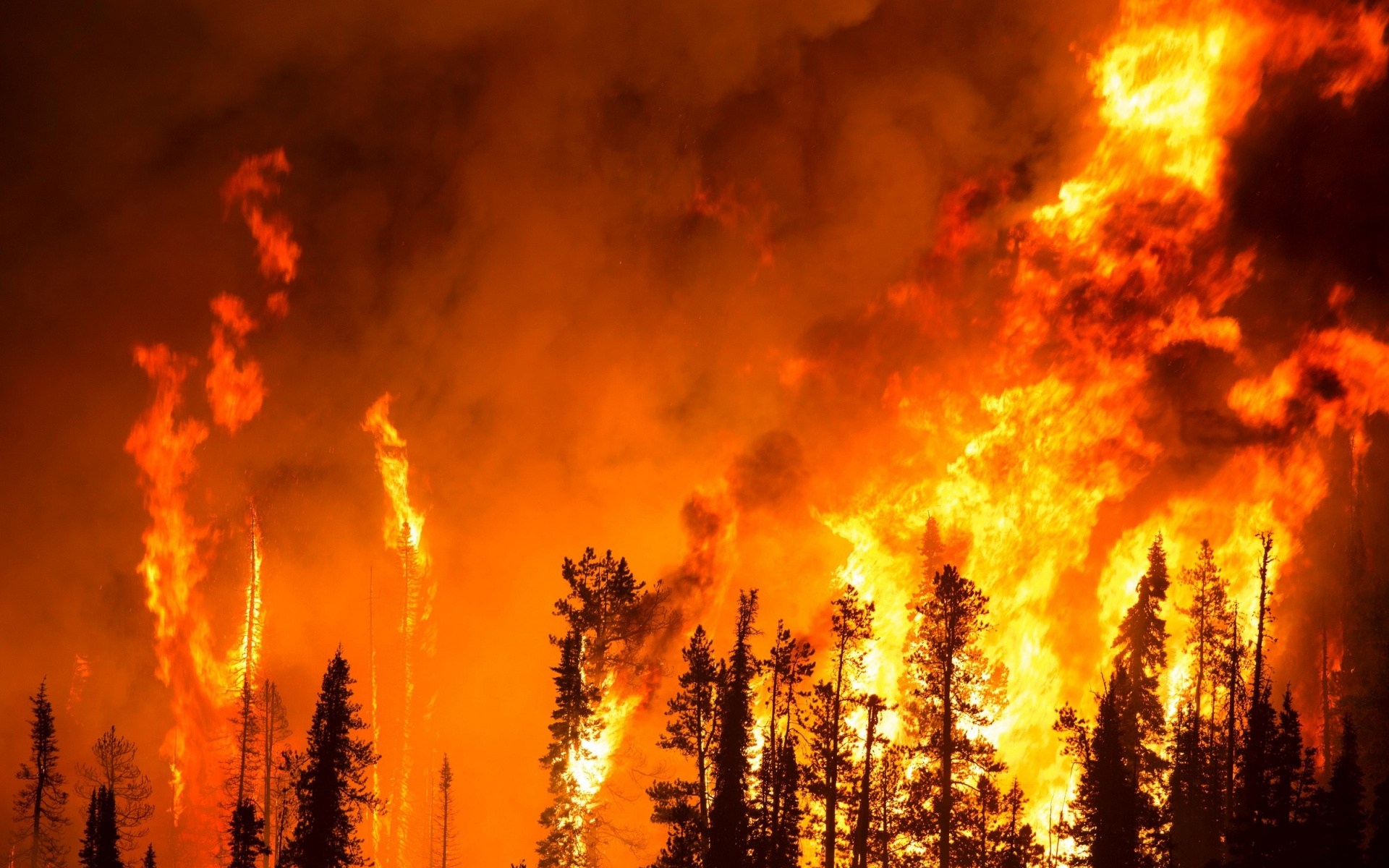

Fort McMurray is the heart of Canada’s tar sands production, a remote and wealthy boom-town that grew rapidly in the Alberta forest in the early to mid 2000s. With higher oil prices making the tar sands profitable, there was lots of well paying work, despite it being one of the most damaging environmental projects on the planet.
Fort McMurray was a city in service to fossil fuels and in defiance of their effects on the climate. And then in 2016 it burned to the ground, in a fire so apocalyptic in scale that it could only have occurred in a changed climate. John Vaillant explores this tragic irony in this bestselling book, Fire Weather: A True Story from a Hotter World.
There have always been forest fires in Alberta of course. There are tree species that are adapted to fire and can’t propagate their seeds without it. But climate change has made the fire season longer, and has made the region drier – it now gets half as much rain as it used to. In summer, dry forest and high temperatures create ‘fire weather’, the perfect conditions to start and sustain large wildfires.
The one that took over Fort McMurray was exceptionally and historically large. It began in May 2016 and wasn’t declared entirely out until August the following year. It forced the evacuation of the city, burnt from street to street and did $10 billion in damage – although remarkably, 88,000 people fled the city as it burned and there were no reported casualties.
Vaillant tells the story using eyewitness accounts, following the lives of ordinary citizens as they go about their business. There are workers in the tar sands, firemen, a local radio presenter. Fires are normal and so nobody pays much attention to this one, until it springs on the city with unexpected speed. The book reads like a thriller as it portrays the evacuation, the confusion, and the heroism of firefighters as they try in vain to bring the fire under control. We return to these characters throughout, over the course of the days of the fire, and they are poignant touchstones in a story that could otherwise feel almost mythical in the scale of its destruction.
In between episodes of the Fort McMurray story, the book explores our human relationship with fire. Early use of fire transformed human opportunities. Ongoing exploitation of fire continues to drive civilisation, though we may not think of it as fire when we run our central heating, drive a car or fire a gun. Nevertheless, fire it is, and all of us command far more of it than ever before. “The degree to which we have mastered fire borders on the magical,” writes Vaillant, “and in this way, with minimal training, we have all become casual wizards.”
Most of these fires are powered by fossil fuels – “petroleum companies trade in fire” – and those same fossil fuels have changed the climate in favour of fire. As witnessed at Fort McMurray and in other places, new forms of fire have emerged that challenge our understanding of what fire is and what it can do. There are fires that create their own weather, fires that are powerful enough to start tornadoes within themselves, and hot enough to incinerate concrete. We have created a ‘fire planet’, with rising temperatures across the entire globe.
“During this first century and a half of the Petrocene Age, as we have harnessed, democratized and amplified fire on demand, we have also unleashed some unintended consequences: a by-product of becoming a petroleum-based society – in other words, a fire-based society – has been the superheating of the atmosphere.”
Fire Weather is an incredible story, well told. It’s also a kind of parable, a symbol of our loss of control of the climate, and a call to direct “our energy and creativity to regeneration and renewal instead of combustion and consumption.”
- You can pick up Fire Weather from Earthbound Books.
 The Earthbound Report