
When I was researching my book on the connections between climate and race, one of the things that struck me is how many dimensions there are to climate justice. I was researching just one of them, and I put in a chapter that explained how climate change amplifies existing disadvantage across a whole range of categories. There are geographical, economic and sociological divides. There are gender inequities to climate change. Children are disproportionately affected, and so are those with disabilities or medical conditions.
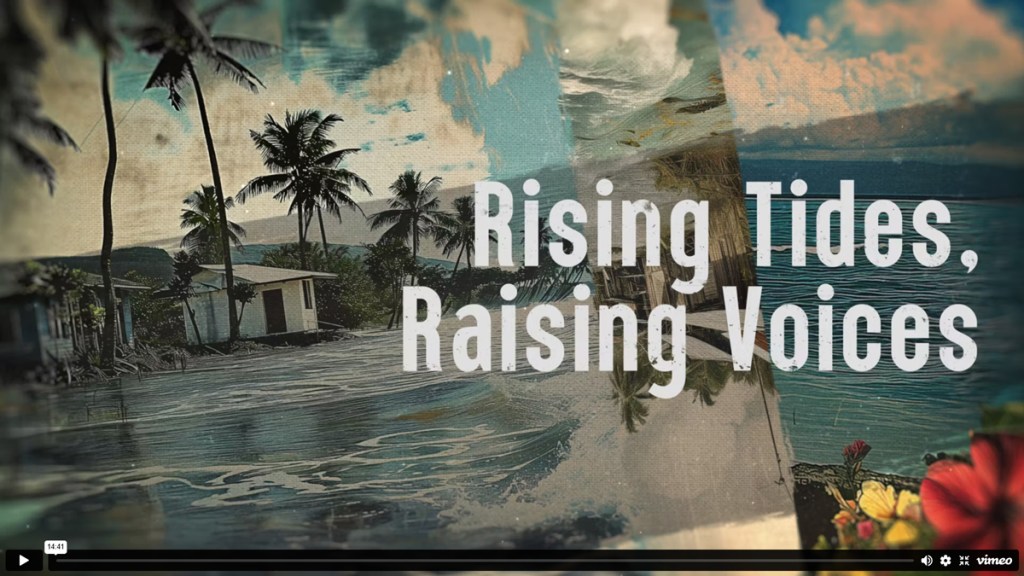
Disability and climate isn’t something I’ve given a lot of thought to, and so I appreciated a recent day at work where a couple of short films were screened for discussion. I thought I’d share Rising Tides, Raising Voices, from the Disability Justice Project. It features several Pacific islanders, letting them tell their stories in their own context, and it’s eye-opening and well worth your time.
People with disabilities live with daily challenges, and specific difficulties in a disaster situation. Pacific islands have early warning systems whose alarms are no use to someone who can’t hear. When a call comes to evacuate, someone in a wheelchair is going to need extra support. If they get to the storm shelter, they might find that the door is too narrow for a wheelchair or that the toilets are upstairs.
The video illuminates some of these problems and the value of thinking intersectionally in our response to climate change. I also really liked the way it presents community as the most powerful solution. For all the focus on technology and science in climate change, loving our neighbours is still the most important thing we can do.
The video is 14 minutes long and won’t embed for me, so make yourself a drink and click over to the Disability Justice Project to watch it.
 The Earthbound Report
Thank you! Will do!