
Have China’s carbon emissions stopped rising? A plateau in emissions, driven by a surge in renewable energy capacity, is already observable and might make 2025 the year that China’s carbon pollution begins to decline.
I wrote earlier this week about the revolution in electrifying India’s railways – link below. Here’s an infographic from Indian NGO Down to Earth that sets the wider context of the energy transition underway, both its successes and challenges.
I use Ecosia, but this week I came across Good, a search engine that runs on a subscription model to keep itself independent of advertising and big tech companies. Has anyone used it?
Electricity could be cheaper in the UK and some of the factors that keep it expensive are structural. Jonathan Brearley, CEO of regulator OFGEM, explains in the Montel podcast how regional pricing could make a difference and why they back it.
As we plod into the sixth month of our relatively modest building project, I envy those using modular systems such as this Belgian firm that’ll sell you a DIY sustainable home kit that you can stack together like Lego.
This week’s articles
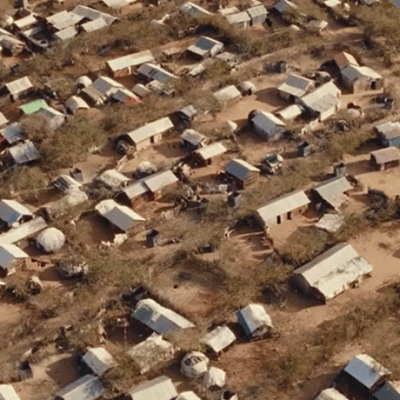
Radio Dadaab: reporting for climate justice
Radio Dadaab is a 25 minute documentary about a young journalist in the Dadaab refugee camp in Kenya, home to 200,000 Somalis. She is reporting on drought and climate change and migration, and it’s some of the best climate justice reportage that I’ve seen in a while. Here’s the video, with some further thoughts below.…
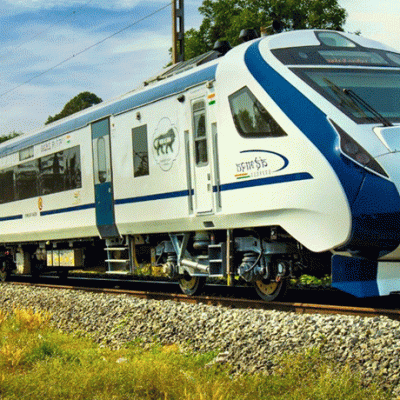
India’s electric railway revolution
Every day, India electrifies 19.6 kilometres of railway line. In the last decade the country has electrified 40,000 kilometres of track, and it is due to reach 100% electrification this year, exactly on time. It’s a remarkable achievement. With 97% of its broad gauge lines now transitioned, India has the second highest electrification rate of…
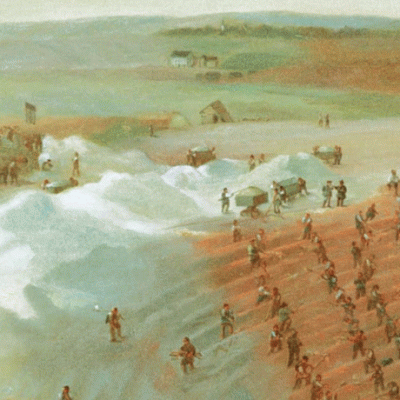
Book review: Subjugate the Earth, by Philipp Blom
“I thank God that Donald Trump won this election,” enthused evangelical leader Franklin Graham in November. To his mind it was a win for families and for religious liberty, but also “a win for coal miners. It’s a win for farmers. It’s a win for the oil and gas industry.” Victory for the fossil fuel…
 The Earthbound Report