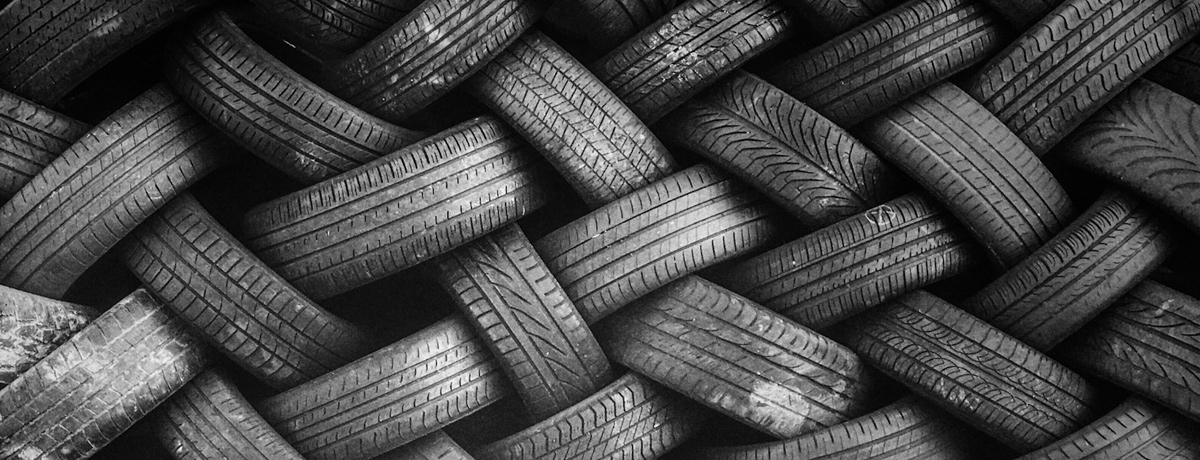
A few years ago I wrote a couple of posts about tyres, a sustainability headache that I hadn’t heard much about. I thought I’d revisit it to see if there was any update, but it appears that we’re not much closer to solving the problem, and the number of tyres produced every year has risen. Over two billion tyres are now manufactured every year, every one of them a big weight of non-biodegradeable mass of rubber and plastic. They can’t be recycled either, though they can be refurbished up to a point, and down-cycled into lower value products such as flooring. Globally, most of them are dumped or burned.
Of the possible solutions I’ve explored before, the most ambitious were those that sought to reinvent the wheel – either creating more durable tyres or airless versions that couldn’t be punctured. So far there’s not much progress to report here. Michelin’s experimental tyreless wheel now gets a 404 on their website. Bridgestone’s airless tyre was still at the prototype stage the last time they updated the web page, which was three years ago. A genuine circular economy solution for tyres seems a way off yet. Or could it be that tyre companies don’t actually want a solution to this problem?
A useful intermediate solution is retreading, where tyres are remanufactured, certified and reused. This is much more common on trucks and buses than with cars, and tyre retreading is the biggest remanufacturing sector in the US, employing 51,000 people. Unfortunately the number of retreads in use has been falling in many places, as they can’t compete with cheap tyres from Asia. Most of these cheaper tyres aren’t high enough quality for safe retreading, so they have to be disposed of at the end of their lives.
This seems like a good place for a bit of intervention. The Tyre Recovery Association has been lobbying the UK government to place tariffs on Chinese tyres, but we could probably be more creative in our incentives. Support for retreading businesses would create jobs in the green sector. There could be tax incentives for fleet managers to choose retreaded tyres. Variable import duties that favour retreadable tyres would encourage overseas manufacturers to innovate around quality and durability.
There’s also a real opportunity to do some PR around retreaded tyres. There’s no reason why car drivers can’t buy them too, but awareness is low and there are myths around safety. In reality the industry is strictly regulated and standards are high – high enough that 80% of aeroplane tyres are retreaded and most air passengers won’t be aware of that. Aviation safety is generally a much higher bar than road traffic, so we really should be able to buy retreads with confidence in the UK. A campaign to promote retreaded tyres and ease safety concerns could grow the market for retreads and significantly reduce waste tyres.
While we wait for such things, most of the energy around the question of waste tyres is going on second life applications such as sports surfaces or carpet underlay. It’s not true recycling, but it does recover the materials in some way and it’s better than dumping them. This seems to be working best where there are formal networks for doing it well. For example, in Italy a small levy is added to the price of all new tyres sold, which pays for their processing at the end of their useful life. That funds a consortium called Ecopneus, which organises the collection and disposal of tyres. They processed 2.2 milion tonnes of tyres in their first decade, around 60% of the country’s tyre waste.
So, we can burn tyres for energy, and we have ways of breaking tyres down and reusing the materials, but there’s a lot more to do on reducing the number of tyres entering the waste stream and designing alternatives. Let me know if you’ve heard different or have come across any interesting possible solutions recently. And here’s a video from Mongabay on the question. It includes some striking footage of the world’s biggest tyre dump, which is in Kuwait:
 The Earthbound Report