This morning I had a conversation with my daughter about school uniform. It’s been hot this week – for the UK at least – and school has finally said they don’t need to wear their blazers. We await the day that boys are allowed to wear shorts, but it’s a concession to the fact that clothing needs aren’t the same all year round.
Despite how obvious that might sound, formal or informal rules around clothing don’t necessarily recognise this. The British Army has shirt sleeve orders that determine whether you can have long or short sleeves on, and these depend on the time of year and time of day, not the temperature. (In the RAF they let people use their common sense, apparently)
Unwritten they may be, but business has its uniform as well. Take a London train during the summer and you will find plenty of men sweating into their suits, apparently unable or unwilling to wear anything else into the office.
All of this is cultural, and thus all of it can be changed. There are no good reasons to make people uncomfortably hot, and some very good reasons not too: people who are comfortable will do better work and be less irritable. You will save money on cooling. People will be happier. And call me a maverick, but maybe it’s not always necessary to micro-manage what people wear in the first place?
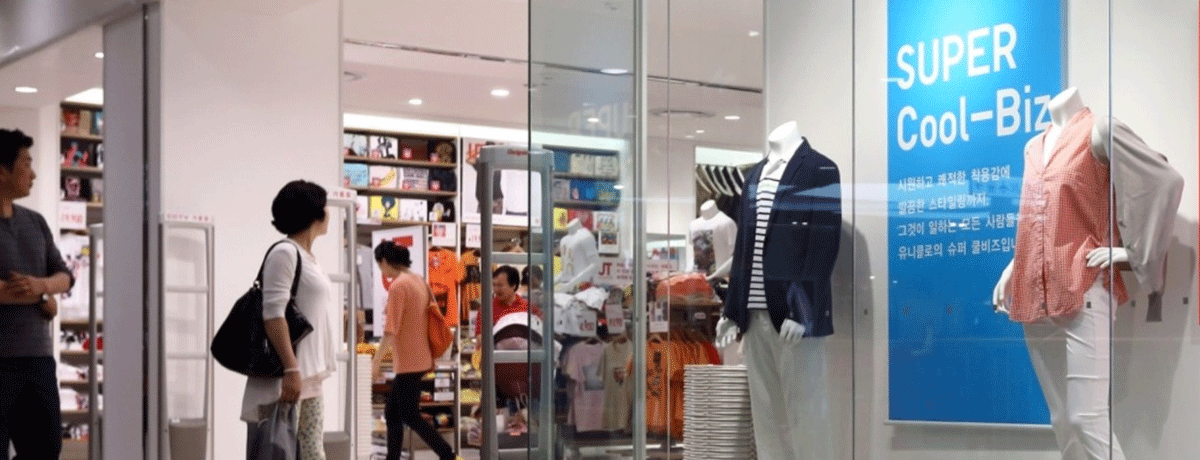
For a nice practical example, consider Japan. In 2005 the Ministry of the Environment hatched an idea to save money on air conditioning in government offices. They reset all air conditioning to a higher temperature and relaxed dress code rules across the civil service. To make sure that everyone got the memo, Prime Minister Junichiro Koizumi led from the front and starting doing interviews and cabinet meetings in an open-collared shirt and no tie – an important gesture in a conservative dress culture where employees will take their cues from the boss.
The campaign was helped along by branding the idea as ‘cool biz’, and by the next year companies had started to adopt it too. Clothing retailers caught on and started putting out summer wear collections for office workers.
Twenty years on, summer office attire is standard in Japan. It’s an established part of the fashion industry calendar, with new styles out for the summer. It saves over two million tonnes of CO2 a year in air conditioning costs, and everyone feels better for not being in a suit and tie – until October, when the dark suits return.
Cool biz has since been adopted in South Korea, where cultural norms around summer wear in the office have similarly shifted.
As Carbon Brief described in a recent newsletter, there’s plenty that we can learn from Japan’s initiative, and no reason why it shouldn’t work in more places. After all, climate change is both increasing temperatures and prolonging spells of hot weather. That means more discomfort and greater exposure to health risks from overheating. What we choose to wear is perhaps the most straightforward form of climate adaptation there is.
 The Earthbound Report
Comfort should be considered, particularly as many people have different needs. For example, I can understand that some may feel more unwell in the heat, therefore, not wearing a blazer etc should be accepted.