Having installed a heat pump in our house recently, I recognise that it’s not going to work for everyone. It takes up a lot of space and we’ve had to design it into an extension – not something you can do in an apartment or a small home. We’ve also spent the last ten years steadily improving the insulation on the house to make sure it works well. Again, not something everyone can do if they have an older property. And we were fortunate that we didn’t have to change all the pipes in the house. Lots of new homes come with tiny pipework that saves the developer money, but makes it very expensive and disruptive to install a heat pump later.
So if you can’t fit a heat pump, what can you do instead? Here are a handful of other low carbon heat technologies.
An electric boiler with storage – let’s get one thing off the table straight away: you probably don’t want to swap out your gas boiler for an electric boiler. Gas is cheap and subsidised, and an all electric boiler will likely cost three or four times more. However, if you can add battery storage and you can make use of cheaper overnight rates, it becomes much more affordable. The Bolt Boiler is new generation of boiler that combines the two, charging up overnight or running on solar panels to provide heating and hot water. It’s early days for Bolt, but it’s an idea to keep an eye on.
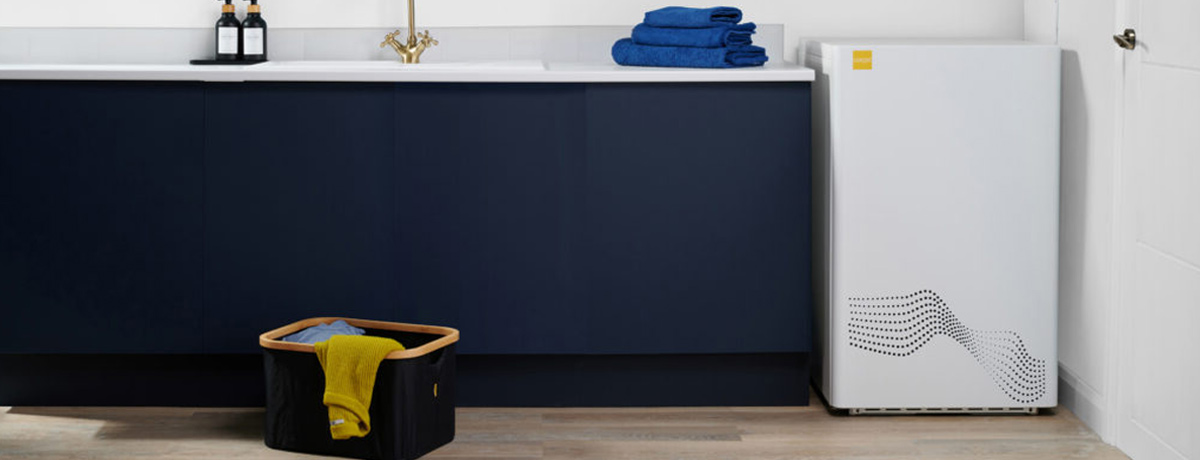
A heat storage boiler – rather than storing electricity in a battery overnight, another option is to bank the heat itself. That’s what the Tepeo boiler does. It’s the size of a washing machine and much easier to fit than a heat pump. It heats up on cheaper electricity and stores a lot of heat in a small amount of space, releasing it throughout the day. It’s pretty smart, and I might have got one myself if it didn’t also need a hot water tank. A combi version is on the way apparently.
Infrared heating – Both of the above assume that you’re keeping a central heating system and radiators. You can move to zero carbon heating without that, and infrared heating is one option. These are efficient panel heaters that are safer and neater than traditional electric heaters, and they warm the people in the room rather than the air. They can prove expensive to run and won’t be suitable for every situation. But in modern homes that are well insulated and don’t need a huge amount of heating, they might be ideal.
Biomass heat – some parts of the world are going to decarbonise their heating with wood or biomass. Whether this is a good idea or not depends entirely on context. Finland, for example, has vast tracts of forest for a relatively small population and wood makes sense. If you have your own woodland or plentiful supplies of cheap local wood, then burning it for heat might be appropriate. That can be wood burners or pellet burners. It qualifies as low carbon heat and so it deserves a place on this list, but it’s not going to be a solution for most of us.
Air to air heat pumps – the genius of heat pumps is that they don’t actually create heat. They move it, and that makes them remarkably efficient. So before you give up on heat pumps entirely, consider that most heat pump installations in the UK are air to water – the heat pump feeds into the existing water-based central heating system and uses radiators to provide the warmth. That’s not the only kind of heat pump. Air to air heat pumps, which can conveniently also provide cooling, are much easier to fit and are very common in many parts of the world, such as Japan or New Zealand. A Kiwi living in Luton has retrofitted his home with air to air heat pumps and explains it here. Unfortunately the government doesn’t subsidise these at this point, much they are much more affordable to begin with.
Thermoelectric heating – yes, we haven’t exhausted the possibility of a heat pump for your house yet. These are very new and I haven’t yet seen one in action, but the cutting edge of the heat pump world is with solid state heat pumps. These use thermoelectrics rather than circulating refrigerants, which makes them very compact. A company called Anzen has just started marketing them in the UK, with a ‘climate wall’ that you install in each room. They’re smaller than the radiators they replace, provide heating and cooling, and a local electrician can install them in a couple of hours. If they work and they catch on, this is what everyone is going to have in ten years time.
Beyond individual homes – I wouldn’t wait around for these, but there are solutions that are beyond our individual choice as householders. One is heat networks. Again, pretty rare in the UK and widely used elsewhere in Europe, we will have more of them in future. If you’re connected to a heat network, you don’t need to worry about this at all. The entire neighbourhood will have low carbon heat, using one of the above technologies or using waste heat from industry. I’m visiting a school tomorrow that is in very early discussions about sharing a heat network across two schools, a community centre and doctor’s surgery and bringing low carbon heat to all of them at once.
There’s also, away in the distance, the possibility of clean gas in the gas network – either hydrogen or biogas. Enthusiasm for this has definitely cooled in recent years, with two big national hydrogen pilot projects proving inconclusive on the matter. Ecotricity’s grass-based gas project was announced in 2016 and the first plant is yet to be connected to the grid. Clean gas doesn’t look like a promising solution right now, despite the obvious advantages of using existing infrastructure, but that may change.
In summary, there various ways to provide low carbon heat. If you’ve looked at heat pumps and decided it’s not for you, that doesn’t tie you to fossil fuels forever.


I don’t know if you’ve come across this before but, although not likely to play a role in domestic heating anytime soon, it does offer a simple and logical way for oil companies to move into supplying genuinely sustainable energy.
https://projectinnerspace.org/