Consumers in the UK spend of a total of £17 billion a year on food that is thrown away, according to the latest figures from WRAP. That’s an average of around a thousand pounds for a household of four. Most of that food waste went in general rubbish bins, which cost local councils a further £500 million to take away.
Despite relatively high awareness of food waste, this means that there has been almost no progress in a decade. Food waste figures today are only marginally lower than in 2012, and what looked like a downward trend has been reversed:
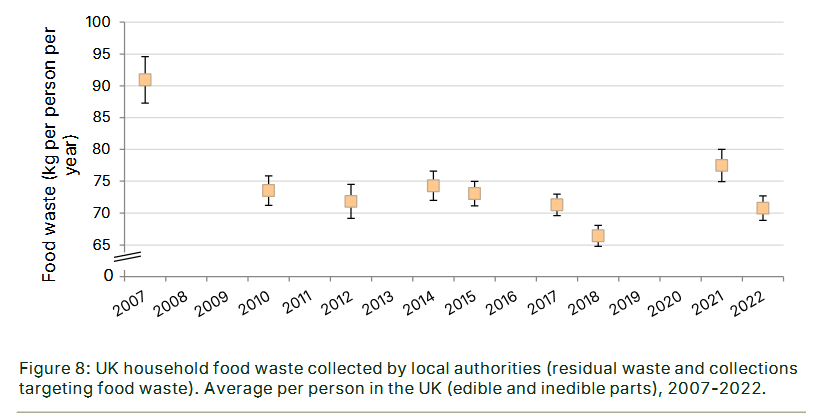
There are a handful of things to notice about this graph. One is that the latest figure we have is for 2022 – yes, that’s how long it takes to calculate the country’s food waste. Our stats are always years behind, making it painfully slow to see if new policies are working.
Second, there’s a lot of variability in that graph. To start at the far left, there’s that big drop from 2007 to 2010. One thing that happened there is the launch of the Love Food Hate Waste campaign, which did a lot to draw attention to the issue. The other thing that happened in that era was the global financial crisis, a tightening of household budgets, and a new-found sensitivity to waste.
At the other end of the graph we can see another world event troubling the dataset. There’s a big spike in food waste coming out of the pandemic. The main reason for that is that this is household food waste, and people were spending more time at home. Food waste that happens away from home gets counted in commercial waste streams. A lot of meals occurred at home in 2020 and 2021 that would normally have been at school or work, and that is reflected in the data.
Most recently, the food waste per person has fallen, in part because of financial pressures again. Food prices went up sharply in 2022, all around the world. This is in part due to the Russian invasion of Ukraine and the subsequent rise in the price of grain and energy. It’s also partly to do with climate change, as some important food producing countries experienced droughts and poor harvests that year. As the ‘cost of living crisis’ began to bite, people became alert to food waste again and the total dropped.
With global events tipping consumer habit this way and that, it’s hard to make comparisons across years. But one thing we do know is that the overall figure is too high, and not on track to meet either climate targets or the sustainable development goals (SDG 12.3).
Help may be at hand in the form of separate food waste collection, which all councils are obliged to provide from March 2026. People tend to become more aware of what they throw away when they have a separate bin. Making it visible is important, because 78% of people are convinced that they waste less than average, and you don’t need to be a statistician to find that sus. Unfortunately the lag in the data means that we’ll have to wait until 2029 to know if new waste services are working and reducing the total.
As the graph above shows, food waste is complex and influenced by all sorts of things. It’s a systemic problem. As WRAP say, “where and when we shop, how food is sold to us, the design of our kitchens and its appliances, social norms around food, our social and work lives – these are just some of the influences on food waste in the home.” Solutions then, will be varied and at all sorts of levels, including legal guidelines around sell-by dates or packaging in supermarkets, alongside behaviours in the home.
- Lots more interesting points in the full report
 The Earthbound Report