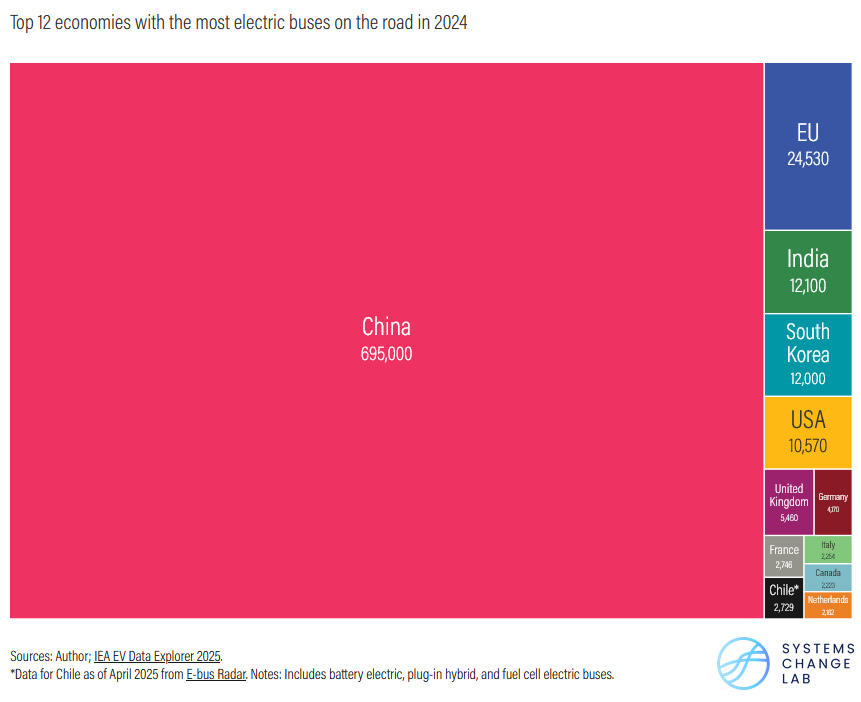
In 2018 I came across a striking fact: 99% of the world’s electric buses were in China. It was there that they were commercialised and produced at scale, and every month Chinese cities were adding more buses to their fleets than the rest of the world put together. The benefits of electric buses did not go unnoticed, running quieter and cleaner on city streets, and everyone else wanted them too. So what would the percentage be now?
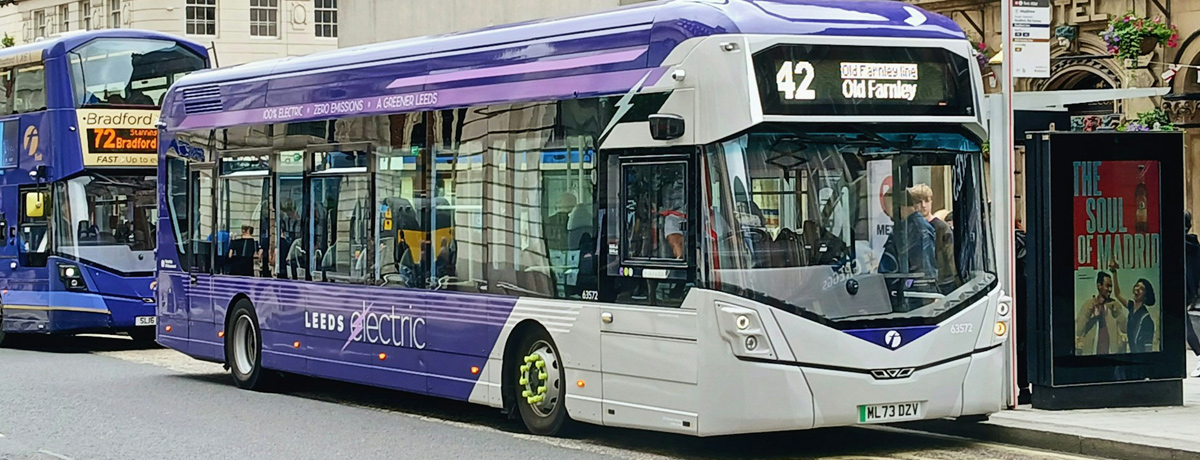
Outside of London, which has always loved buses, I saw my first electric bus at COP26 in Glasgow. I took a picture of it like the climate nerd that I am. It was also at COP26 that ZEBRA was announced. This stands for Zero Emission Bus Rapid-deployment Accelerator, an acronym that overlooks a D for the sake of being catchy, and a partnership from C40 cities. Their plan was to coordinate between cities in Latin America and bus manufacturers, and try and get electric buses in use across the continent as quickly as possible.
A coalition of cities worked with investors to finance new fleets of electric buses. With the finance in place, cities were able to commit to electric fleets. This in turn gave bus manufacturers the confidence to invest in production and in new factories, and to put in place supply chains for Latin America. Cities also shared what they were learning, with case studies on costs, safety and charging strategies.
As a result, the number of electric buses in the region has gone from just over a hundred in 2018 to over 7,000 and rising, displacing 6.8 million tonnes of CO2 in the process. You can track where these buses are on the E-bus Radar website – 1,335 in Brazil for example, a quarter of them trolleybuses. This exercise is now being repeated in Africa, which is also mapping the spread of electric buses.
Alongside these partnerships for importing buses from China and elsewhere, some are focusing on building their own. Kenya’s buses are mainly built in-country by the Kenyan companies BasiGo and Roam. Local manufacturing like this brings all the usual benefits of electric buses, alongside high quality green jobs.
That’s something the UK has been aiming for too, with a partnership between the government, major bus operators and bus manufacturers. GoAhead has committed to an all electric fleet, and UK-based Wrightbus is expanding to meet that demand. Similar things are happening in India, the EU and elsewhere.
With supply chains for China’s buses expanding, and investment in local production, where are all the electric buses today?
Well, the World Resources Institute estimated in the summer that China still has 90% of them – but that’s progress, right?