Buying quality items and repairing them when they break is one of the best antidotes to a throwaway society. Whether it’s electronics or appliances or clothing, maintaining and fixing them can keep our possessions in service for longer, reducing waste and using materials more effectively. That depends on the quality and design of the item itself, as many things are designed for disposal and can’t be repaired. It also depends on the skills of the consumer, or the availability of a repair shop.
The denim company Levi’s has always traded on durability as a selling point. Their jeans are more expensive than many high street brands, but they’ll last for years. There is an emerging problem however, for any company committed to longevity: repair skills are in decline. Market research by Levi’s shows that younger people are more interested in repair and more willing to keep clothes for longer, but they are less likely to have the repair skills or the tools to do this.
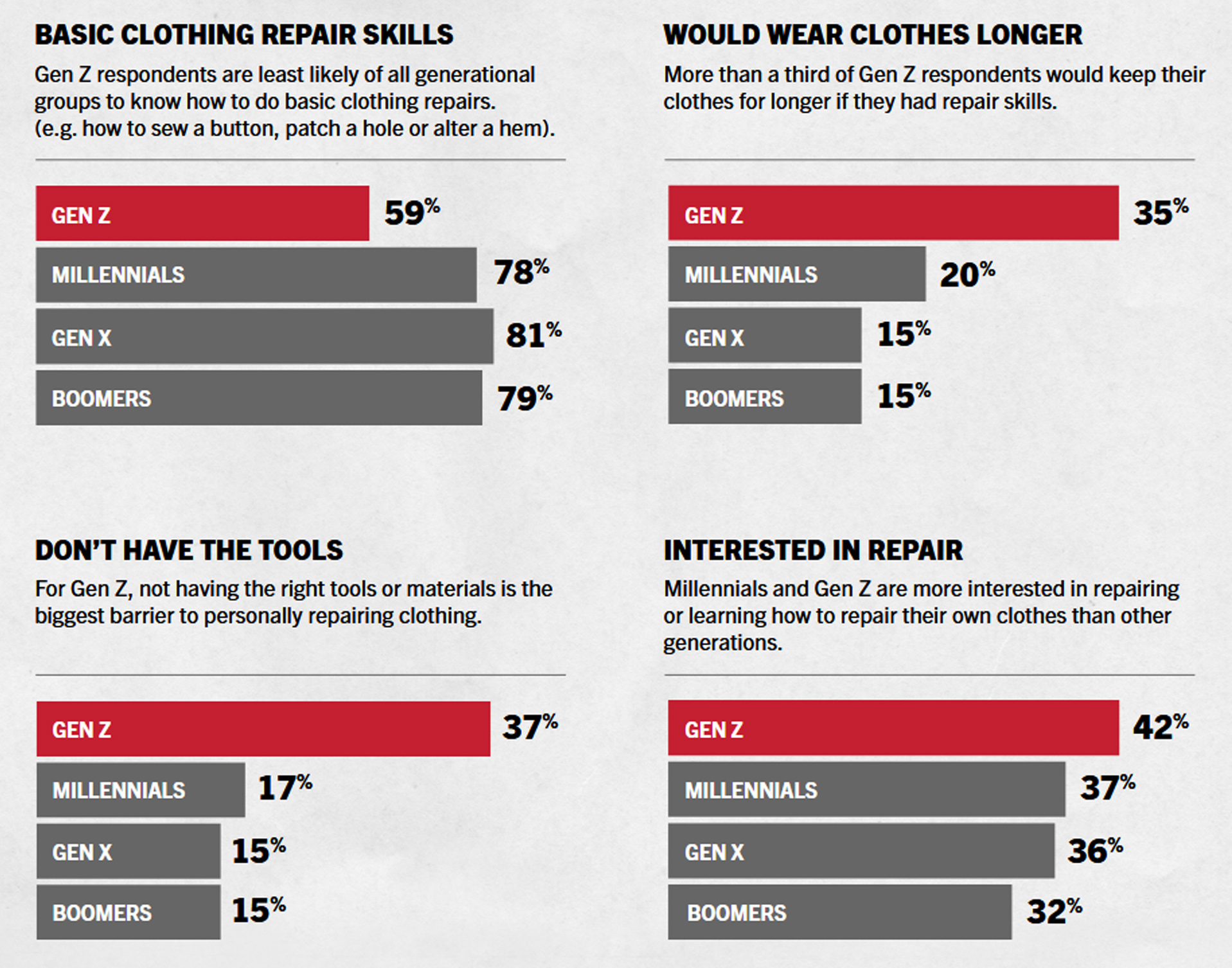
It’s worth noting this generational difference, which is why I’ve featured the above graphs in full. If you work in education, consider whether you could be teaching repair skills in school, and where you could bring this into lessons or extra-curricular activities. If you work in sustainability, could repair and skill sharing be a way of bringing young people into your projects?
Levi’s have launched their own solution: the Wear Longer Project. As a direct response to the feedback they’ve received from their Gen Z customers, they’re looking at how to fill the skills gap and empower people to repair and modify their clothes. The programme includes community workshops and lessons in schools, initially delivered by Levi’s employees and then by trained ambassadors. So far the community based part of the project is debuting in San Fransisco, with plans to roll it out more widely and eventually take it global.
There’s no need to wait for that, as there’s also an online curriculum that you can download from their delivery partner Discovery Education. There are facilitator guides and student guides for a range of basic repairs, from sewing on a button to patching a tear.
“Every year, millions of wearable garments end up in landfills, many taking centuries to decompose,” say Levi’s. “By teaching repair skills, expanding community workshops and integrating sustainability into our stores and events, the Levi’s Wear Longer Project aims to interrupt this cycle of waste and reinforces Levi’s long-standing commitment to durability, quality materials and more responsible consumption.”

