
If you go down to Luton station at the moment, you’ll find engineers on site fitting lifts to all platforms. It’s a much delayed improvement to our old and shabby station that will finally allow people with disabilities, pushchairs or luggage to get to their trains without struggling down the stairs. With this addition, the train service to Luton can tick off one of the five building blocks of good public transport.
These are outlined in a recent briefing from the Institute of Transportation and Development Policy. It aims to summarise what good public transport looks like, and breaks it down into five things to look out for:
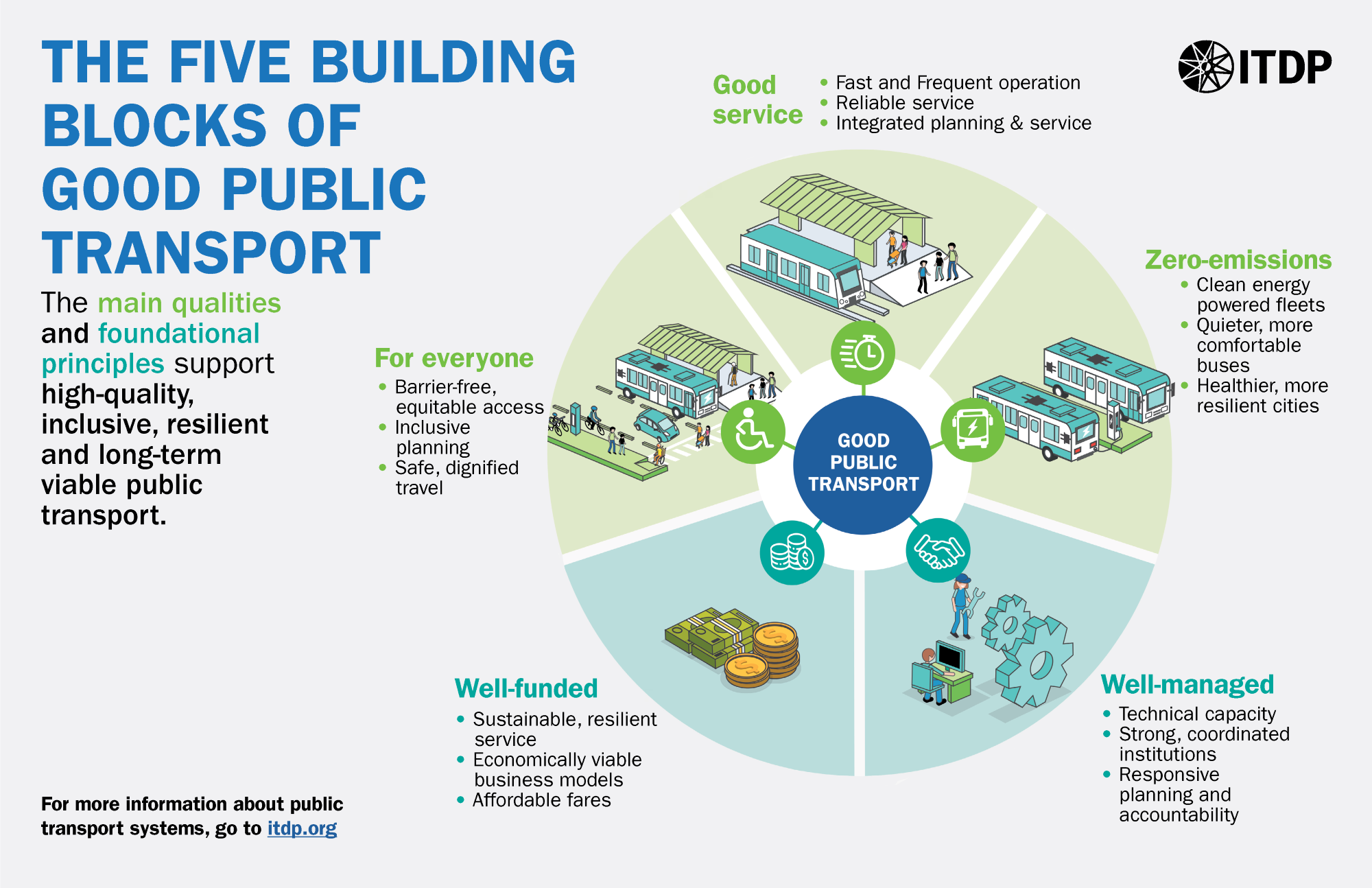
A reliable and fast service is perhaps the one we might think of first. It’s usually the deal breaker on whether or not most people will use public transport. In today’s world, ITDP argue that zero emissions is also an important standard. This reduces greenhouse gases, but it’s also better for cities and their populations, reducing noise and pollution. Accessibility is a third main quality, ensuring that everyone can use the service and can do so safely.
Beyond those passenger-facing aspects of good public transport are more foundational princples. Is the service well maintained and responsive? And is it sufficiently funded and operating on a sustainable economic model?
Here in Luton, the train service fails on affordability. If I were to walk down to the station right now, an off-peak fare to London would be £30.40 – exactly a pound a mile for the 30.4 mile journey. Looking at the last minute deals of a local airline, I could alternatively walk to the airport and fly over a thousand miles to Reykjavik for just two pounds more. That’s a price per mile of £0.03. In this hasty comparison, which I hope is not representative, air travel out of Luton is 97% cheaper than the train. There are reasons why this is so. None of the reasons are good.
Depending on where you are in the world, public transport might need investment in any of these five. In countries with mature and well functioning transit systems, the main direction of progress might be low carbon. For others it will be improving the service itself. Or progress might be in institutions, securing long term funding or ending corruption. What are the priorities where you are?

