I’ve been doing quite a lot of work around summer overheating recently, looking at how we adapt buildings for a warmer climate. For the day job that’s with schools, and I have a personal interest in it in homes as well. Our own house has a tendency to get too hot in the summer, and I’ve written about some of the solutions that we use.
One of the reasons that some buildings overheat more than others is the way they are oriented, along with the design of the windows and ventilation, and a variety of other factors. Orientation is a neglected aspect of architecture, as taking the movement of the sun into consideration during the design stage has major implications for the building throughout its lifetime. Correct orientation will keep it warmer in winter and cooler in summer, and maintain a more comfortable temperature for occupants.
That also translates directly into energy use. A building that’s naturally warmed by the sun in the winter has lower heating bills. In the summer months it won’t need mechanical cooling through air conditioning. Think about the cost savings of a large building such as a school over the decades, perhaps even centuries, that it remains in use. Orienting it right at the outset costs nothing at all, but over the years those savings could add up to millions of pounds.
At a time of high and volatile energy prices, passive energy saving measures like this should be at the top of the agenda, especially for new buildings.
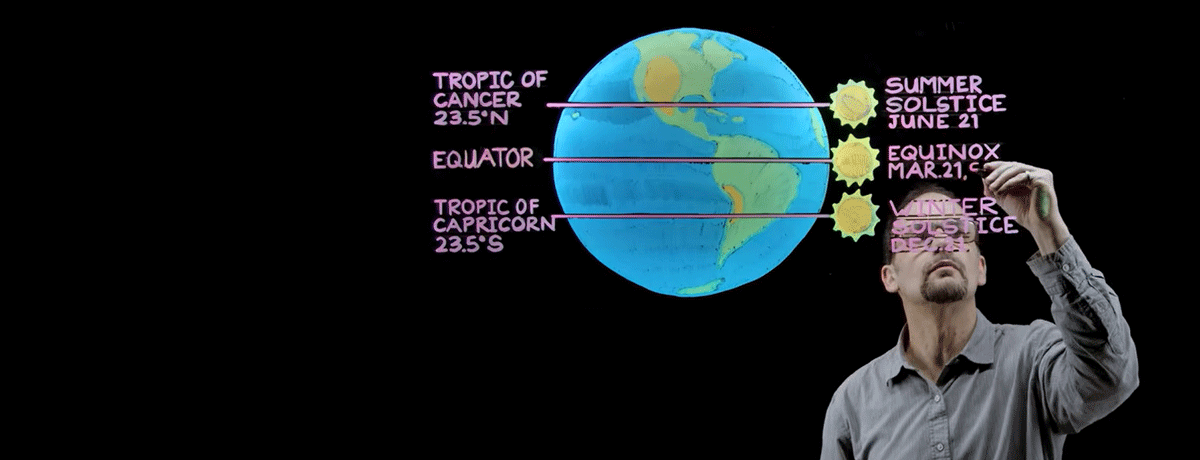
Permaculturist Andrew Millison has a good video introduction to this idea and why it matters. Most of us aren’t designing our own homes, but he suggests ways to maximise the use of the sun even if your home isn’t optimally positioned. Make a cup of coffee and take a few minutes to watch it, and see if you can save some energy and improve the comfort of your home by thinking about the sun.

