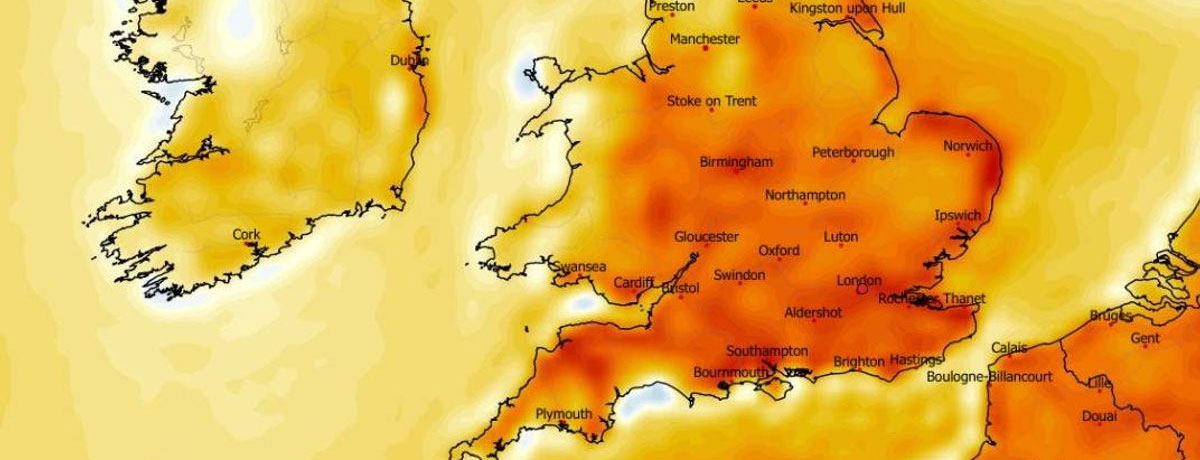
Last week Britain recorded its highest ever May temperature, at 34.8C – and it did so comprehensively. This is a full two degrees warmer than the previous record. That kind of heat would have been almost unheard of not so long ago in mid-summer, let alone the spring.
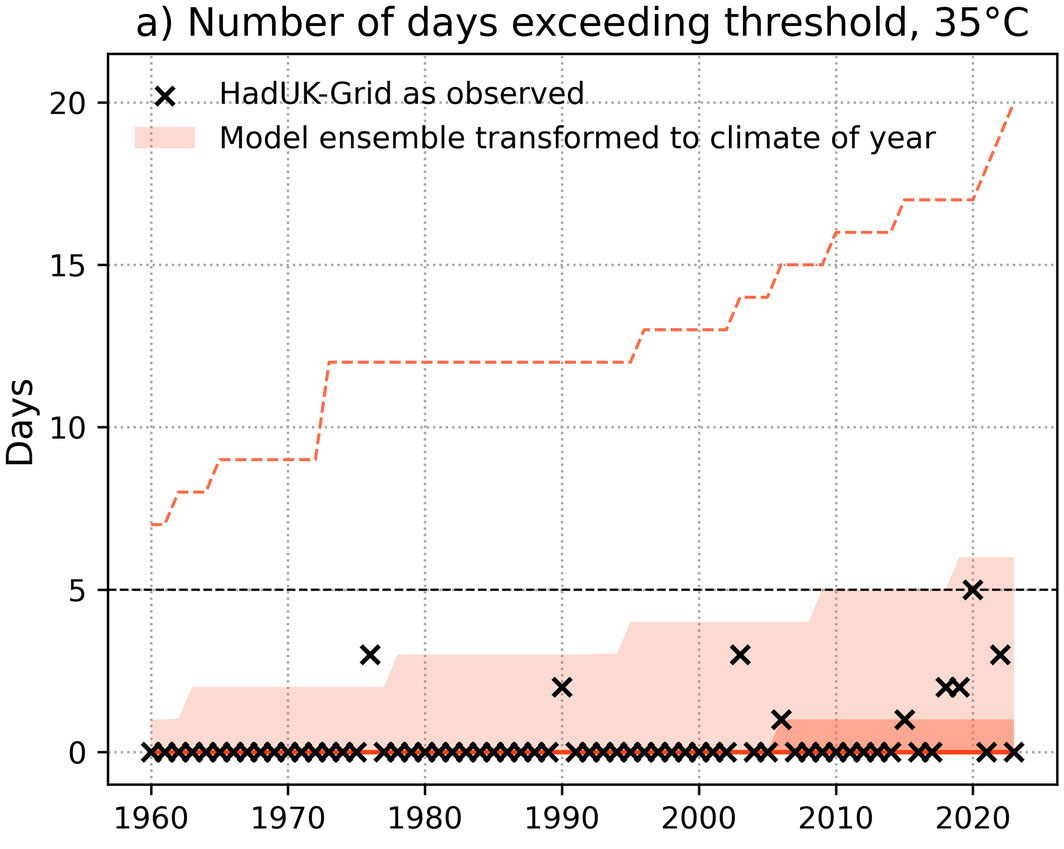
Here’s a graph I’ve been using in presentations recently, showing the number of days of heat over 35 degrees in the UK. That’s the x’s at the bottom. As you can see, between 1960 and 1990 temperatures only reached 35C once, in the famous 1976 heatwave. That’s three days of 35C in thirty years. Looking at the end of that sequence, we see that we now hit 35 degrees at some point most years.
Looking at the lower threshold of 28C, taken from the same 2025 study, we see that in the last century you’d be unlucky to get more than ten days a year over 28C. There are years where that happens, including that outlier of 1976 again, but it’s around one in three. Not any more. In the last ten years, every year is a hot year, with more than ten days over 28C.
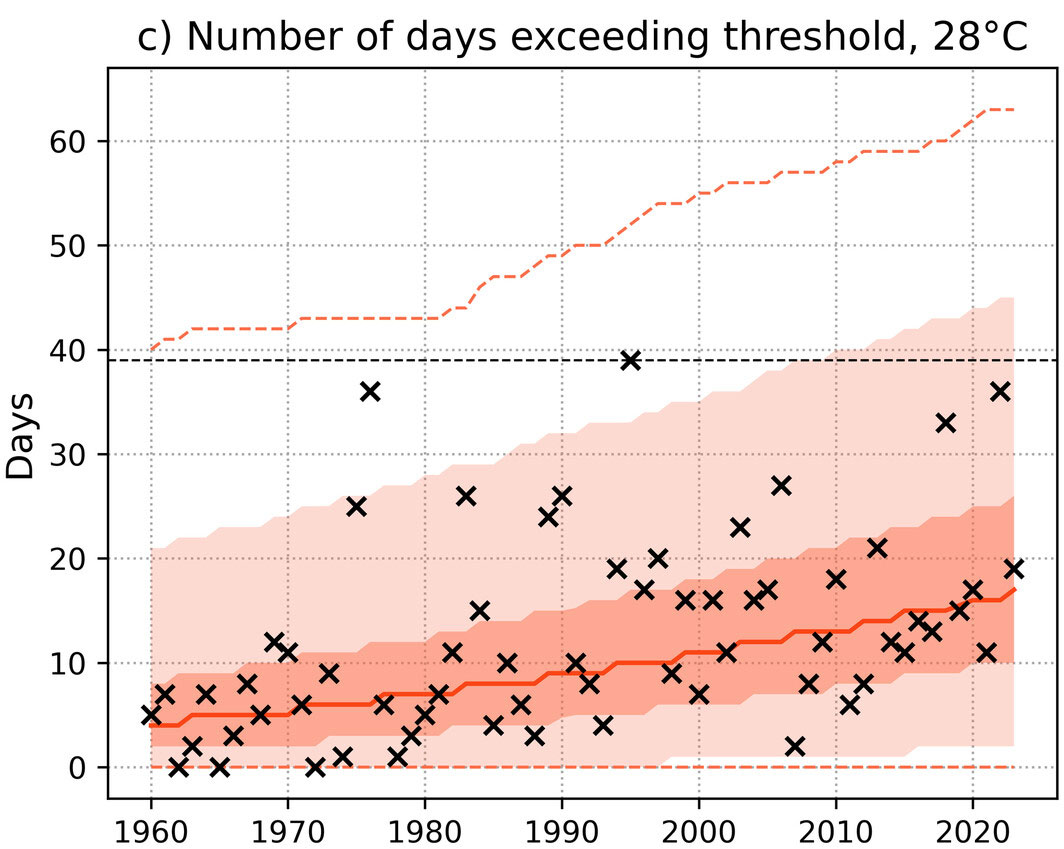
Putting these two together, we can see that all of us in the UK are living with higher top temperatures and a longer warm season. But here’s the thing – most of our infrastructure was built for that lost cooler climate.
Over 10,000 schools were built during that thirty year period where temperatures only hit 35C once. Because that was so exceptional, very few of those buildings can cope with that kind of heat. Some of them are physically unsafe for children and have to close when it gets too hot. At the time of construction, it was recognised that there might be a few warm days in the summer term when the school would get uncomfortable. Because it was likely to be a few days, it was something staff and students could suffer through. It’s very different when the heat goes on for week after week.
When it comes to homes, Britain has a notoriously old and outdated housing stock and this too was built for a previous climate. Around a third of the country’s homes were built before the Second World War, including many Victorian houses. The biggest building boom occurred post-war, with estates and tower blocks built with little thought to summer heat and the need for shade, accounting for another 25% of our homes. Only 8% of Britain’s homes are newer than the year 2000, and most of them haven’t been designed with higher heat in mind either.
The Well Adapted UK Report, released last month, paints a similar picture across other sectors, including hospitals, care homes or courtrooms. There is a growing awareness, especially during heatwaves, that we need to do something about this.
As I work in schools, that’s the bit I’m working on, along with my colleagues at Let’s Go Zero. We advise schools on the various techniques they can use to prevent overheating and adjust to higher temperatures. It’s going to be part of a much larger conversation, and I thought I’d write a bit more about it this summer, while it’s hot and it’s on people’s minds. Consider this an introduction, and we’ll return to the topic of heat and adaptation in future posts.


Hi Jeremy
Thanks for the informative article.
I think the May temperature this year reached 35.4 C, not 38.4.
Best wishes
Jack
Thanks for the correction, I’d copied that the wrong way round and it’s 34.8.