
One of the rewarding aspects of covering sustainability stories over time is watching good ideas creep towards the mainstream. Technologies and approaches that were once filed as alternative move from being theoretical to operational. They spread from pioneers and early adopters to wide scale use.
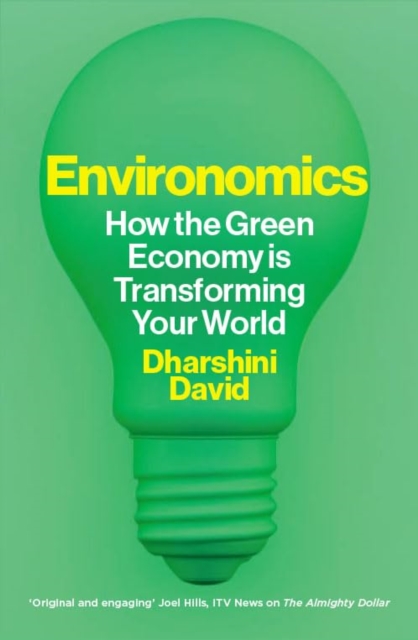
This book demonstrates the transition. Not so long ago the subtitle would be ‘how the green economy could transform the world’ – or ‘will transform the world’ if you were feeling confident. Now it’s definitely in the present, documenting an unfolding reality.
Darshini David, a former economist with HSBC and now deputy economics editor at the BBC, aims to draw our attention to what is already happening. “Governments are acting,” she writes, “technology is advancing, our long-formed habits are changing.”
The books aims to bring the green revolution to life through daily actions and habits, grounding it in our everyday experiences. Each chapter starts a simple action as someone moves through their day, starting with switching on the light and making a morning coffee. Each action is then unpacked through its environmental consequences and the people and businesses that are doing things differently.
There’s a chapter on fashion. The morning commute introduces a section on transport. Later we cover green finance, waste, fishing and the oceans, before wrapping up with brushing our teeth before bed and a chapter on palm oil and deforestation. The tone is positive, the examples are drawn from all over the world, and it’s an engaging read.
I did raise an eyebrow a few times. Saudi Arabia’s NEOM is mentioned uncritically as a sustainable city project, whereas to me it looks like propaganda and the pinnacle of greenwash. A company called Biobean is celebrated for its reuse of coffee grounds as biofuels, but it had already completed the hype cycle and gone bust before the book was published. Things move fast, and events overtook Zipcar too – it’s mentioned as a success story in sustainable travel here, and has since disappeared from British streets.
Nevertheless, there are lots of interesting businesses and stories, some of which you will know about if you follow environmental news, and some that will be new. For those that don’t follow green news closely, it’s a really good guide to the emerging new economy.
That’s what makes this book important. The big challenge today isn’t to develop the ideas and the technologies that can reverse environmental damage. The challenge is to communicate them.
Every day I see articles in the British press decrying ‘net zero zealotry’. Fossil-fuelled politicians continue to insist that green technologies don’t work and are too expensive. Even though the green economy is a clear and present reality, plenty of people aren’t hearing about it, or believe self-interested populist lies about it. In such a context, progress can be snatched away, as we’ve seen with Trump’s deeply futile attempt to prolong America’s coal use.
We need books that make the green economy real for people, and help them to see themselves as part of it. Environomics is a good place to start.
- Environomics is available from Earthbound Books

