There’s a heatwave happening across Europe at the moment, and in my day job with schools there’s one topic that everyone want to talk about: overheating. It’s chronic in British schools, and very common across hospitals and healthcare facilities, as well as ordinary homes. In discussions about this problem, the go-to solution is air conditioning. Our buildings overheat, therefore we need air conditioning.
I have no particular problem with air conditioning where it is really needed, especially if it’s paired with solar. But other solutions are available, and there’s a really obvious one that we have forgotten about in the UK.
Over half term we were in France, and it was hot. Most homes had ways of dealing with this, and I bored the family by pointing out shutters, roller blinds and awnings. Keeping the sun off your windows is entirely normal in France. I’ve seen similar things in the Netherlands and Belgium, which have a similar climate to us, but they are much rarer in the UK.
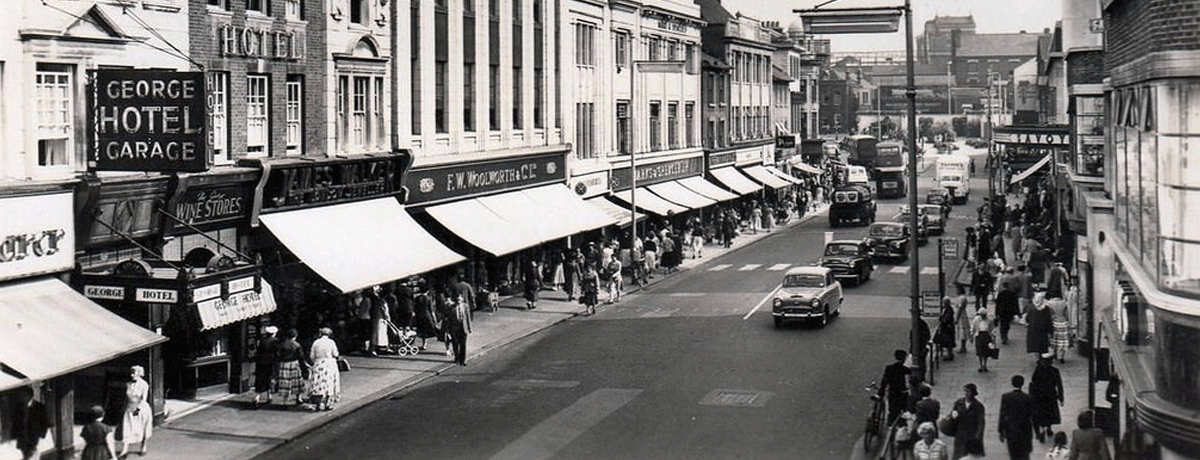
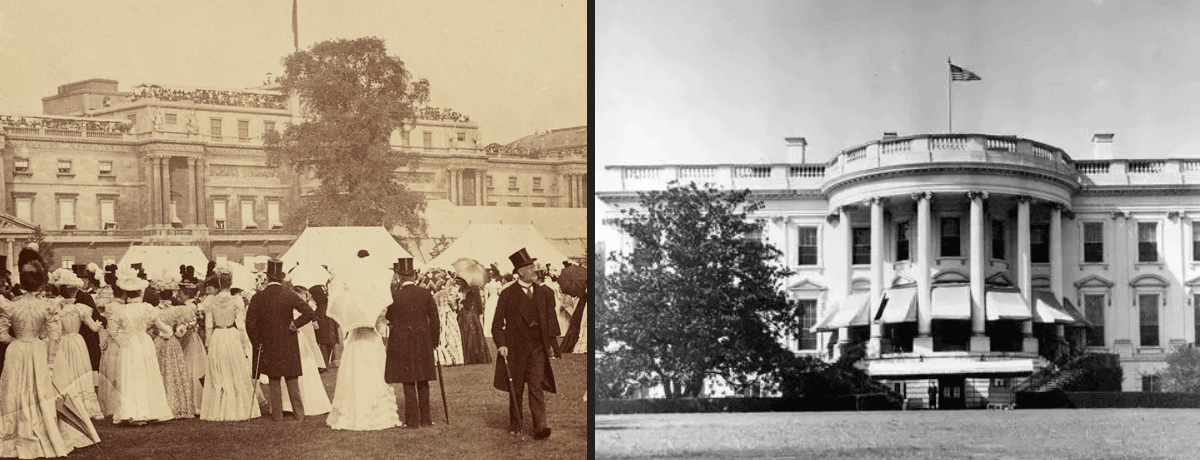
It was not always like this. Historic photos of city streets often feature awnings on the buildings. At the top of the post is a picture of Luton’s high street in the 1950s, with awnings outside all the shops. Not a single one of these remains. Shades were widely used on upper windows and on homes as well. Below is a picture taken in the garden of Buckingham Palace in 1897, with external window blinds pulled down on the lower floors. For American readers, check out the nifty awnings that used to be on the White House.
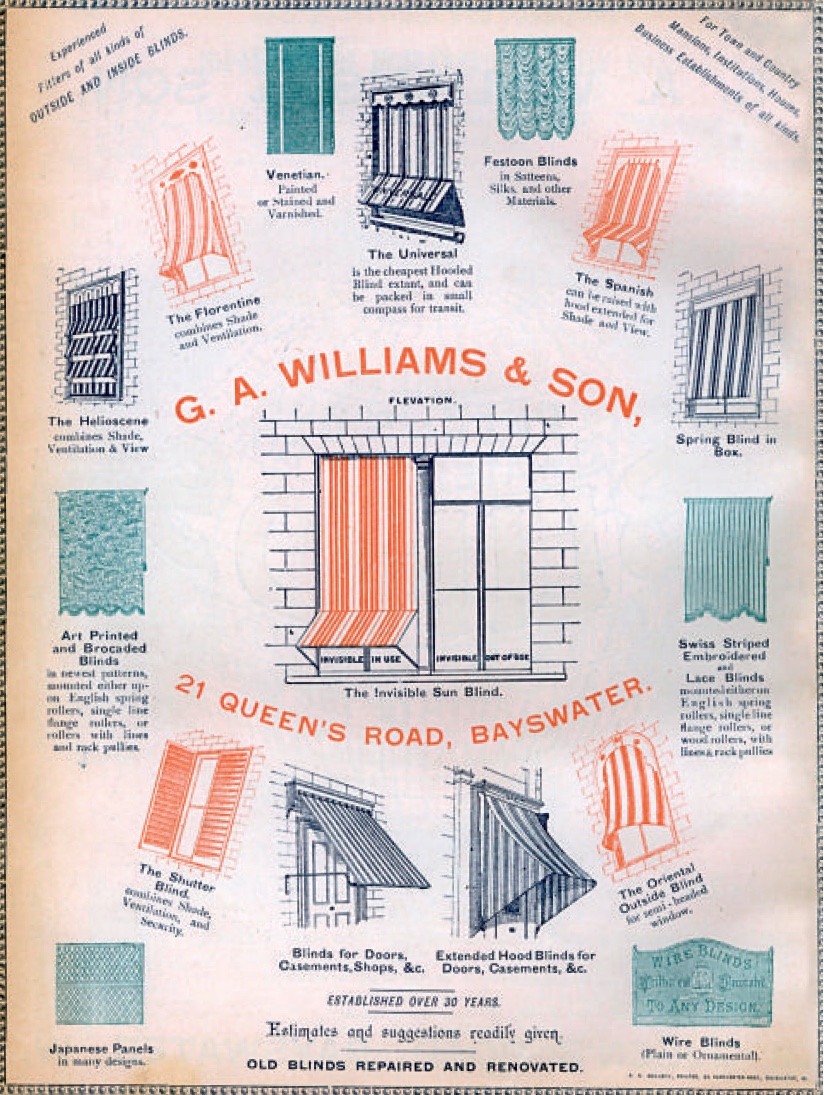
Awnings and blinds were particularly popular in the Victorian era, and adverts from the time offer a broad range of styles. They were a common feature, and there were catalogues and showrooms to browse.
Where did they go? They apparently fell out of fashion in the 20th century, and I haven’t found an entirely satisfactory explanation yet. I’ve read that it’s because of air conditioning, but that’s an American answer for the similar disappearance of their own awnings and blinds.
AC isn’t common in homes in the UK, and so it can’t explain the absence of blinds on domestic buildings, though it might be true of offices and shops. I wonder if it’s more to do with changing design preferences, and a modernist aesthetic that favoured straight lines and avoided decorative elements.
Another factor could be double glazing, which offers some protection against heat as well as cold. Awnings also protect wooden sash windows from the rain, which is less important when windows are mainly made from PVC.
Whatever the reason or combination of reasons, people didn’t just stop building homes with shade structures, they also removed existing ones. Architectural historians working for Historic England point out that the fittings for awnings and canopies and rain hoods can often be seen on heritage buildings even though the shades themselves have gone.
We used to know how to stop our homes from overheating, by keeping direct sun off the glass. Then we forgot, and have become dependent on machines to remove the heat from the buildings when we could have prevented it from entering in the first place. Before we reach for the more expensive technofix of air conditioning, maybe it’s time we rediscovered window shades.
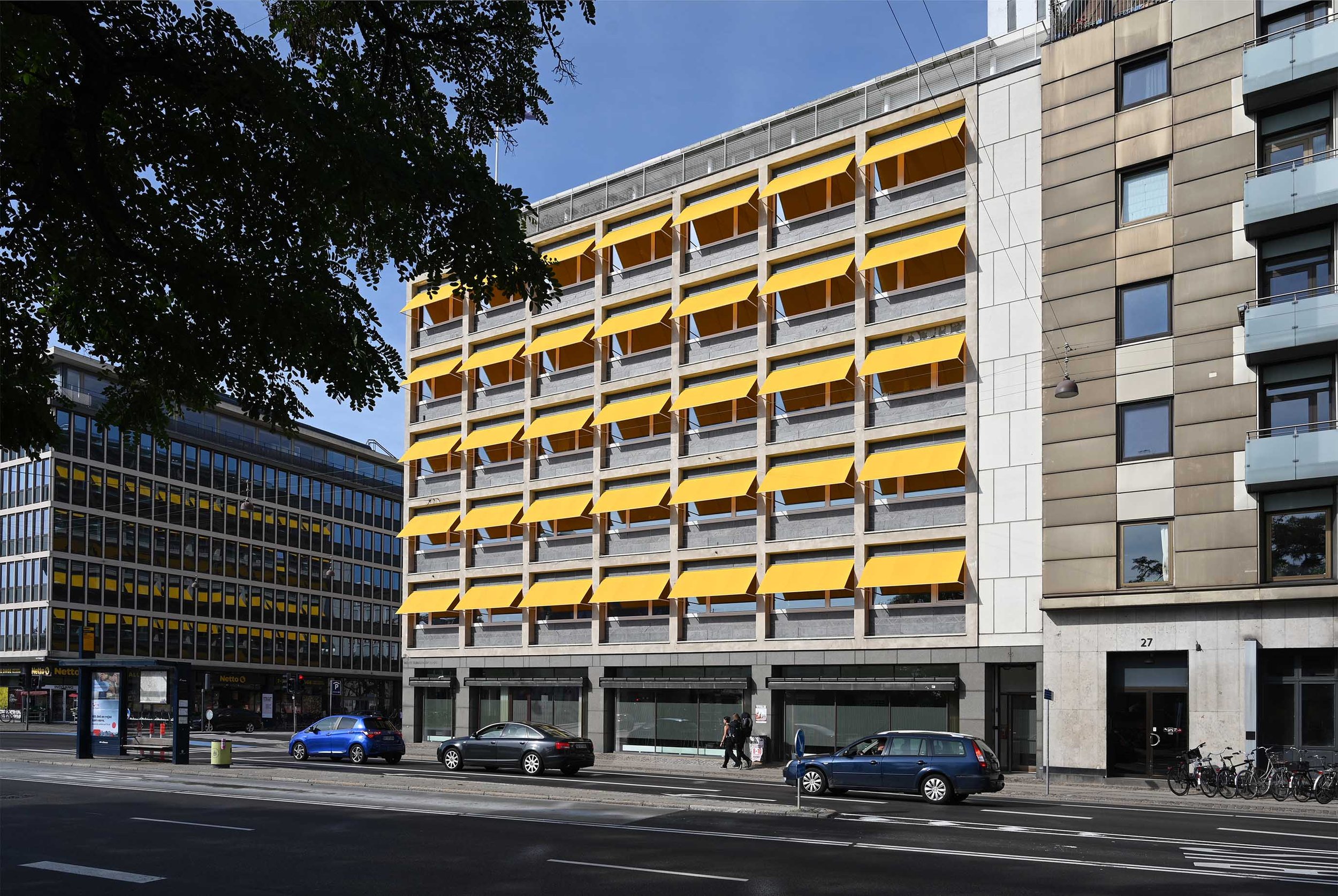
For a nice example, see the Shellhusen building in Copenhagen. It was designed with shade canopies in 1951. They went out of fashion and were removed, and then they were restored in 2022 and look fantastic. More of this sort of thing, yes?
 The Earthbound Report
Hi Jeremy. Your piece about window shades reminded me of my after-school and Saturday job helping at a “gentleman’s outfitters” in Knighton on the Welsh border. One of my first jobs of the day was to take a long pole and use it to extend the blinds from above the two big shop windows. They were self-supporting, but other shops in the street had older versions which were held up by vertical poles resting on the pavement.
They shaded the windows, prevented the expensive suits in the window display from fading and helped to cool down the shop. At the end of the day they were pushed back in again.
Incidentally the shop owners were always insistent that I re-used sheets of brown paper and string with which to wrap up the expensive suits etc. No plastic bags with fancy logos in those days….
Jack