In writing about sustainability for two decades, I’ve read a few national climate declarations. Remember Sweden’s bid to be the first fossil-fuel free country by 2020? Neither do the Swedes, and 2020 came and went with the target long abandoned. Same with New Zealand’s ambition to be carbon neutral by 2025, which was announced in 2009 and has not survived the intervening electoral cycles. Others have been more successful, with the list of countries that have actually reached net zero now standing at four.
Given this kind of track record, all big announcements on climate should be taken with a pinch of salt. But perhaps that’s a smaller pinch than it used to be. Last week Germany published a roadmap for phasing out fossil fuels by 2045. Some parts of that will be easier than others. Electricity generation has already made good progress. The trickier bit is the 36% of final energy consumption that is oil, and the 24% gas. Together that’s 60% of the country’s energy transition still to go, and it’s likely that the easiest stuff happened first. So it is realistic?
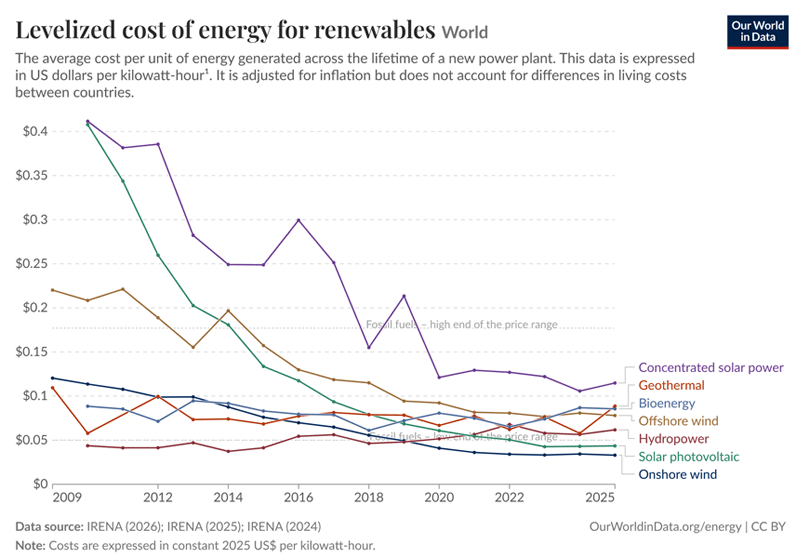
One reason for optimism is that the technologies to deliver lower emissions have fallen in price and improved in reliability. Saying you were going to phase out fossil fuels today is a whole lot more feasilble today than it was 15 years ago. Those early runners in 2008 and 2009 were betting on technologies that weren’t yet mature. It was a statement of hopeful intent more than a strategy. At that time the list of unanswered questions was much longer, with no good solutions for energy storage, and electric cars still an expensive sideshow.
Today the price of solar power and onshore wind have fallen so far that they are cheaper than fossil fuels. They’ve moved from alternative energy to the default choice, provided the grid can integrate them fast enough.
Other technologies are being adopted faster too. 2025 was the first year that saw more heat pumps installed in homes in Germany than gas boilers, marking a tipping point towards electric heat. That moment will come for electric cars too, currently running at around a third of new car sales.
Demand has shot up this year as people worry about the price of fuel, which brings us to this graph from the roadmap and another compelling reason for taking the target seriously.
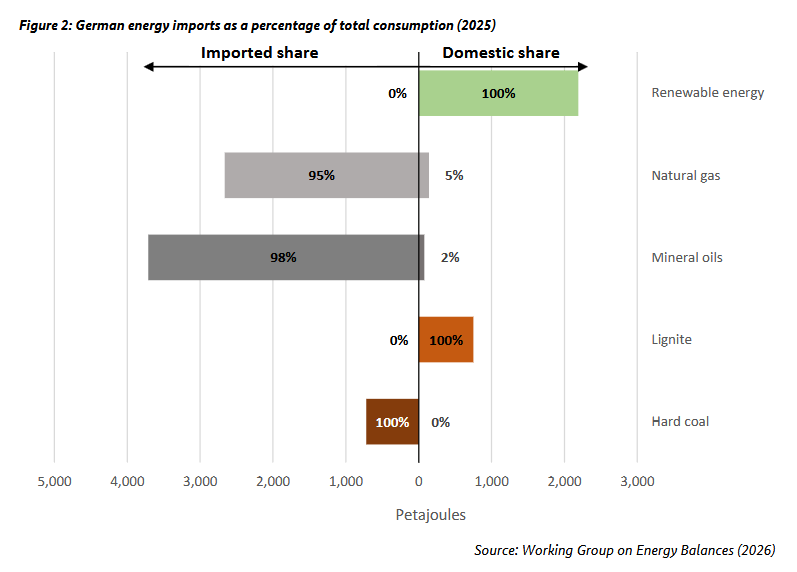
Looking at fossil fuel imports, 95% of gas is imported, and 98% of oil. Renewable energy, on the other hand, is 100% German.
That’s a major dependency, and a clear motivation for the government. Now that other options are possible, the shift to clean energy isn’t just the right thing to do for the environment. It isn’t just a climate change policy. It’s an energy security measure. It always was, but that fact is now highlighted and underlined.
“It is not just extreme weather events around the world that demonstrate how urgently we need to do more to protect the climate,” Environment Minister Carsten Schneider said recently. “If the situation in the Strait of Hormuz determines whether people can still afford their commute to work, that is not a good state of affairs.”
This is another example of how the Trump’s wrecking ball to global climate action has swung and missed. The US may have been set back, but the chaos caused by his war in Iran has spurred everyone else to get off fossil fuels as fast as they can. All imported energy is vulnerable to disruption, and with Trump in charge, your supposed allies are just as likely to wreck your economy as your enemies.
Moving your economy off fossil fuels isn’t a bold and visionary thing to do any more. It’s the obvious thing to do, and more and more countries will do it.

