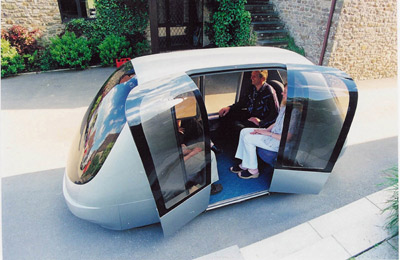
This week the California government signed a bill that legalises self-driving cars on public roads. The bill was signed at Google’s headquarters, as it has been the internet giant that has pioneered computer-controlled cars in the state.
A cynical observer might dismiss this as a kind of science-fiction overreach typical of Google – Larry Page backed an asteroid mining venture this summer, let’s not forget. Those cynics would be wrong however, because Google has competition. Chinese engineers let loose a Hongqi HQ3 car into traffic last year, and it navigated itself to a destination 286km away. It handled fog and a thunderstorm with no complictions, and overtook 67 cars along the way, guided by cameras and sensors. Meanwhile in Spain, Volvo has been testing self-driving cars traveling in convoy. If Volvo are doing it, it must be a sensible proposition, right?
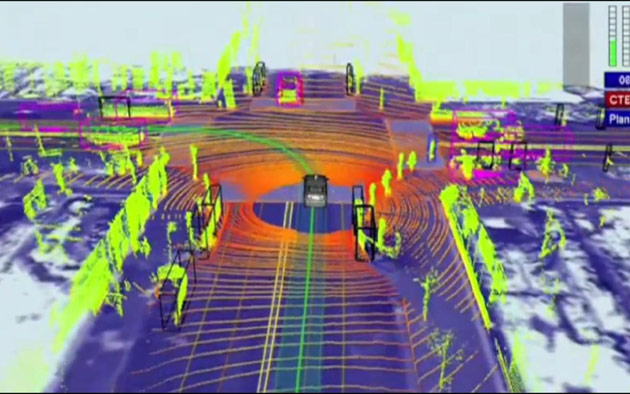 The theory behind the idea is pretty simple – computers are safer drivers than human beings. They can react quicker, they can look in all directions at once and they don’t get distracted. They won’t speed or cut people up, get angry or spill coffee over themselves. We’ve had cruise control and assisted parking for a while now, so this is just the next logical step. And like those innovations, there’s still a licensed driver behind the wheel. We’re talking self-driving cars, not unmanned road vehicles. You won’t be able to call your car to come and pick you up. Not yet anyway.
Roads would probably be safer if computers drove, and that is good news for the global road accident casualty count. The other great benefit is to drivers, who would be able to use their phones, read a book, or check their emails behind the wheel. You could leave the house half an hour later in the morning, and have breakfast, a shave, and read the paper on the way to work.
There may also be environmental benefits, because a computer drives at a more consistent speed. If you can get cars into convoy, they can travel fast together in each other’s slipstream, saving fuel. The EU funded SARTRE Project (that’s SAfe Road TRains for the Environment) reckons there would be a 20% saving on CO2 emissions if cars traveled this way. If all the other cars around you were computer-controlled, they would be able to drive much closer together and talk to one another, reducing traffic – in theory at least – and idling cars are a major source of pollution and wasted fuel, as well as CO2.
So that’s all great, but we shouldn’t kid ourselves that this will make car travel a sustainable option. As long as cars are powered by fossil fuels, they’re a menace to the climate as well as being hostage to a declining resource base. Being 20% less vulnerable to rising oil prices isn’t nothing, but it’s not a long term solution either. You could make self-driving electric cars, but they’ll only be as green as their electricity supply.
 Long term, cars could be redesigned to be radically lighter, saving on materials and embedded emissions. Internal combustion engines need a massive weight of steel, since you’re basically creating forward motion by chaining together explosions in a confined space. The engine is heavy, you need a hefty great chassis too. Electric motors can be much lighter and smaller, but still need the big chassis to accommodate the batteries. Give it a few generations of battery technology and we might be nearer a solution, but it won’t be easy. Would you want to be riding along in a lightweight carbon fibre vehicle if the cars coming the other way were ten times heavier and made of steel?
We’re a long way from sustainable automobiles, and the problems of car culture don’t begin and end with the environment. There are plenty of other reasons why car travel is a bad idea – the loss of community and the death of high streets, for example, or the sheer loss of time as our lives become increasingly hypermobile. A quarter of British adults are obese, while 50% of car journeys are less than 2 miles. There’s the urban land use question, and more to the point, there are much simpler solutions to the problem. If you want to read or watch a movie while traveling, you can ride the bus or the train.
Should we embrace or reject the idea of self-driving cars then? I think we should welcome it, because nothing should be off the table in our efforts to decarbonise our way of life. But we shouldn’t fall for greenwash, or pin our hopes on theoretical technologies when there are proven solutions all around us that have multiple benefits for society – better urban planning, quality public transport, cycle networks, railways and walkable neighbourhoods are all priorities with or without space age automotive breakthroughs.
Asking if self-driving cars can make car travel safer, more efficient and more enjoyable for drivers is an entirely legitimate question. But in my opinion, it is a far more important and more interesting question to ask if we need cars at all.
 The Earthbound Report
Jeremy you been reading our book…? There is another issue we raise where is the electricity to come from. To replace all currant car travel with electricity is a lot of extra generating capacity. Its not impossible but as you say there are other reasons to reduce our car use.
I am not convinced about this automatic driving business. The “driverless” Docklands Light Railway trains often seem to end up with the conductor at the controls.
Personal powered transport is unsustainable and makes people fat.
I’ve noticed that about the DLR, the driver having to sit somewhat awkwardly among the passengers. I think we’re a very, very long way from true driverless cars, but I can see how a more sophisticated form of cruise control would work. You would get on the highway and switch it on, and it would track the other cars in front and stay in lane.
And yes, ultimately the problem is with personal powered transport itself, not just petrol cars.