
A few years ago nobody had heard the term ‘net zero’, even in climate change circles. It wasn’t part of the lexicon. Then, for better or worse, it became the framing of choice for national climate targets. Since 2019 there has been a steady run of countries, regions and companies setting themselves net zero targets.
The last time I wrote about it, it was to point out the snowball effect that can take hold with an idea. The more net zero targets there are, the easier it becomes for politicians to join them. Net zero has come to dominate our global response to climate change.
There are strengths and weaknesses to the net zero framing. On the one hand, it’s honest about the fact that true zero is difficult and for some regions will be impossible. It better reflects the processes of nature, which seek balance rather than absolutes. And it accounts for a broader set of solutions, incorporating those that increase nature’s capacity to absorb emissions as well as our own efforts to reduce them.
On the other hand, it’s far too vague. It’s easy to fall back on offsets or carbon removals, and take little or no responsibility for reducing emissions. The fact that fossil fuel companies such as Shell and BP have set themselves net zero targets, without any plans to reduce oil and gas production, shows how flimsy the concept is.
Since there are useful and not so useful elements to net zero, I think the best approach is to focus on doing it well. That’s where the Net Zero Stocktake report is useful. Now in its third year, it focuses on “net zero target intent and integrity”. Who is setting what targets? Are they looking at the full scope of their emissions? How reliant are they on offsets?
One headline finding in the report is how established net zero targets are today. By the end of 2020 only a handful of countries had embedded a target in law, or even in policy. It was all in discussion. Three years later 75% of global emissions are covered by national targets. That includes 89% of the world’s population and 92% of GDP.
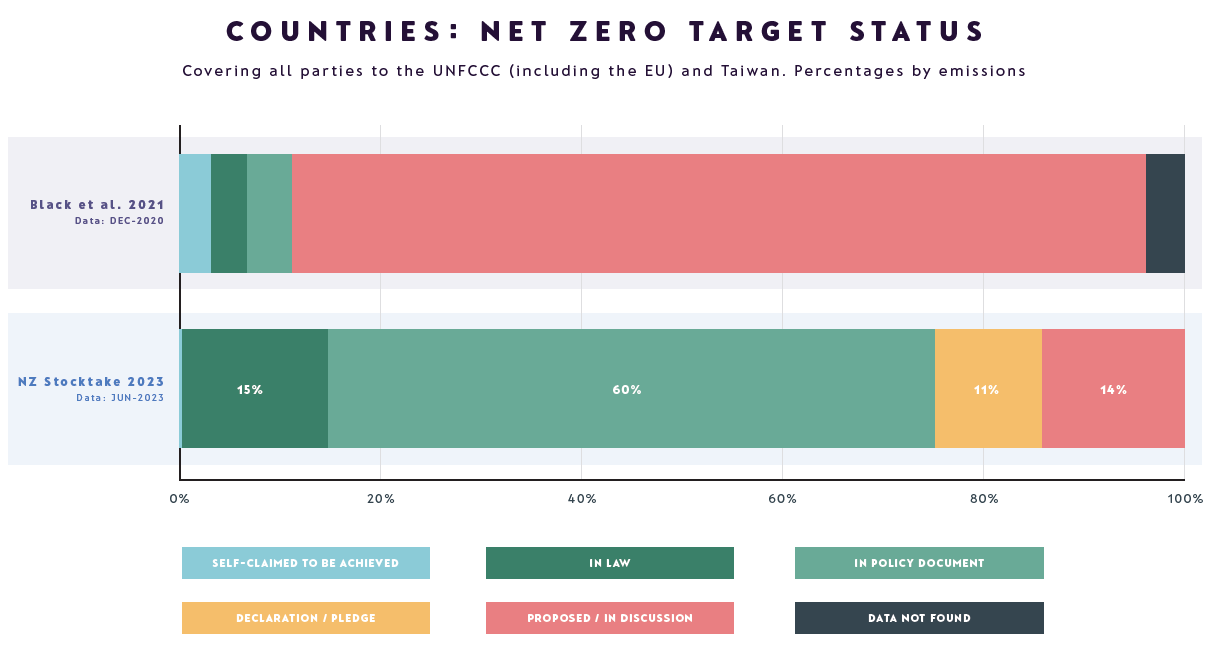
Another thing the report mentions is that target-setting has kind of plateaued at the national level, which is hardly surprising given that there are only so many countries in the world. Things are different in the corporate sector, with the number of companies declaring net zero targets doubling in the last year.
This is all very well, but as the report points out, we are now entering ‘phase 3’ of the net zero story. Phase 1 was establishing the scientific and political legitimacy of the term. Phase 2 was the rush to join that aforementioned snowball. Now comes phase 3, which is when it’s time to deliver and actually start bending the curve on emissions. That’s what really matters, and it will be another couple of years before we know if the whole net zero project has been in any way effective.
 The Earthbound Report