
I’m in my co-working space today in Luton town centre. I have a lovely bright room to write in on the first floor of an old hat workshop. The hat workers needed lots of natural light to see what they were doing, so the room has windows on three sides. I can see 86 individual panes of glass from where I’m sitting and that makes it as good a place as any to write about the material.
It’s not hard to see why glass would be an energy intensive material. It starts with the mining of sand, which is then crushed and scrubbed of impurities. The resulting silica sand is dried and distributed to glass manufacturers, and that’s where the vast energy needs come in.
To make silica sand into glass, it has to be melted. That takes furnace heat of 1,600C.
If you’re making plate glass, the molten mixture is poured onto a lake of liquid tin. The glass will float on the surface, gradually cooling until it can be cut to size. There are the enormous energy requirements for both melting the silica, and for maintaining a lake of molten tin. A lot of fossil fuels are burned along the way.
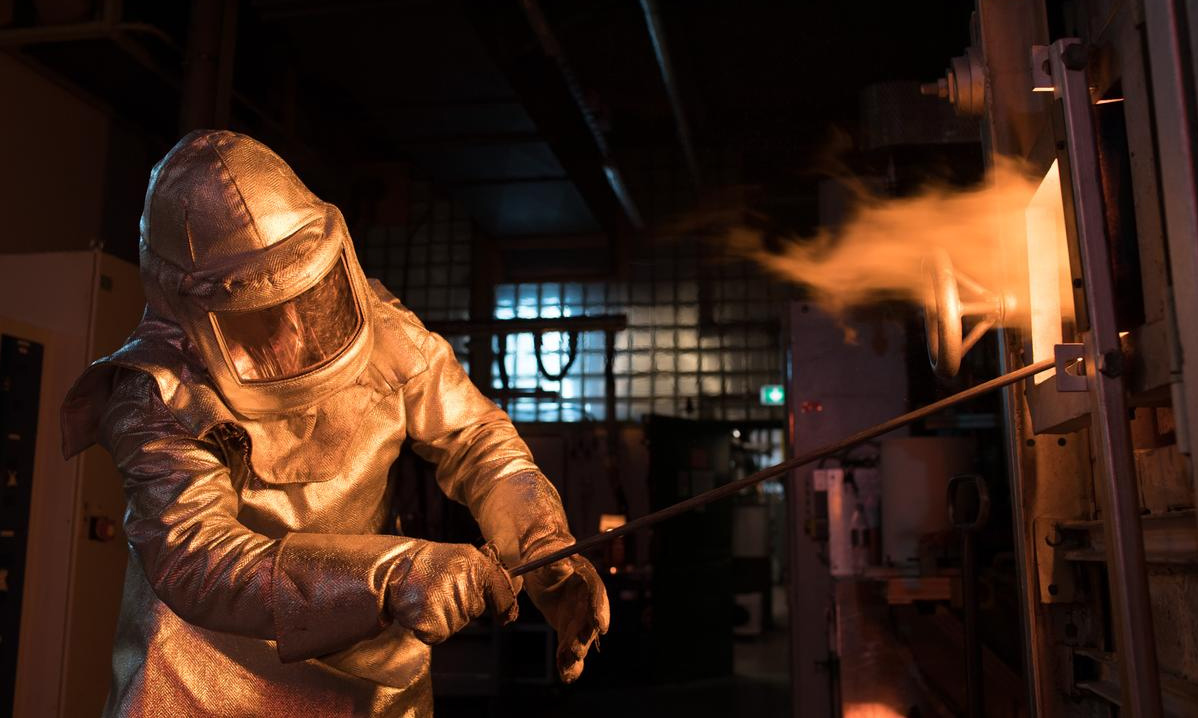
Because it takes so much energy to get it up and running, you never switch off a glass production line. It will stay at the correct temperature and operate continuously for a decade at a time, pouring forth a continuous line of glass. That’s an added challenge for decarbonising the process.
Glass is one of those sectors that’s hard to decarbonise, like steel, plastics or cement. That doesn’t mean it can’t be done, and with governments committing to net zero targets, glass manufacturers have had to follow suit. This has led to some interesting breakthroughs recently.
There are several things that glassmakers can do to make their process more efficient. One is to use heat recovery systems. The whole process relies on heating something to extremes and then cooling it, so it makes sense to capture that heat and reuse it. It can be reused either to pre-heat the materials on the way to the furnace, or you can use the waste heat to generate electricity.
Another way to lower the carbon footprint of glass is to use recycled glass in the mix. This saves the emissions from the mining side, while also reducing waste. It also melts at a lower temperature to silica sand, so it saves on furnace energy too. It’s not simple – different kinds of glass need different mixes, and you can’t make window glass from recycling. And of course not every country has glass recycling systems in place. Glass recycling is common in the UK, but even in high income countries it hasn’t always had enough investment. That’s something to fix, as the industry is relying on recycling to cut emissions on the way to net zero. And since glass is 100% recyclable and can be reused endlessly, why wouldn’t you?
Then there’s the energy for the furnace and the lake of tin. Usually the heat is produced by burning gas, but there are greener alternatives. The obvious choice is to electrify the process, which is already fairly common for many kinds of glass – just not the big float glass lines quite yet. Some propose hybrid gas/electric systems or biofuels as an interim measure, and in the long term hydrogen could be a good solution.
There is progress on all of these ideas. Over the summer the drinks company Diageo announced the first zero-carbon glass bottles. They will be made in a plant in the North of England that will be powered by hydrogen and renewable energy. Production will begin in 2027 and when running at full capacity it will make 200 million zero-carbon bottles every year. Diageo will use these bottles for its Smirnoff, Captain Morgan and Tanqueray brands.
Pilkington, who invented the float glass method in the first place, have been experimenting at their facility in St Helens. Their advanced and versatile glass line can run on various fuels. Last year they were the first glass company in the world to run their furnace on 100% biofuels – a trial that lasted four days. They also ran it on hydrogen for three weeks. These were experiments to test the theory, but it’s hard to switch completely without well established supply chains. The hydrogen experiment saw 60 tankers delivering hydrogen to the factory, which of course can’t be switched off. While they work on it, their most sustainable range – which they claim is the greenest on the market – has 50% of the usual emissions.
Over in France, Saint-Gobain produced the first certified zero carbon glass last year, using 100% recycled glass and 100% clean energy and biogas. Like Pilkington, this was a demonstration project and ran for one week.
More permanent change is on the horizon in Germany, where Schott is building a commercial scale pilot plant for making pharmaceutical glass. The plant will feature a new low carbon melting tank, tackling the most energy intensive part of the process. It is due to open in three years time, and should reduce emissions by 80%.
This is all hopeful, though as is often the case, China is by some distance the world’s biggest glass manufacturer. I can’t find any information about sustainability in the Chinese glass sector. That doesn’t mean nothing is happening. It means it’s not in English and is beyond my internet search skills. We do know that China is investing in hydrogen for industry, so there may be news on that front before too long as the net zero by 2060 target filters through.
What we can say at this point is that zero carbon glass is possible. It’s coming. It will really hit stride when China steps up. And remember to recycle your glass.

