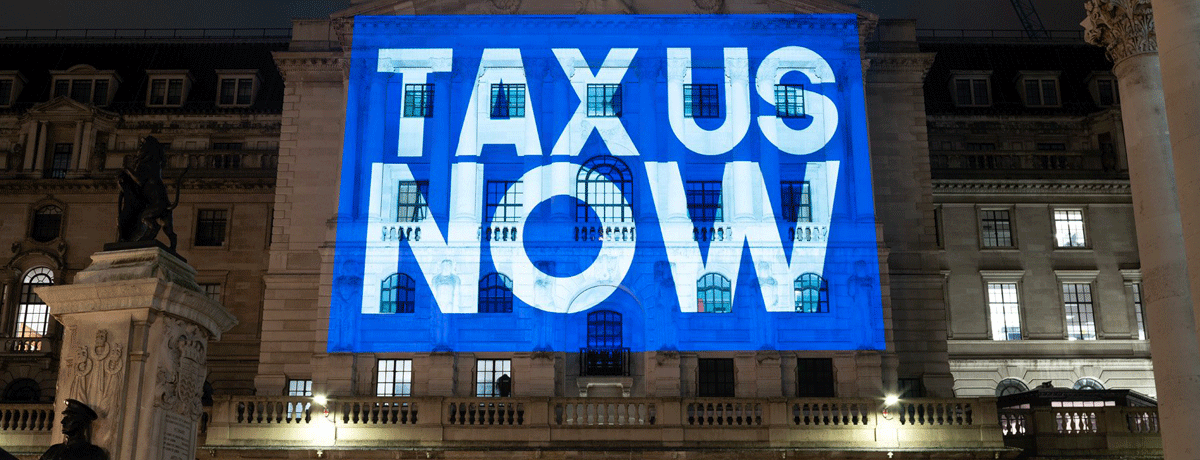
Yesterday I reviewed Ingrid Robeyns’ excellent new book Limitarianism, which proposes a cap to wealth accumulation and a world in which nobody ever gets to become a billionaire. One of her arguments is that this would be better for everyone, rich and poor alike, and she talks to plenty of rich people who make that argument themselves.
There are personal stories, such as Chuck Collins, an author and researcher on wealth and inequality who gave away his inheritance. Or Marlene Englehorne, the BASF heiress who campaigns for inheritance and wealth taxation. Abigail Disney (yes that Disney) made the documentary The American Dream and Other Fairytales, using her own family story to investigate inequality and disproportionate rewards.
There are also organisations. Millionaires for Humanity is a network of very rich people who want to “go beyond philanthropy and work for systemic change.” Tax Me Now is a German alliance of wealthy people who advocate for wealth taxation. Resource Generation is a network of wealthy young people demanding that “wealth inequality stops with our generation.”
The Good Ancestor Movement is an organisation that supports rich people who aren’t waiting for government, and want to do a bit of radical redistribution of their own. Their advisors help people to think through their values and steward their wealth for the public good.
Another organisation is Patriotic Millionaires, who campaign for higher taxes on themselves in the US and beyond. They have partnered with Oxfam to create the Proud to Pay More campaign, which presents an annual letter to the Davos gathering.
“Our drive for fairer taxes is not radical, they say in the 2024 letter. “Rather, it is a demand for a return to normality based on a sober assessment of current economic conditions… Our request is simple: we ask you to tax us, the very richest in society. This will not fundamentally alter our standard of living, nor deprive our children, nor harm our nations’ economic growth. But it will turn extreme and unproductive private wealth into an investment for our common democratic future.”
There are some good reasons to highlight these organisations and their work. Often when ordinary people start talking about taxing the wealthy, someone will accuse them of indulging in ‘the politics of envy’. I’m sure that is occasionally the case, but if the rich recognise the need for greater equality too, we can stick that lazy response straight in the bin. Besides, as Robeyns points out in her book, anyone concerned about envy should support greater equality. There’d be a lot less envy in a more equal world.
Secondly, it’s important to recognise that the issues are systemic and not personal. It is the structures of capitalism that allow people to accumulate vast fortunes. There are alliances of philanthropists too, but these are groups that recognise that we need deeper change to the system. It’s not enough to use your wealth for good. The economy ought to be restructured to distribute wealth better, and even society’s winners know that.
And finally, I think it’s helpful to remember that not all rich people are the same, and we should avoid caricatures and generalisations about what ‘they’ want. Creating a fairer society will need everyone, and many progressive wealthy people are read to play their part.
 The Earthbound Report
Paying more than they owe would be a way to help and probably the best use of their money, better than most charities. They don’t have to wait until they are forced by law to pay more.