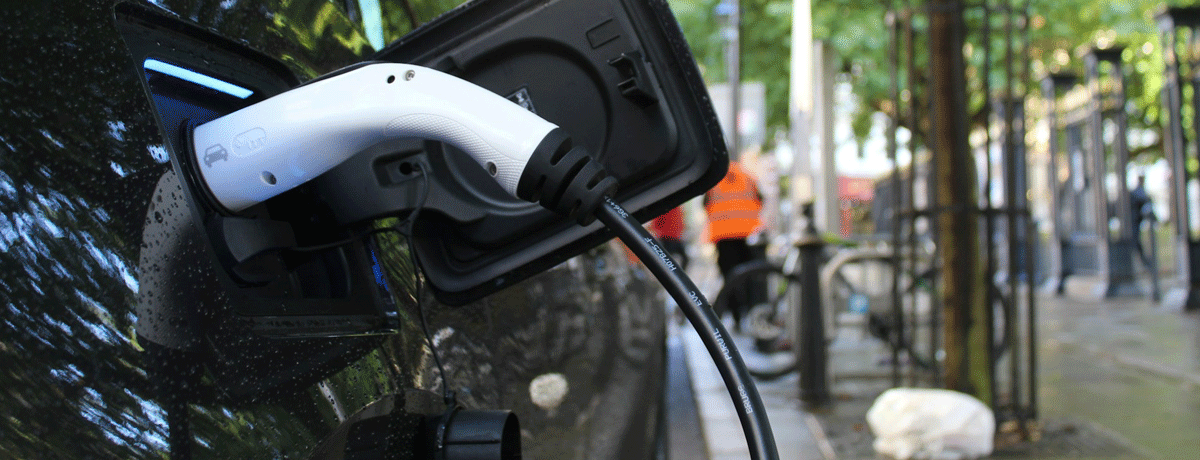
Sales of electric cars in the UK have so far focused on the luxury end of the market, with fewer options for affordable smaller cars. That’s meant that high income middle-class families have been able to benefit from electric cars sooner than those who might need them most. The savings from smaller electric cars would be much more meaningful for those on lower incomes, and so far that demographic hasn’t been well served by the car companies.
The charity Possible make this point with their recent campaign Clean Cars for Carers. Carers are not well paid, and spend a lot of money on fuel every month as they make house calls and travel between patients. Their employer’s allowances for mileage often don’t compensate them adequately, with the price of fuel having a serious effect on their work and wellbeing. Research shows that an efficient electric car, when charged at home on a suitable tariff, could save carers a thousand pounds a year. That’s a clean technology that would put money in the pockets of poorly paid but vitally important professionals.
There’s also a canny carbon reduction here. There are 900,000 care workers in the UK, all making multiple journeys every day. Together this adds up to a somewhat stunning 4 million miles every single day, or 1.5 billion driver miles every year. Carers in rural areas travel furthest, with research finding many drive a thousand miles a month, putting them in the top 5-10% of road users. As Possible say in their report, “the steepest, fastest reductions can be made by helping the highest mileage drivers switch to electric cars.”
However nice the opportunity might be, carers can’t afford electric cars, and so Possible are arguing for a social leasing scheme that makes them available. They’ve developed the model through research and focus groups, surveys and travel logs, and the campaign is supported by The Care Workers Charity. If you think it’s a good idea too, there’s a petition you can sign.
There are a few things I like about this campaign. First, it’s climate action that serves those on lower incomes first, which means it addresses inequality and in-work poverty at the same time as reducing emissions. It’s also honest about the fact that some people need cars, and that those in rural areas depend on them more. And it argues, with all the research data to back it up, that electric cars are cheaper for ordinary people – contrary to the prevailing wisdom that they are unaffordable.
So, good work once again from Possible, and more climate campaigns like this please.
 The Earthbound Report
Which, let’s be fair, is one of the various niches in which I feel cars (electric or otherwise) are actually worth keeping around long term. I think the thing with the high end electric cars coming into fashion is that it might have made electric cars suddenly no longer a laughingstock for the bourgeoisie, and a rallying point for the tech bro crowd, which might be positive, but these are not the sort of people whose owning and driving of cars is necessarily a net positive for society. It should go without saying that carers (who deserve all they can get) are the opposite.
Yes, let’s have cars for those who for whom travel is essential and walking, cycling, public transport etc. is not a viable option. But of course let no-one be under any illusion that we can rely on them en masse as we do gasoline powered cars, to solve the problems the latter create.
(I probably shouldn’t prescribe who actually needs cars and who doesn’t, including wealthy businessmen etc. – after all they might! – the point ultimately being cars should be owned and driven based on necessity rather than luxury or ‘that’s just how people get around’.)