Last week I was reading the Wildlife Trust’s plans to bring beavers back to England. It’s a scheme that has been described as controversial or even irresponsible – usually by anglers, admittedly. But it’s only putting back something that should have been there all along. Beavers have been absent from England since the late medieval era, and would bring plenty of benefits to our waterways.
It’s easy to forget just how nature-depleted Britain is, and England in particular. The idea of a ‘green and pleasant land’ is culturally embedded and perhaps blinds us to the scarcity around us. We pride ourselves on being a nation of nature lovers, and we’re better at seeing deforestation and biodiversity loss in other places than at home.
From a global perspective, we are in fact in a parlous state. Take the Biodiversity Intactness Index, compiled by the Natural History Museum. The index calculates the percentage of original species in each region, and how abundant they are. In the map below, the blackest areas are largely untouched. The brighter the colour, the less biodiversity remains as humans reorder the landscape. (There isn’t data for every country on earth, hence the new Sea of Sudan in the heart of Africa.)

In this index, the UK scores in the bottom 10%. England comes in at number 233 out of 240 countries in the ranking. Scotland, Wales and Northern Ireland only fare marginally better. Other biodiversity measures are available, but there’s no question that there’s a long recovery ahead if we are to regain that lost ground.
The recent change in government has opened some new possibilities, though nature restoration plays second fiddle to energy security in Labour’s list of five ‘missions’. There are new forests planned, and tree planting. Tighter regulations on water companies may begin to reverse river pollution. The Wildlife Trusts offer their own list of five priorities, and there is some overlap.
Missing from government plans is a proper plan for farming, which is one of the leading causes of biodiversity loss. There’s a single paragraph in the Labour manifesto on farming, and it’s quite vague: “We will introduce a land-use framework and make environment land management schemes work for farmers and nature.” We’ll have to wait and see what that actually means.
Another recommendation from the trusts is to restore wildlife in cities and towns. This could bring a variety of intersectional benefits, bringing green space to poorer communities and improving health. There’s no leadership on this from government at the moment, though the most powerful actors will be regional. Funding will be all important, but bringing wildlife back into schools and parks and streets could engage citizens in some exciting new ways.
This is of course an issue where individuals can make a visible difference too, more so than many global environmental conundrums. Even the smallest garden can be managed for wildlife, and you will see the difference in increased bird and insect numbers. If you do this already, look at the next area where you could have an influence – a school or a place of worship. It could be a workplace, or even a grass verge or a roundabout. Look out for local volunteering opportunities.
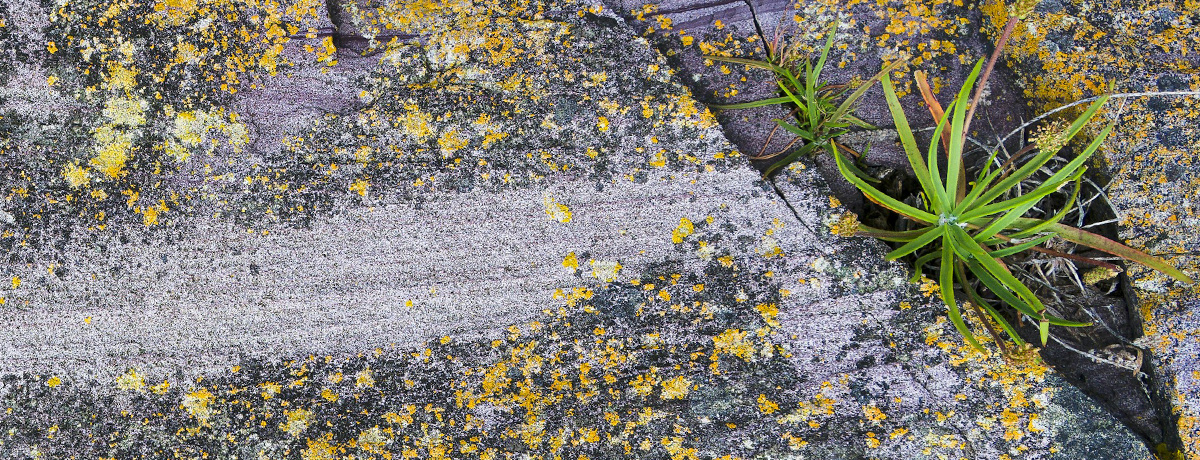
And remember that biodiversity is valuable at every level, which is why I’ve chosen lichen on a rock as the header image here, rather than a red squirrel. The most biodiverse part of my garden is likely to be the woodpile behind the lavender bush, which is full bugs and fungi just below the surface. Let’s take care of the grassroots, call for action from government too, and meet in the middle in a greener and healthier Britain.
 The Earthbound Report
ref your point about “Missing from government plans is a proper plan for farming” – perhaps worth remembering that the current Defra plans (ELMS) at least have potential, even though the devil is in the detail, and many of those are still being worked out. Hopefully the Labour (political) government will build on this, rather than messing it up?