
I didn’t understand sea level rise until I read Jeff Goodell‘s last book, The Water Will Come. I understood the science and the logic of it. What I hadn’t grasped was how it would appear it as happened, how it would bubble up from the drains, how it would be priced into home insurance, or be argued about in city budget meetings. Goodell’s book made it real in the places where it is already being felt, and I found it very useful.
A few years later, here’s a similar exercise and a book title that almost seems to reply to its forerunner. The Heat Will Kill You First investigates the most immediate effect of global warming, how increased heat will affect the planet and the creatures that live upon it.
We’re used to thinking of heat in increments, Goodell suggests – warmer or colder days and the varying degrees of comfort they entail. He argues that we should get used to thinking of it as a force. Heat is a force that acts upon things and transforms them.
Across its chapters, the book explores these transformations. An early chapter follows up on the bluntness of the title and looks at heat deaths, at the biology and the risk. Climate change makes heatwaves more likely, and these are dangerous because people don’t necessarily know how to stay safe. There are parts of the world where sustained heat is normal and people know how to live with it. Homes and cities are built with heat in mind. That isn’t the case everywhere. Heatwaves hit like natural disasters, and as I’ve written about before, they are not considered as such by the general public. Goodell suggests they should be named, like we do with storms, in order to identify them as the threats that they are.
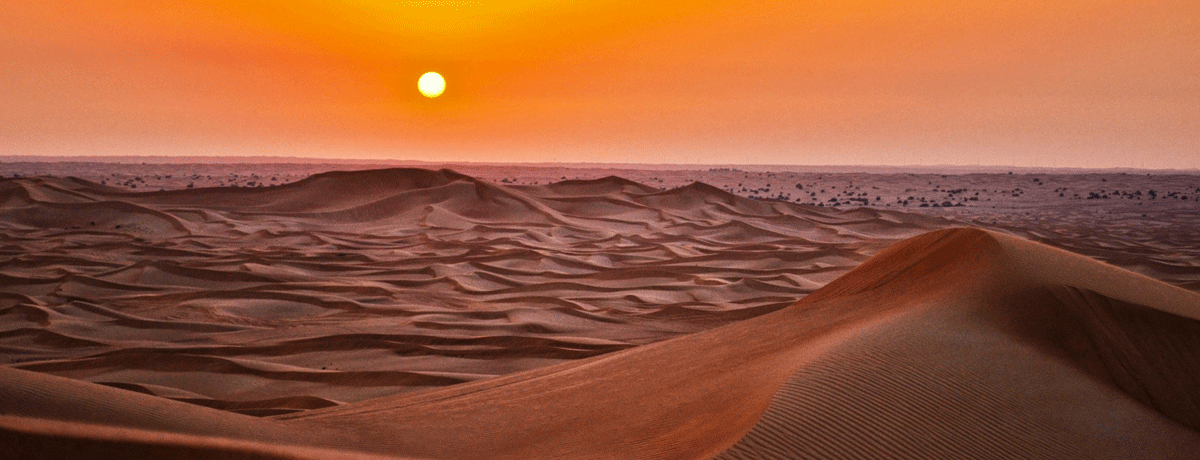
Goodell is aware of how heat affects people at the margins, or in jobs that require them to be outside in the “sweat economy” that we depend on but rarely think about. He follows the story of a migrant worker who died from heatstroke on a US farm, and travels to the baking desert where migrants cross into the US, following a local humanitarian who leaves water and supplies for those making the crossing.
Beyond people, the book looks at the effect of heat on plants, on agriculture and animals, oceans and ice. The increased heat of climate change will be felt in all sorts of ways, and the book highlights a broad range of topics. One chapter explains how mosquito ranges are changing and more people are being exposed to tropical disease. Another tells the history of air conditioning, and how it made architects forget how to design buildings for heat.
Another looks at the famous zinc roofs of Paris, how deadly they can be in a hot summer, and how increased heat presents a risk to heritage. “We can save the future or we can save the past,” says one interviewee as he describes the opposition to retrofits that would save lives. “But we can’t do both.”
As in his previous work, Goodell reports from the scene, blending reportage with background science and history into a pacy and engaging narrative. He’s a good storyteller, finding characters and sharing their experiences, and telling the stories of heatwaves or fires or scientific ideas through their eyes. Sometimes he shares his own experiences too. There are stories of overheating on a hike in Guatemala, or of journeys into the Arctic by ship. He’s a well travelled man, is Mr Goodell, and a first class journalist.
I liked The Heat Will Kill You First very much, depressing subject matter notwithstanding. The risks of climate change can seem abstract or theoretical. Then when disaster does strike, the news often reports it without reference to the underlying trend. Goodell bridges this gap, showing how increased heat will change the world in all sorts of ways – without ever losing sight of the fact that we are not powerless, and we don’t have to let it have its way.
- You can buy The Heat Will Kill You First from Earthbound Books and support this blog instead of Amazon.


Adding it to the list. Thank you!