
As global temperatures rise, the risk of heatwaves will increase. As we know, heatwaves can be deadly, especially to the elderly and vulnerable. At the same time, warmer temperatures will reduce the risk of cold related deaths and that annual winter crisis in the NHS.
There are few who would champion this second fact as a positive from climate change, but you could see it that way. In his book on climate nationalism, Anatol Lieven suggests this is a more common view in Russia. Some politicians argue that Russia has plenty to gain from a warmer climate, and helping to reduce global emissions is against their national interests. (They’ve forgotten the potential migration crisis at their southern borders as people leave an inhospitable Central Asia, says Lieven.)
Writing for Our World in Data, Hannah Ritchie has combined the statistics on temperatured related deaths with climate projections. In colder countries, an increase in heat related deaths in summer is more than offset by a reduction in winter deaths, leading to lives saved overall. There is no such offset in hotter countries where cold is less of a problem. That creates a starkly unequal distribution of premature deaths from temperature:
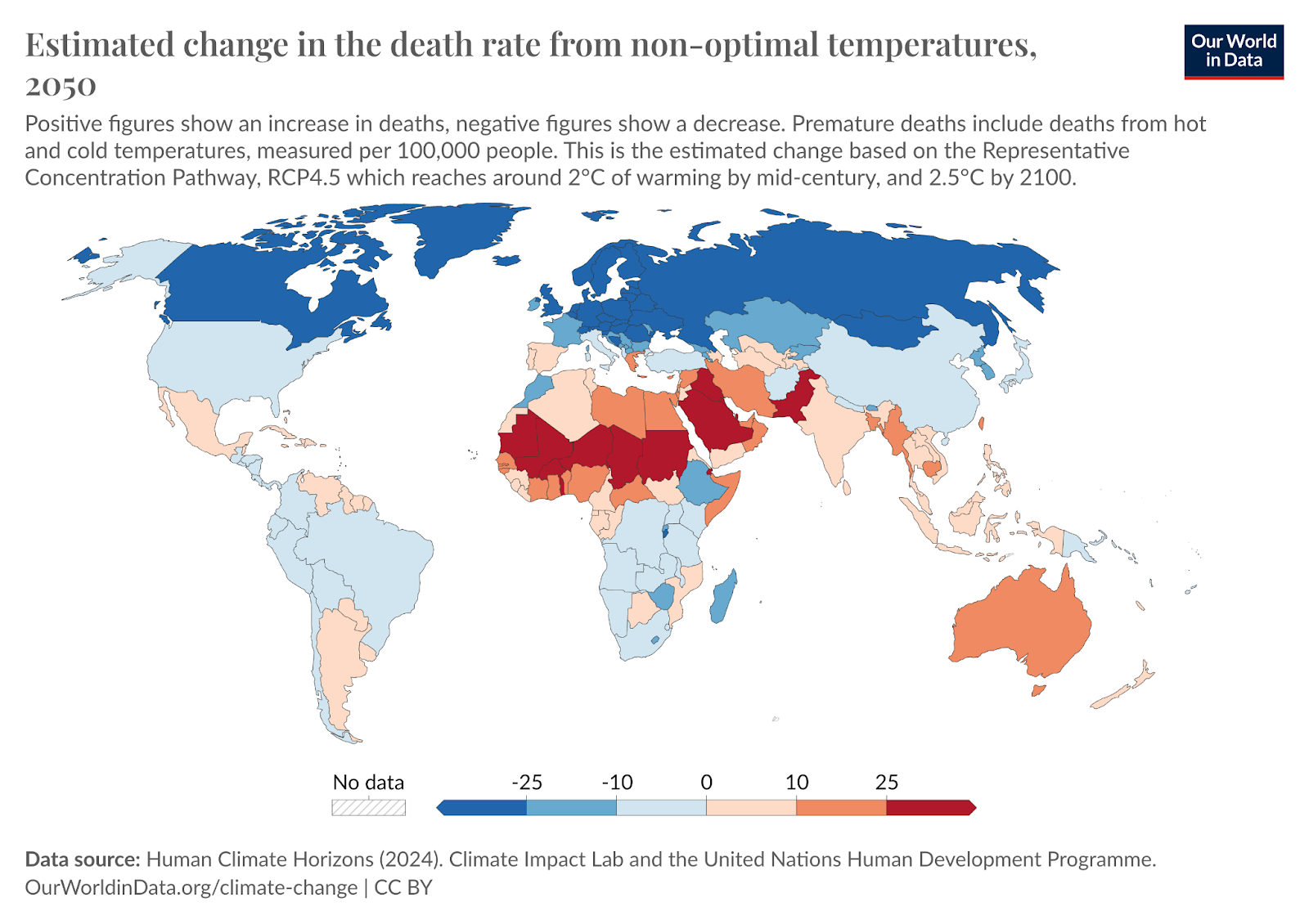
There are exceptions in the Middle East and Australia, but once again the richer countries – who have higher emissions – will tend to suffer less harm from a warming climate. India is not so lucky, nor North and central Africa. The Sub-Saharan fares better. It doesn’t take extremes to exacerbate medical conditions, so there are more cold related deaths in Africa than you might expect.
The map above follows a similar pattern to other climate impacts, such as extreme heat, falling crop production or uninhabitability. Emissions go into a shared atmosphere, and the damage can fall on those least responsible.
 The Earthbound Report
