
Do you remember that moment when it looked like social media was a powerful new tool for democracy? It could circumvent traditional media censorship, mobilise citizens in new ways, and topple dictators. Big claims were made for and by Facebook about its role in supporting popular revolutions, the ‘Arab Spring’ and the Occupy movement. That feels like a long time ago now.
In the intervening decade and a half, we have learned how Facebook has taken hundreds of millions in political advertising. We’ve seen it gamed to target voters and sway elections by tiny and specific margins, as Cambridge Analytica did to deliver Brexit to their paymasters. In 2021 the Nobel Foundation awarded their Peace Prize to Maria Ressa for her journalism exposing how Facebook was supporting the Duterte regime in the Philippines, and announced it on their Facebook page.
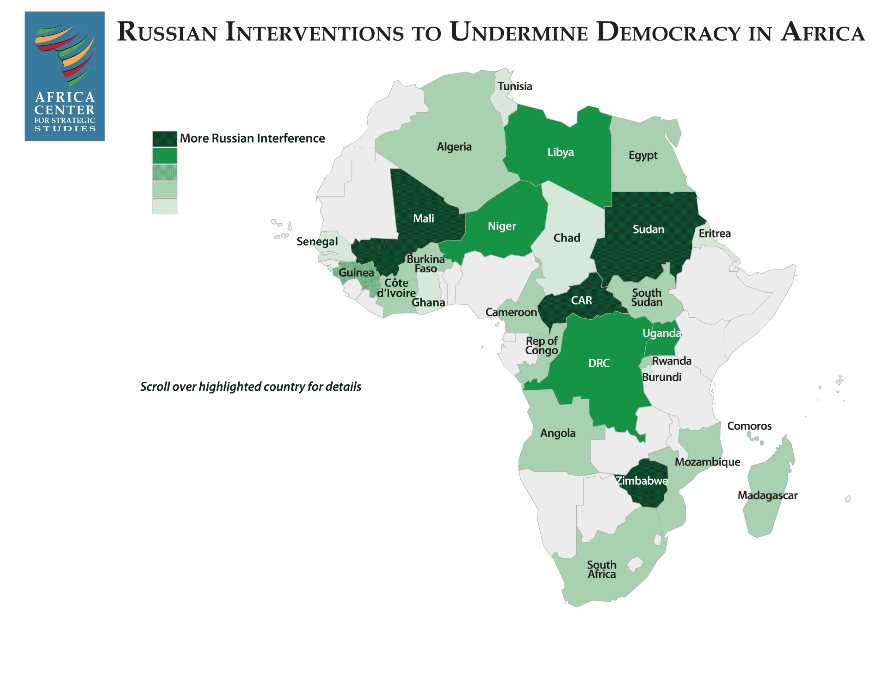
We know now that it isn’t just political parties and candidates that seek to influence elections. Foreign powers and corporations do too. Russia are not alone in doing this, but online interference from Russia is now routine in African democracy, according to the Africa Centre. Their activity has been detected in dozens of elections, supporting whichever candidate is most promising to Russian interests and usually whoever is in power. Social media is now so visibly poisonous to the political process that many African countries have declared internet shutdowns ahead of elections – though since only governments can enforce those, they’re mainly serving dictators.
It isn’t always a matter of picking a side. As Peter Pomerantsev describes in his book on information wars, sometimes instability itself is the objective. There are fake accounts both for and against Trump, both pro and anti Black Lives Matter.
Today we’re in the run-up to one of the most consequential elections in history, with the Harris and Trump campaigns pouring half a billion dollars into advertising in a single fortnight. Harris is spending more on Facebook and Google. Trump has his very own social network in Truth Social and also has Twitter in his pocket, now that it is owned by a fellow billionaire demagogue. It isn’t illegal to take out ads for your opponent, and it emerged this week that millions of people in swing states have seen fake adverts for Kamala Harris campaign on Facebook. Facebook acknowledge this in their registry of advertisers, but they’ve been paid to display them and don’t take them down.
The lesson here is that social media never belonged to its users. The user experience made it feel like it did, because we were engaging with our friends. But we didn’t own it, and it didn’t ultimately serve us. It was there to serve its owners and shareholders, and our social interactions were the means and not the end.
That’s not to say there aren’t good things about social media, which is why everyone joined them in the first place and why so many billions of us remain on them. At their best they can be powerful tools for building community, for education and entertainment, and they wouldn’t be so popular if they didn’t work at that level. But they aren’t ours.
The platform isn’t ours, the tech and the algorithms. If you read the small print, often the content we post to social media isn’t ours either, our photos and our personal news and our witticisms. SnapChat gave us an object lesson in this recently. They gave themselves the right to use AI generated images of users’ faces in ads, which has resulted in people seeing themselves or their friends appearing in adverts.
Where does all this greed and distrust leave us? I think it leads us to an obvious possibility: a social media platform that we do own. Something collective and shared, something social in its construction and not just in its user experience. I seem to remember Kim Stanley Robinson imagining a UN-led universal public social media platform in his novel The Ministry for the Future, but I can’t check because someone borrowed my copy and hasn’t returned it (was it you?)
Perhaps we are approaching something along those lines with what has depressingly become known as the ‘fediverse’, which is an open network of interconnected social platforms. Mastodon is the largest, but there are upstarts and equivalents for sharing photos and videos, none of them quite securing big enough audiences to make a dent in the legacy brands. Meta, the umbrella company behind Facebook, is supporting the idea in its new Threads service, which is promising.
An important difference with the fediverse is that content is not exclusive. It can be federated across the network. And it belongs to you, so you can close down an account and take your network and the content that you have created with you. It’s also inter-operable, which means you can engage with content across platforms. WordPress is part of the fediverse, so can theoretically post comments below on Mastodon and elsewhere.
To be honest, I just barely understand what the fediverse is all about. It’s technical and loaded with jargon, yet to descend from the realms of internet geekery to language that the rest of us can understand and engage with. But there is a sense of direction about it.
Personally, I’m waiting for it. I haven’t posted anything on Twitter since the summer. Musk cheering on the riots on Britain’s streets was a final straw. I haven’t posted on Facebook for over a year, and I’m not currently investing in any new platforms at this point.
Do I miss it? Yes, actually. The main thing I miss is being able to compliment people when I’ve enjoyed their work. I miss supporting other authors and campaigners. I miss being surprised by interesting stories, and Twitter was at one point a reliable source of climate news. But if and when I return to active social media use, it needs to be better.
Despite the doom-laden paragraphs that open this article, there is a new social media landscape emerging through the fog, something more open, more accountable, more democratic. Let me know if you’ve glimpsed it.
 The Earthbound Report
Thanks for this–stimulating
As usual Jeremy raises a valid topic but goes to the worst purveyors of disinformation and propaganda for his main takes. This is coming from a man who still thinks Western MSM isn’t manufactured consent and that there has been no bias by rags like the NYT’s regarding its Gaza coverage. Garbage in garbage out.
Could I have used western propaganda on Gaza as an example? Sure. I used Russia because of its association with meddling in elections, which makes it a topical example in an election season. How they use social media is well documented, and therefore a good fit for an article on social media, no?
As for MSM, I believe we’ve had this argument before, and my point remains the same: no useful conversation has ever begun with the acronym MSM, because it is a uselessly generic term for a complex thing. It isn’t fair to speak of ‘mainstream media’ as if it’s a monolithic block. It’s like those who say ‘you can’t trust the scientists’, as if all scientists have the same opinion.
There are better and worse media agencies, and responsible and accountable journalism needs structures that are very difficult outside of larger news institutions and their editorial controls. Empowered citizenship, and an awareness of how consent is manufactured, needs media literacy – not an abandoning of professional journalism.
And I’m aware NYT has a bias, and not just on Gaza. Every media outlet has a bias on everything. So does every reader.
If WordPress is considered social media, then I like it and use it. For the others, especially the ones with fine print that my artistic friends don’t seem to bother to read, that allow the platform to own the artist’s work (instagram), I dislike them and, especially find Facebook to do more harm than good. (It played a role in spreading the hate and disinformation that made the Rohingya genocide possible, for one thing, and when I don’t use it I feel relieved not to be wasting my time. But I do like WordPress.
Yes, not sure if WordPress qualifies as social media as generally understood, but it is an active participant in the federation conversation. It’s always been ahead of the curve on open source and a more transparent internet.
That’s good to hear. Thanks.
Recently started being on fediverse and loving it….it is technical at first but day by day sorta acclimatising myself haha…