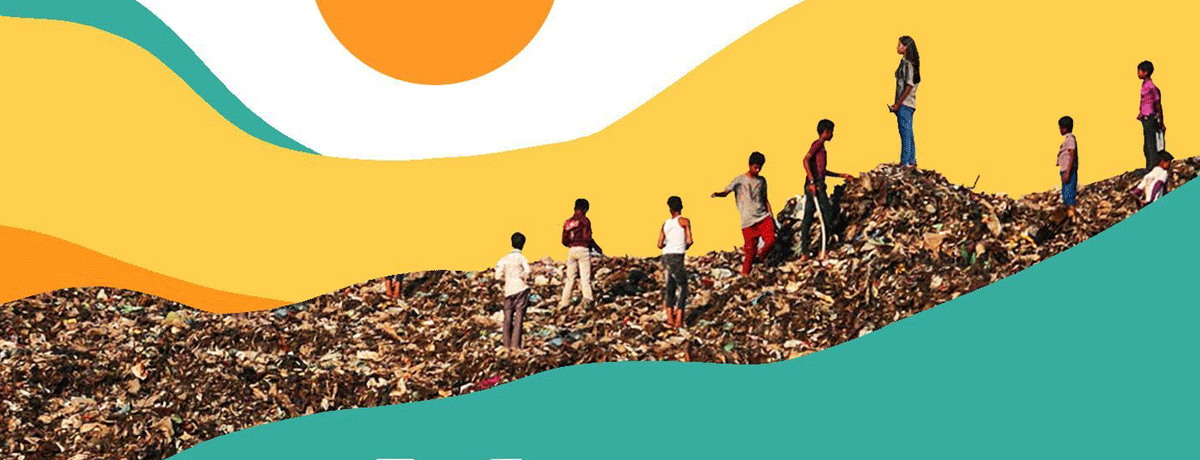

Sauma Roy is a journalist and microfinance entrepreneur in Mumbai. She discovered that many of those seeking loans were living on the Deonar landfill site, eking out a living from the city’s waste. Over the course of a decade she visited, got to know people, and tells their stories in the remarkable book Mountain Tales: Love and Loss in the Municipality of Castaway Belongings.
It’s called Mountain Tales because Deonar is a trash mountain: the city has been dumping its rubbish there since 1899 and it now covers 300 acres, heaped as high as an 18 storey building. A thousand trucks a day arrive and add to it, and pickers scramble over the delivery for anything that can be salvaged and sold – plastic bottles, metal, scraps of fabric. They look out for the trucks coming in from the richer parts of the city, where there’s a better chance of finding edible food and items that can be sold. This is “the world that our castaway possessions made”, and an entire community lives and works in Deonar, now into its third and fourth generations of pickers.
The book tells the story of the dump and the endless wrangling over how to deal with it. We hear about the various factions among the pickers – the fabric gatherers, the ‘magnet people’ who specialise in metals and patrol with a magnet on a stick. The high risk, high reward route is in medical waste, not least because you will have to deal with the gangland bosses that run that bit of the dump. We also jump from the landfill site to the courtroom from time to time, as politicians try and fail to get to grips with the mountainous headache. Compost it? Incinerate it? Re-locate it? Who should take responsibility for it, and what place does the community have in the change?
While there’s a century long story of change here, the spotlight is very much on the people. Roy introduces us to a cast of characters and their families, sharing their lives in detailed descriptions that read like a “non fiction novel”, as she has called it.
It’s a difficult life, as you can imagine. There is the constant danger of cuts and scrapes from broken glass and other hazards. There are fires, moving vehicles in the smoke. There are guards, as the pickers are at various points declared persona non grata. The gas emissions from the waste cause respiratory problems. The carbon monoxide can cause dizzyness and confusion which is understood as mountain spirits which need to be exorcised. Life expectancy is just 39.
And yet, Roy doesn’t set us up to pity the pickers. People make a full and meaningful life for themselves in Deonar. They raise children and have their hopes for them. They start businesses and build homes. They fall in love. They organise and protest. The book is an extraordinary portrait of a community at the margins, allowing us into their experiences, their suffering and their little victories. As a reader, I came to care about them and want the best for them – especially a teenage girl called Farzana, whose harrowing story of survival becomes the focus of the narrative.
What Roy has done in Mountain Tales is shine a light on the darker side of consumerism in India, though every society has an ‘elsewhere’ to deal with their waste. In simply presenting their stories, it’s also a bold declaration that every human life matters. Biographies are not generally written about trash pickers, and there’s something radical and sacred in the book’s quiet insistence that these lives are worth reading about. By inviting us into their experiences, we get to walk with Roy alongside people who are at best overlooked, at worst considered as disposable as the waste they trade in. The result is a book that I found quite beautiful, despite its desolate setting.
- You can buy Mountain Tales from Earthbound Books

