
I wrote recently about my own experiments with temporary shade structures on my own house. Here’s Low Tech Magazine with a historical overview of similar things. In the past, it was entirely normal to ‘dress’ your home for summer or winter, something we have forgotten how to do with the advent of central heating and air conditioning.
When US citizens were asked to estimate what percentage of the federal budget is spent on overseas aid, the average answer was 26%. The real figure is 1%, or 0.25% of GDP, but this absurdly exaggerated estimate may go some way to explaining how easily the Trump administration was able to destroy US-AID.
Per capita carbon emissions in China are now the same as the UK, Hannah Ritchie points out at Our World in Data. Both trends – one up and one down – are driven by changes in coal use.
There’s been a buzz in climate justice circles this week as the International Court of Justice has concluded that those harmed by climate change are entitled to compensation from those most responsible. Since it’s advisory and governments are under no obligation to respect that ruling, I’m not expecting any change overnight. As a long term principle however, it lays a foundation for reparations. Carbon Brief have a useful guide to what it does and doesn’t mean.
I’m taking a break over the next few days for some camping, so no planned articles this week. In the meantime, a couple of articles and a bonus review below.
Latest articles

Video: Could degrowth save the world?
An interesting overview of degrowth from the BBC News channel that I wanted to draw your attention to. Unusually, producer Alvaro Alvarez has gone looking for practical examples of people attempting to live out degrowth principles, alongside academics and theorists. One is rural and one is urban, a co-housing project in Spain with shared spaces…
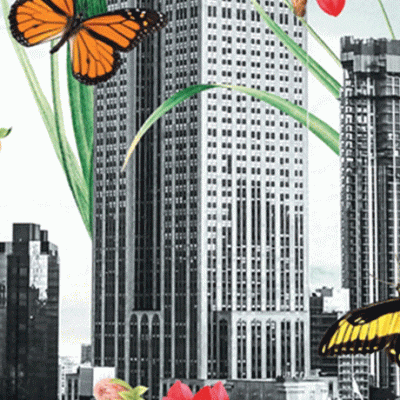
Book review: The City of Today is a Dying Thing, by Des Fitzgerald
“This book, I should say at the outset, is against green cities.” That’s the contrarian premise of The City of Today is a Dying Thing, from Irish sociologist Des Fitzgerald. You don’t need me to tell you how counter-cultural that is. Visions of greener cities are ubiquitous, from simple plans for more street trees to…
- Book review: The City of Today is a Dying Thing, by Des Fitzgerald
- Video: Could degrowth save the world?
The Expanded Earth, by Mikey Please
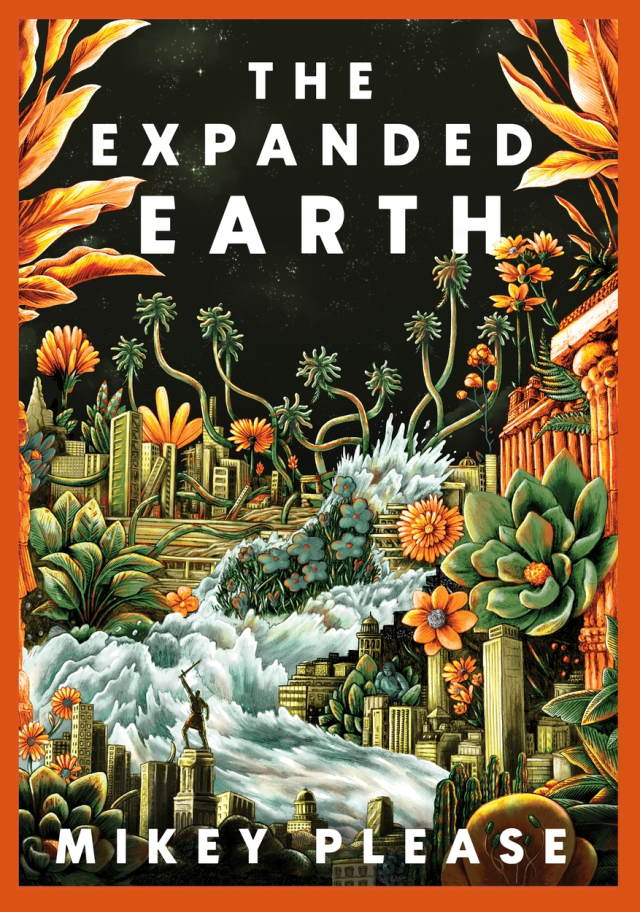
This week I read The Expanded Earth, a debut novel by the multi-talented writer, illustrator and animator Mikey Please. The premise is that all humans shrink without warning to the size of a hand, and have to survive in a world where they are no longer top of the food chain.
This idea has of course been explored in books like The Borrowers, movies like Honey I Shrunk the Kids or Downsizing, or games like Grounded. There’s a scene in The Expanded Earth that echoes Toy Story and one that lifts the central idea from Terry Pratchet’s Truckers in its entirety, though this feels like a knowing homage rather than theft.
Please brings a couple of new angles to this literary heritage as he adapts what is normally a children’s story into an adult one. One is a bit of grit, bordering on body horror, in the shrinkage and its aftermath. Along the way, he subtly poses a series of environmental questions about human over-reach, the nature of abundance, and what cosmic justice might look like if a higher power were to respond to human dominance of nature. All this alongside the drinking from bottle tops and sock sleeping bags that are par for the tiny course, and in a beautifully presented book full of Please’s own striking artwork. You can pick it up from Earthbound Books if you fancy some imaginative summer reading.
 The Earthbound Report