
It’s a cloudless spring day outside as I write. This being England, it could snow tomorrow and the end of winter is largely psychological. At the risk of casting one’s proverbial clout, I’m still going to review our first winter with a heat pump.
I’m aware of the ‘net zero dad’ phenomenon of middle aged men talking loudly about the size of their Coefficient of Performance, so I’ll keep it non-technical and to the point. Sharing experiences of heat pumps is important because there is so much disinformation about the technology. The tabloids provide a steady drip of horror stories about the heat pumps that the government is apparently ‘pushing’ on us ordinary citizens.
No heat pump has been pushed on me – thankfully, as they are very heavy – though the government were involved. They gave me £7,500 towards the installation, with no work required on my part to claim it. It was installed by Aira last March, so we’ve now had it for a year and I can compare our energy costs before and after.
First of all: it works. It continued to work through the coldest parts of the year. It worked when it snowed. We have not been cold this winter.
There were some teething issues with our system. While it worked flawlessly to provide the hot water during the summer, it did occasionally cut out in the autumn once the heating was needed. This happened with increasing frequency, and though it was easy enough to restart the system, it was an inconvenience over Christmas when we were away. This wasn’t a problem with the heat pump itself: it turned out to be flakes of rust from our old pipes that caught in a filter and reduced the flow through the system. It was a five minute fix for the engineer.
Second, it is different. Heat pumps warm homes differently to gas boilers. The latter flare up and provide a burst of heat, then cool down and flare up again when needed. Heat pumps provide more constant heating at a lower temperature. The radiators are never hot, they’re just warm. The house has maintained a comfortable temperature better with the heat pump, though my wife missed waking up to a blazing radiator in the morning. My daughter didn’t miss the roaring and ticking of the boiler that used to be in the corner of her bedroom.
Being a tortoise to the gas boiler’s hare, there were occasions when I wanted a bit more from the heat pump than it can deliver. Sometimes I don’t just want the house to be comfortable. I want it to be toasty, and on especially miserable days or when coming in from the cold, I might push the boost button on the old thermostat. Heat pumps can’t do that, so I put on the electric fireplace for a bit instead. I mention this as a difference, not a flaw – plenty of people with gas central heating still have wood burning stoves for nights when they want to be cosy.
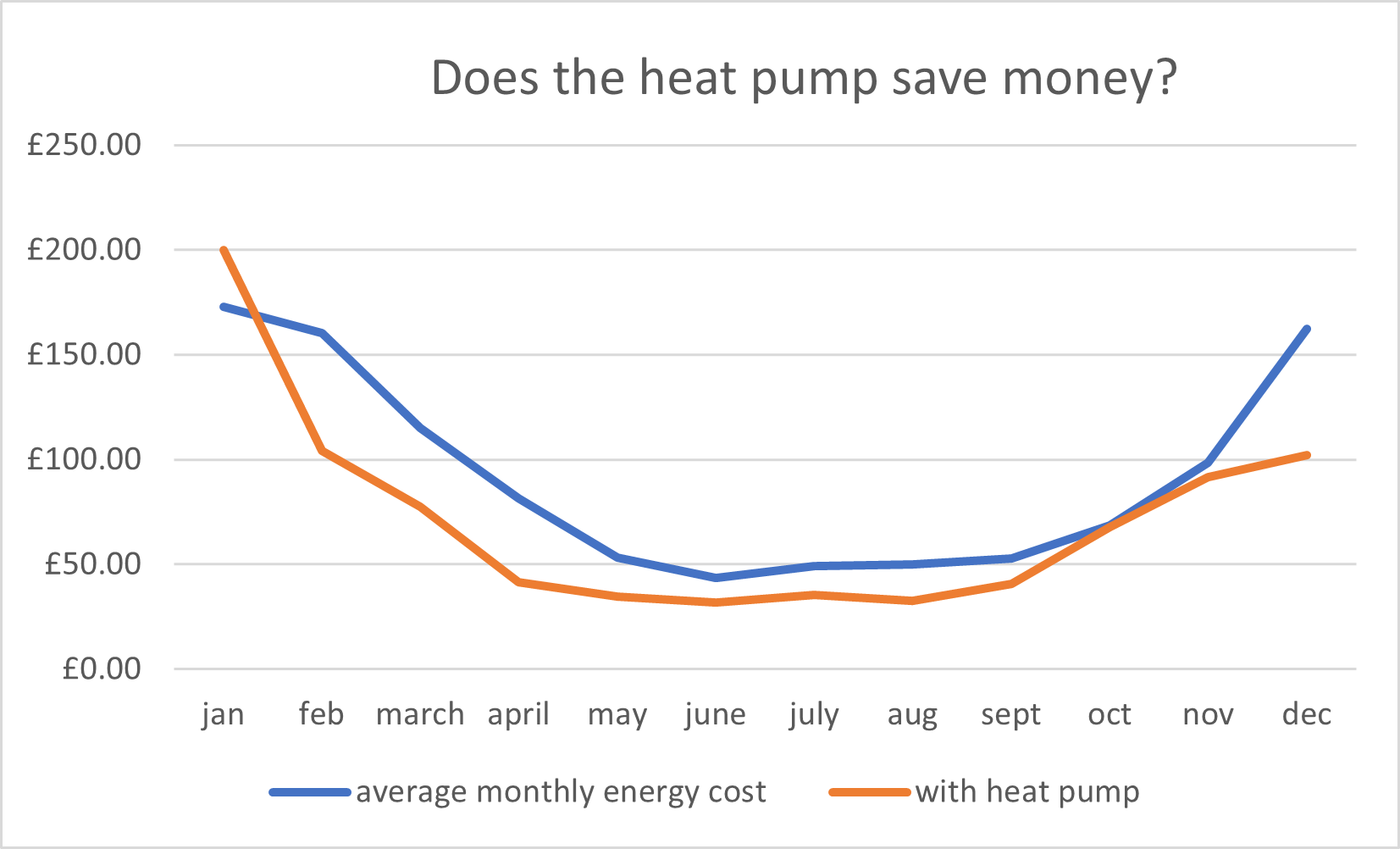
Third, it’s cheaper. I’ve graphed the last year of energy bills in orange on the right. The blue line shows an average monthly cost for the last three years. The house is consistently cheaper to run, except for the coldest month of the year in January. The extra cost there is more than offset by savings in the warmer months.
In total, our household energy costs for 2025 were £873. The average energy bill for a house of our size in the UK is £1,755, so we’re paying half of the average. It’s actually better than that though, because that £873 includes charging the electric car. We also sold £229 of electricity to the grid. If you add those in, our costs are close to a third of the average.
This is by design, and the heat pump completes a larger and more long term project. It works well because we did lots of other things first, and this is really important. Because it provides constant low level heat, a heat pump is wasted on an inefficient house. This schoolboy error is ignored by the anti-heat pump brigade. Take this farcical article from the Daily Express, where a man whinges that the heat pump installed in his prefab home was so expensive that he was forced to insulate it. That’s so ass-backwards that no respectable newspaper would publish it, but the pro-fossil fuel paymasters of the Express were so pleased with it that they ran exactly the same story a month later with different pictures, to get a second bite at the cherry.
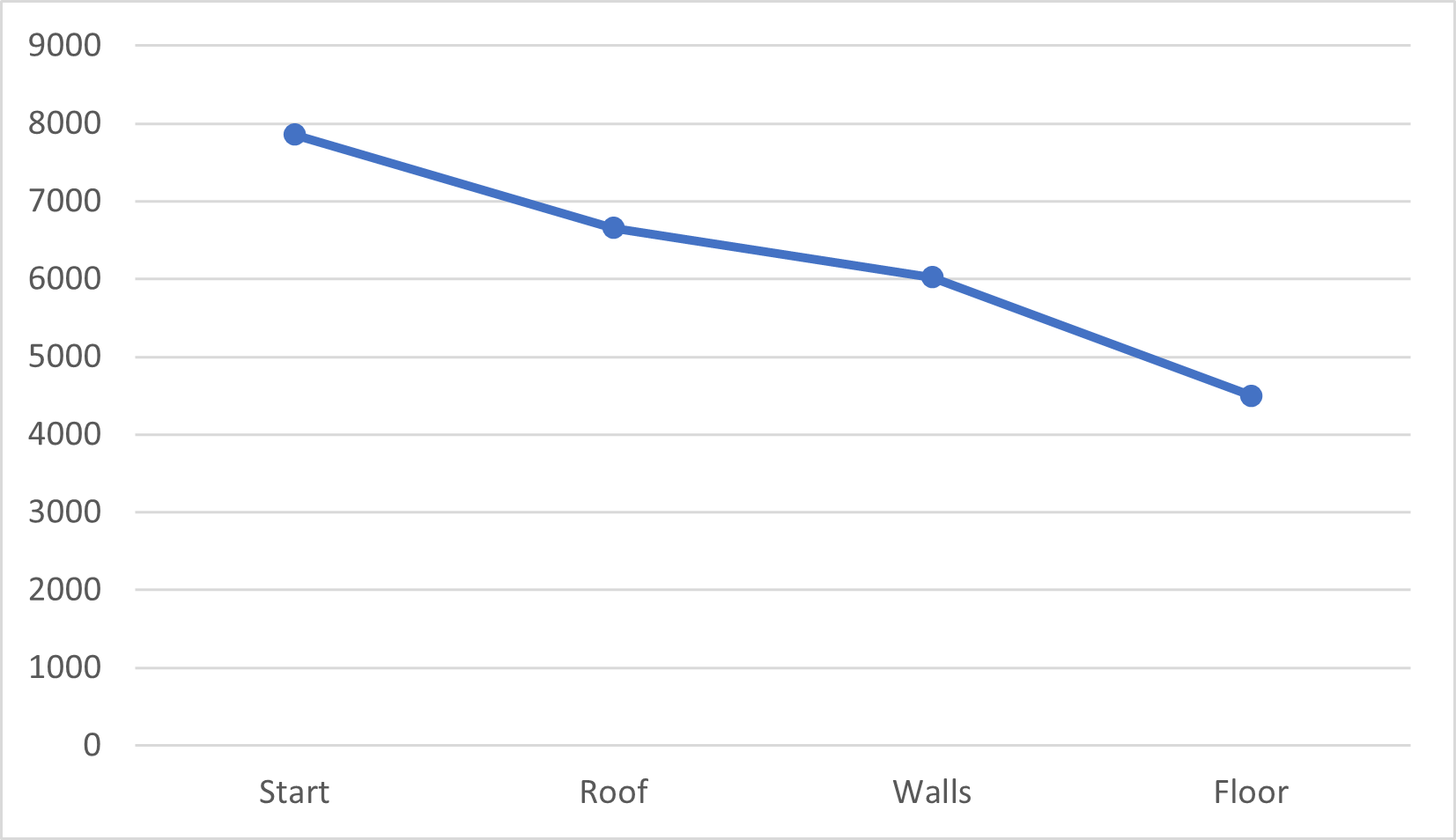
A heat pump is not a straight swap for a gas boiler in an older home, not if you want to stay warm and keep bills down. In our case, we made a series of improvements to our 1920s house to get it ‘heat pump ready’ before investing.
I’ve tracked these along the way. From a starting point in 2019, we incrementally reduced our gas use with insulation. First in the roof, then external wall cladding and then under the floor. Knowing how much energy the house needs to warm it up, and how well it holds on to that warmth, I could be confident that the heat pump would work.
As well as insulation to reduce gas use, we installed a battery so that we can use cheaper overnight electricity rates. This also helps to keep prices down with the transition to electric heat.
All told it was a six year project to get the house to low carbon heating. That’s mainly because we didn’t have the money to do it all in one go, so that’s not to say that it couldn’t be done quicker. One advantage of doing things slowly is that green technologies have got cheaper and better along the way. The west-facing roof was considered inappropriate for solar panels when we bought it, but improvements in panel efficiency made it viable within a few years. Likewise heat pumps, which have become much more efficient in the last decade. Since electricity is more expensive than gas, this is an important factor in whether or not bills rise or fall with a heat pump.
With that mention of heat pump efficiency I realise I’m a whisker away from mentioning coefficients of performance, and so I’ll stop.
 The Earthbound Report
Dear Jeremy
Many thanks for this, and for the Visit a Heat Pump tip. My wife and I are embarking on a full-scale eco-renovation of a poorly maintained house built in 1960 and will be installing insulation, ASHP and PV panels plus battery. Have you considered air to air heat pump? And how does the ASHP perform when hot water is needed on demand, eg for showers?
Best wishes
Ian Christie
Hi Ian, we did consider air to air. With a small house it should have been possible, but ducting heat to the back and the front of the house would have been a challenge in a mid-terrace and we thought we’d stick with the water system. I know other people who have done air to air and it’s worked well, especially since it will run cooling in the summer too.
Having had an on-demand combi boiler for hot water, I did wonder if we’d ever be short of hot water with the heat pump and the tank. It hasn’t happened yet, and there’s a boost button on the app that we can press if we’ve got guests over and we think we might need more than usual. Good luck with the renovation!