
In 2022 I wrote about how Swedish EV brand Polestar had committed to creating a zero carbon car. Note that this isn’t a ‘net zero’ car, but a truly zero carbon process from start to finish. It was industry-leading in its ambition, and also the kind of thing that some companies make a big noise about and then quietly drop once the PR boost is in (oh, hi Easyjet). So I was pleased to see that they’re still going and are making progress.
Their new sustainability report for 2025 shows that they have reduced emissions per car by 31% since 2020. The first step to making this kind of claim is to conduct a full cradle-to-grave assessment of the car’s emissions, which they have done. This is all publicly available, part of their plan to be “the world’s most transparent car company”. Since others don’t do this, it’s really useful for understanding the embodied carbon of a car, and also where the carbon comes from in the process:
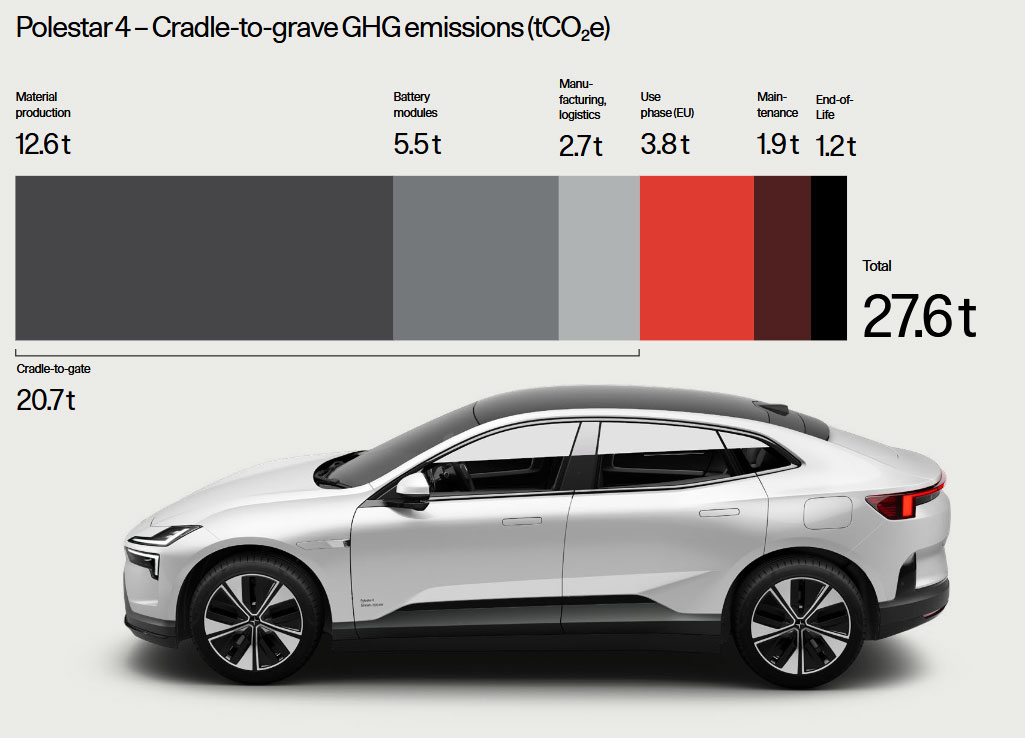
Looking at the full lifecycle of the car, Polestar could claim responsibility for around 10% – that light grey 2.7 tonnes in the middle. That’s the manufacturing and delivery, and the bit that is most obviously theirs to deal with. Lots of sustainability initiatives do this bit and no more. It’s rarer to take on the full range, which Polestar do.
As the graph shows, the biggest source of carbon is in the materials supply chain. Polestar have a network of partners that they are working with to reduce emissions. I mentioned some of them in the previous article, including pioneers in green steel production and electric mining trucks. As well as low carbon materials from responsible suppliers, the other option is to use recycled materials whenever possible.
The Polestar 5, their latest model and therefore the beneficiary of all their research to date, has an aluminium chassis and body. 13% is recycled, and 83% comes from smelters using renewable energy. This cuts 14 tonnes of carbon per car when compared to new aluminium from China.
Using carefully sourced materials also reduces incidences of human rights abuses in the supply chain. Polestar is using 50% recycled cobalt in its batteries.
It’s not all good news. Wanting to do things properly has proved to be slower than anticipated, and so the original target of 2030 has been pushed back to 2035. That doesn’t surprise me. I didn’t think 2030 was possible. They insist that the delay has made them more determined rather than less, and last year the company opened Mission 0 House to bring all their science and engineering under one roof. As CEO Michael Lohscheller says, “our ambition is simple: to build the most sustainable cars in the world, without ever compromising on performance or design.”
That’s the kind of thing I like to hear from auto industry executives, and I hope to be able to check in again on their journey towards a low carbon, circular economy car.

