
A nice local story that I’ll write more about elsewhere: Luton Town have announced their new shirt for next season, and it’s the first football shirt in the UK to use Reflo, a recycled and recyclable circular economy fabric.
Not local, but connected to the story about coal I wrote earlier this week. Indonesia is another country with lots of coal and rising energy demand, but president Prabowo Subianto reckons they can bring forward their target for 100% renewable energy from 2040 to 2035.
Having written about food waste earlier this week, here’s a solution I haven’t come across before: Iceland is selling £2 ‘lucky dip’ bags of items approaching their sell-by date.
New Economics Foundation have released some useful research into air travel, showing how airport expansion is being driven by wealthy frequent flyers.
A few months ago I wrote an article about the UK government’s new funding for solar for schools, and I mentioned that I hoped we’d get to work on that with Let’s Go Zero. News this week is that we’ve been named as one of GB Energy’s delivery partners for the first round of that solar project, which is great to hear. Alas, the first 46 schools to get solar will all be in the North-West of England and a long way from me, but hopefully I can get stuck in with some future rounds.
Latest articles
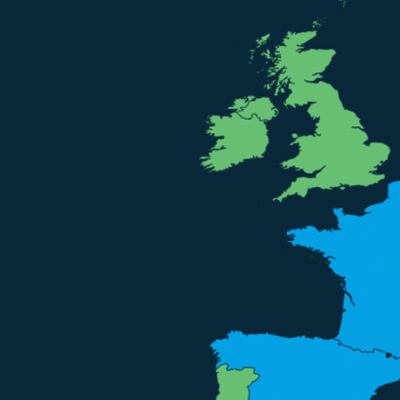
Europe’s coal phase-out
If you’re a regular reader, you’ll have seen me harping on about the UK’s falling emissions. This isn’t out of misplaced optimism or some kind of climate patriotism. It’s because if we want to fix something, we have to know what works. When we find a climate solution that’s effective, we need to notice and…
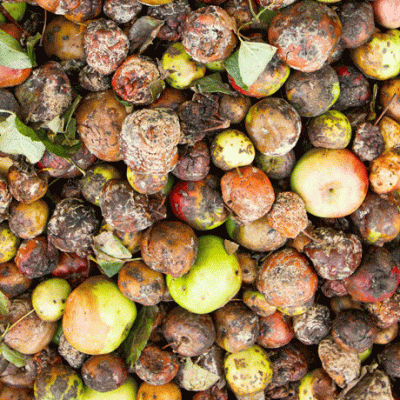
The complex story of Britain’s food waste
Consumers in the UK spend of a total of £17 billion a year on food that is thrown away, according to the latest figures from WRAP. That’s an average of around a thousand pounds for a household of four. Most of that food waste went in general rubbish bins, which cost local councils a further…
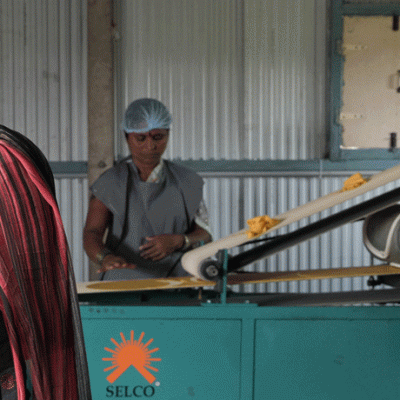
Selco’s solar innovations for the poor
No, not that Selco, the UK builders’ warehouse with the radio jingle. I’m talking about Selco India, another winner to profile from this year’s Ashden Awards. Selco are, at first glance, a solar company. They provide solar installations in rural locations, including clinics and hospitals – something that can be life-saving when you consider the…
- The complex story of Britain’s food waste
- Europe’s coal phase-out
- Selco’s solar innovations for the poor
Families Like Ours
You might have caught this already, but my wife and I have been watching Families Like Ours on BBC iPlayer this week. It’s a mini-series about the disbanding and evacuation of Denmark – yes all of it – as it becomes economically unviable as a nation in the face of rising sea levels. It’s told through the experience of one family as they come to terms with separation and re-location. It’s from Academy Award winning director Thomas Vinterberg, so it’s high quality television. It also raises some knotty climate justice questions.
It feels bold to tell this kind of story about Denmark, but the fact that we can engage with it as a work of fiction is in itself evidence of our climate privilege. People are already being forced to leave their homes and land because of climate change. People are already being turned away at the borders. Telling this kind of story with a middle class white family might prompt people to ask ‘what if it happened here?’ But does it do enough to remind viewers that it is already happening elsewhere, day in and day out, to people who look different to us?
 The Earthbound Report