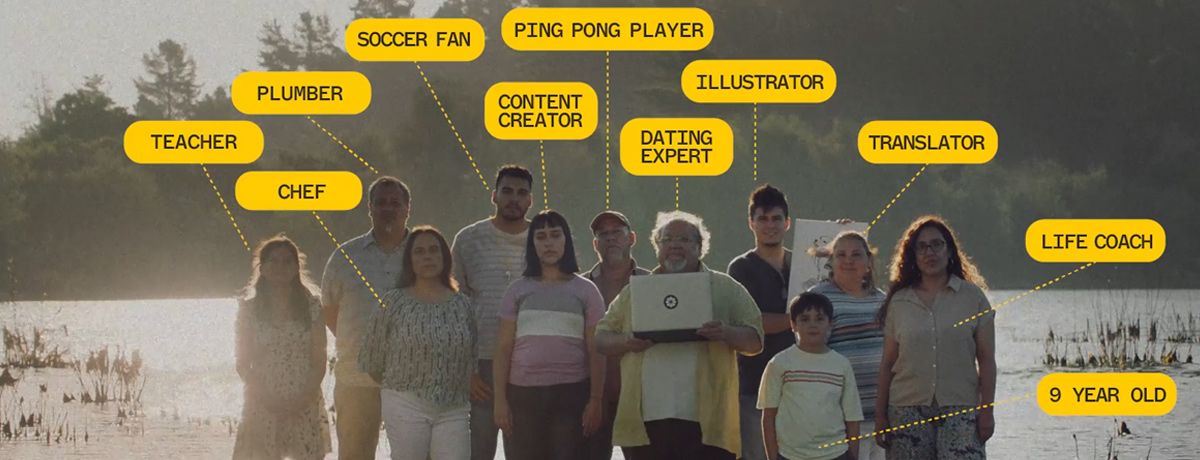
Quilicura is a community in Chile that is facing water scarcity, in large part because so many water-cooled AI data centres are located there. To raise awareness of the problem, they brought together a group of local experts to answer people’s AI queries for a day. It’s an imaginative campaign and a good reminder that humanity’s greatest reserves of true intelligence lie in people, relationships and community.
The Climate Fiction Prize has announced its shortlist for 2026. Some intriguing entries on this impressively international selection.
Earlier this week I mentioned that net zero requires a certain degree of offsetting for some essential industrial processes that can’t be decarbonised. For balance, here’s an example of offsetting as a disingenuous distraction: a new platform from Aerovolt allows people to buy carbon credits from electric plane flights. Someone flies an electric plane, and you can pay to pretend it was you – though that’s not how the marketing blurb describes it of course. No carbon has been reduced, so this isn’t real offsetting. Worse, at this point almost all electric planes are tiny and flown for leisure, so this scheme essentially subsidises wealthy hobbyists and calls it climate action.
Edible spoons are an idea that the internet got excited about almost exactly a decade ago, as an attempt to replace single use plastics. They’re available but haven’t exactly caught on. Now the first firm to make them in the UK is having another go, with Eddy’s providing edible spoons to a deli in London, with the hope of rolling them out more widely.
The world’s largest compressed air energy storage facility has come online in China. Air is pumped into salt caverns when renewable energy production is abundant, and released through a turbine to generate electricity when needed. It is large enough to power 600,000 homes.
Latest articles
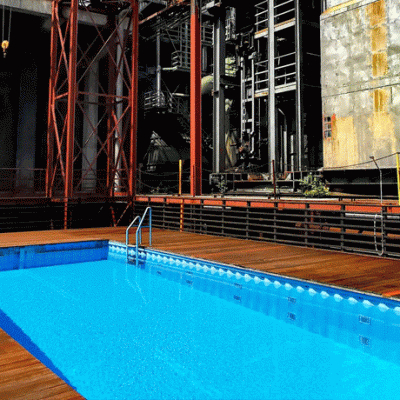
Book review: Don’t Build, Rebuild, by Aaron Betsky
“We should not construct new buildings from scratch,” says the first line of Aaron Betsky’s Don’t Build, Rebuild. He’s an experienced architecture critic from the Netherlands who has spent his career travelling the world and studying buildings. The ones he is drawn to today represent an architecture that “does not impose itself on the land…

What we learned this week
Chris Hatch at Covering Climate Now writes about something I’d noticed: Mark Carney was very forward thinking on climate change while at the Bank of England, and seems to have forgotten all about it as Prime Minister of Canada. More evidence that if you’re losing farmland to solar farms, you’re doing it wrong. The biggest…
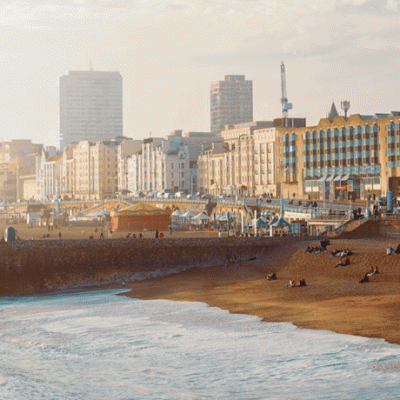
Mapping heat for a more resilient Brighton
Britain experienced its hottest ever summer this year, pending end-of-year verification. While you can never really point at something and say definitively that it is climate change, the Met Office tells us that climate change made this summer 130 times more likely, which is as good as you’re going to get. Climate change is transforming…


Eddy’s Teaspoons of Change!! I remember the post from 10 years ago and still think it is a great idea… If only I was a capitalist marketing mogul 😉