
Not so long ago Norway was the big story in electric vehicles. They were one of the earliest movers, with subsidies for EVs and privileged access to parking and bus lanes. It was the first country to cross the rubicon and sell more EVs than petrol and diesel cars.
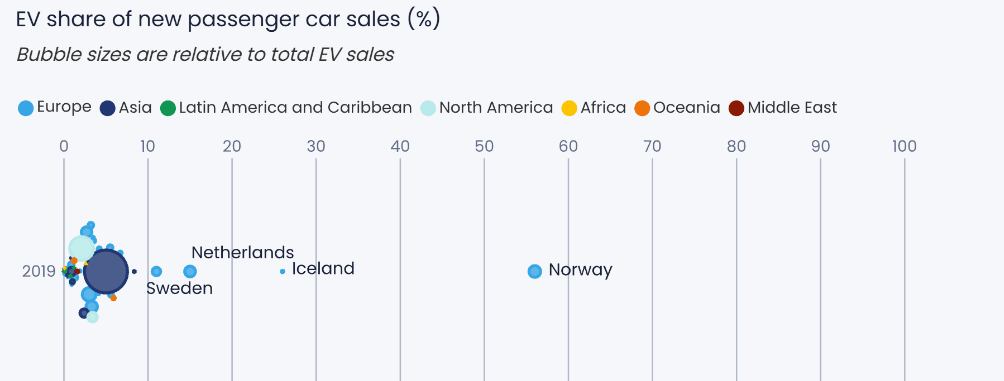
In a graph of global EV sales from 2019 it’s well ahead of the pack, trailed by a handful of Northern European countries. Everywhere else, at least nine out of ten new cars sold are still fossil fueled.
A lot has changed in five years, as described in this recent report from Ember.
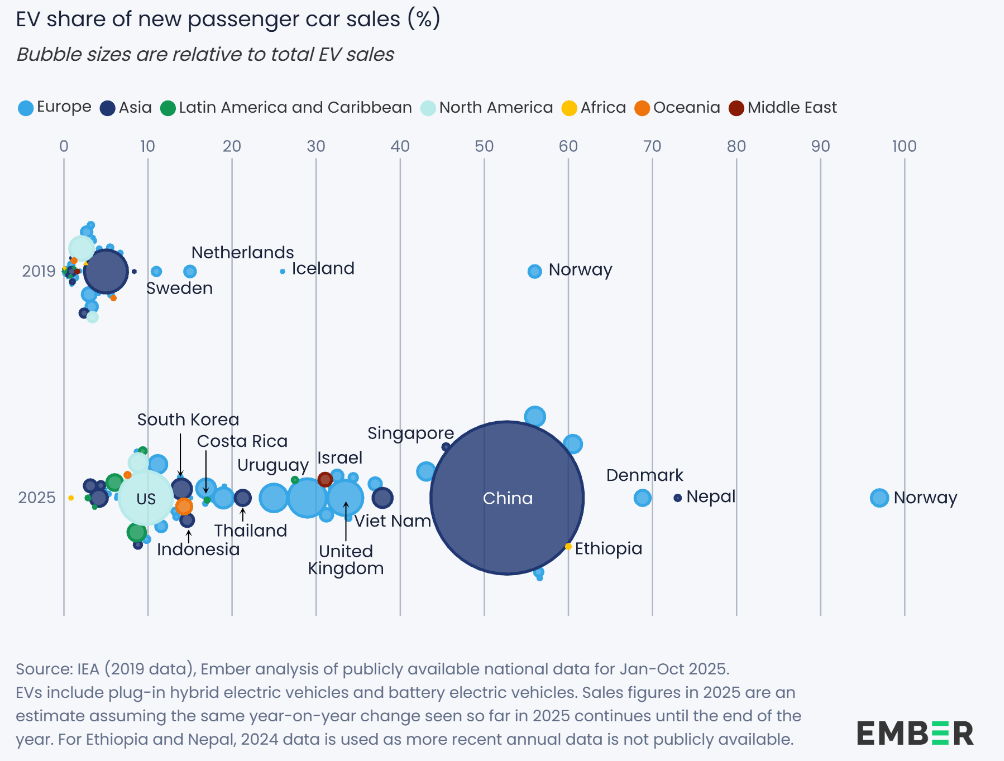
Norway still leads and is still out front, but everything in the chasing pack has changed. The most dramatic movement is China, which has leapt past the 50% mark. In raw numbers, it outsells everyone else on the planet: of all new EVs sold, two thirds are in China. This graph only covers passenger cars. China leads the way on electric buses and ebikes too, which I consider to be more important in the grander scheme of green transport.
China matters for its own sales, and also for its exports. It is cheaper EV brands from China that are enabling the rapid shift elsewhere in Asia and beyond. Singapore and Vietnam and Nepal have overtaken much of Western Europe on EV adoption.
Speaking of Nepal, it’s interesting to see them and Ethiopia in the top five for EV sales, albeit at smaller numbers. Those are two very different countries, but with some common features that explain their prioritising of electric transport. Both have no oil reserves and have to import it. Both are landlocked, which makes all fossil fuel imports really expensive. On the positive side, Nepal and Ethiopia both have abundant cheap hydroelectric power and run on 100% renewable energy. EVs make spectacular sense, reducing their vulnerability to price spikes and boosting the local economy.
Similar factors explain those lagging behind. The US and Canada both have lots of oil and the case for EVs is less obvious. The Middle East is practically invisible in the graph, with the exception of Israel, which lacks oil reserves of its own. Moving slowly on electric vehicles will have consequences, and it’s notable that both the US and Canada wound down their incentives for them in 2025. Turning their backs on EVs politically risks locking the continent into an older technology. They won’t have the infrastructure domestically, and American car companies will fall behind on exports. North American citizens won’t see the benefits of cheaper transport, quieter cities and cleaner air that others will see elsewhere.
For oil producers, EVs are still seen as a threat rather than an opportunity. The world is leaving them behind. That’s their loss and we should not mourn the decline in geopolitical power of the fossil fuel producers. Consider the ongoing reality of wars and regime change for oil. Remember the ongoing destruction of the atmosphere for profit. Compare the vulnerability of global oil supply chains and locally produced renewable energy, and ask which one you’d rather build an economy around.
Taking these sorts of questions on board, this graph of EV sales tells us a lot more than who is buying electric cars. It tells a story about a slow and vast shift in power, away from the pollution and colonial violence of fossil fuels, and towards clean local power. For those choosing electric, like Nepal and Ethiopia, it’s about independence and self-reliance just as much as it is about the environment. Green technology has the potential to be liberating for people and for the planet.


This is exactly what I was looking for. Very helpful content!