
Ripple is a new energy start-up that is inviting customers to buy shares in a wind farm, making it the first to be owned by its customers. There are community energy groups that might argue that’s only true as a technicality, but it’s still a good idea that supports energy democracy.
Canada has set out proposals for a net zero by 2050 climate target. Yes. Do it Canada.
“As anti-racists, we cannot be against ‘racial’ inequality at home, while at the same time perpetuate ‘racial’ inequality abroad through exploitative consumption habits” argues Samir Sweida-Metwally in this Bristol University Press article on ethical consumerism and racism.
Solar Oysters is a company that plans to use solar power to automate floating oyster farms in the Chesapeake Bay, producing food while cleaning the water – a potentially regenerative form of ocean farming.
Onshore wind and solar are back in the picture in Britain, as the government allows them to be included in next year’s Contracts for Difference auction (a form of subsidy). They have been excluded since 2015 for no good reason, so this is good to see.
This week’s posts:
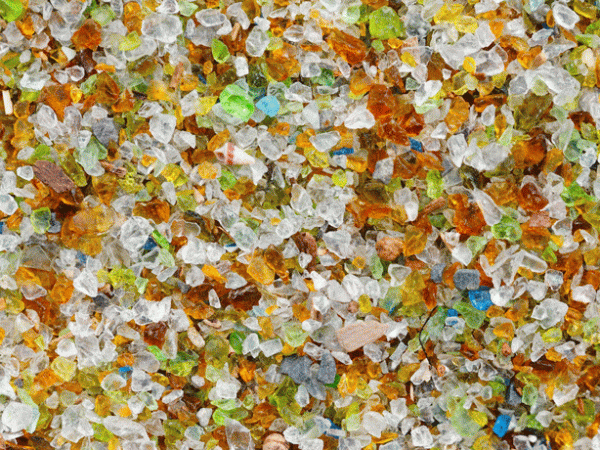
Picturing where microplastics come from
Here’s an image I came across on social media recently that I found useful. Yes really, something useful on social media. That doesn’t happen often anymore, though I should point out that it was LinkedIn, which used to be the most boring and staid of all social media platforms and now feels like the only…
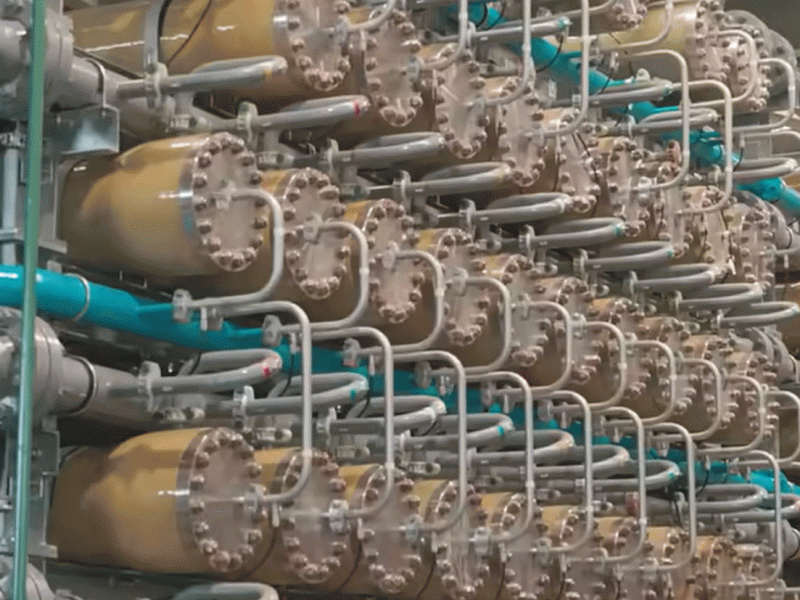
Osmosis, the other other renewable energy
I’ve been writing about renewable energy for twenty years, and just this week discovered that there’s a whole other kind that I didn’t know about. This is the climate nerd equivalent of my daughter finding a new Pokemon. Usually when we’re talking about renewable energy, it’s wind and solar that come to mind. Biomass is…

Easy energy comparisons
Back when the climate movement was young, we got a lot of tips for cutting carbon with very little context around them. My personal favourite was at LiveEarth, where celebrities offered their favourite eco actions. One of them was to switch off your phone charger at the wall when you’re done. This was recommended to…
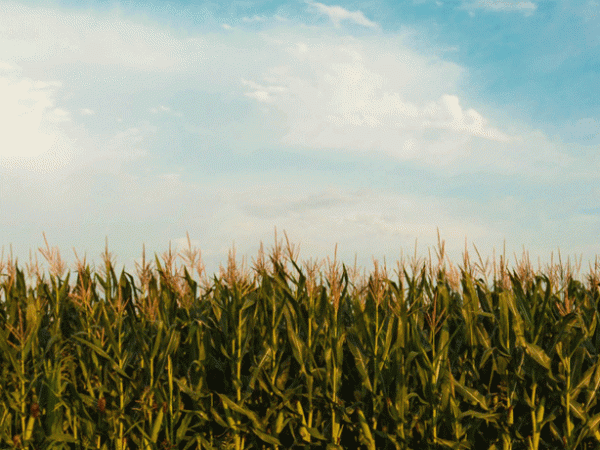
It’s not solar that competes with farmland
One of the big hesitations around solar farms is that they take up land that could be used for food production. It’s an argument that’s made by climate sceptics who oppose renewable energy, but those on the green side of the equation worry about it too. My response has always been that if you’re displacing…
 The Earthbound Report
Do the Canadians plan to shut down the tar sands mines? It’s my understanding that their laws are so restrictive that they cannot refine that gunk in Canada, so the pipelines send it to the US.