
New Zealand has declared a climate emergency and that the government will try to get its own emissions to net zero by 2025. (It got less coverage, but Japan declared a climate emergency a couple of weeks ago too.) These are symbolic of course, but they are also a powerful statement of intent.
How adding seaweed to cattle feed can reduce emissions. The easiest way to reduce beef emissions is to reduce beef consumption of course, but this is useful too.
I learn from the Spokesmen Cycling Podcast that cargo bikes move 3.5 kph faster than vans in central London, making them a faster way to make local deliveries as well as a cleaner one.
“Rich countries have disproportionate influence when it comes to setting the rules of international trade and finance” writes Jason Hickel, highlighting the colonial influences in the IMF and World Bank.
Have you seen the front cover of The Economist this week? ‘Making coal history’ is the cover story.
I gave a talk last week on climate, race and privilege, for my friends at Christian Climate Action. With apologies for the quality of the Zoom recording, here it is. If people find this useful, I might try and record a better version.
This week’s post in case you missed them:
LATEST POSTS
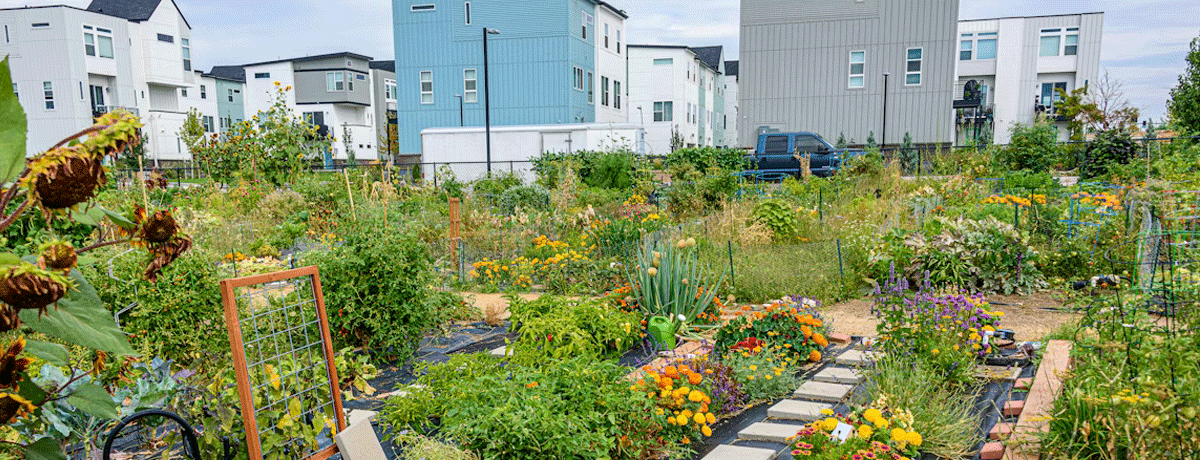
How to run projects that create bigger change
Now, more than ever, people need to see that environmental action makes a tangible improvement to their lives. These are febrile times. People want certainty and the safety of what they know. Politicians and the media can easily scapegoat climate policy and erode support for ‘new and untested’ low carbon technologies. Despite the urgency of…
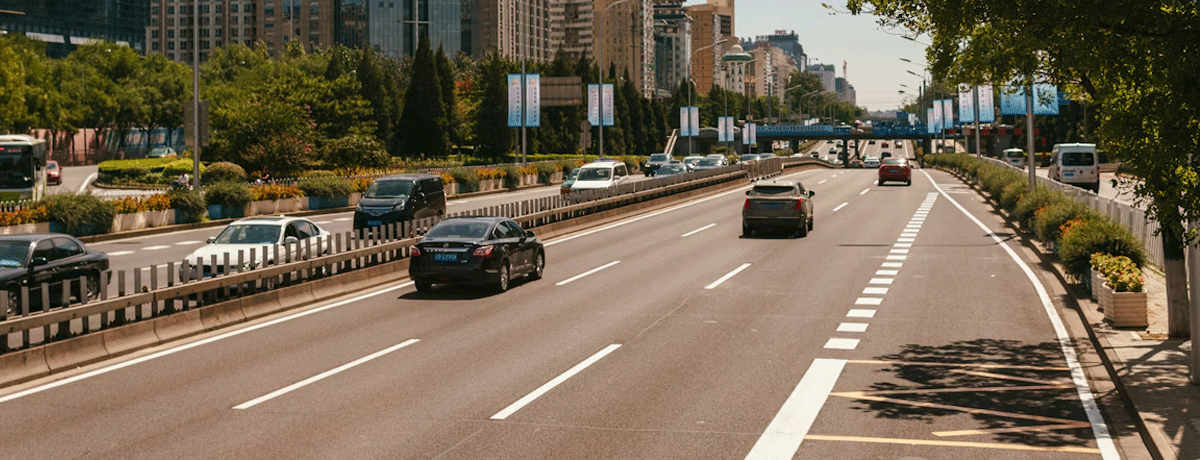
The globalisation of electric vehicles
Not so long ago Norway was the big story in electric vehicles. They were one of the earliest movers, with subsidies for EVs and privileged access to parking and bus lanes. It was the first country to cross the rubicon and sell more EVs than petrol and diesel cars. In a graph of global EV…

Clean energy for Uganda’s refugees
In the long walk towards universal energy access, refugees are among the hardest to reach. Across the world there are 120 million people living in refugee camps, and 94% of them don’t have clean and affordable power. That’s something that my colleagues at Ashden are working on, as part of a project called Transforming Humanitarian…

A first winter with the heat pump
It’s a cloudless spring day outside as I write. This being England, it could snow tomorrow and the end of winter is largely psychological. At the risk of casting one’s proverbial clout, I’m still going to review our first winter with a heat pump. I’m aware of the ‘net zero dad’ phenomenon of middle aged…
Something went wrong. Please refresh the page and/or try again.
 The Earthbound Report
Yes indeed on e-bikes point: it reminds me of this: https://www.eav.solutions
I saw an independent write up(s) of these people; I think major logisics firms are seriously interested because they have major advantages for ‘last mile’ delivery, which is the area logicstics firms are finding hard to crack (both economics and sustainability I think). Our ‘pipe dream’ for Chipping Norton is to have a ‘community last mile delivery depot’ run as a COMMUNITY social enterprise, using bikes like these.
actually not quite a pipe dream: we’ve just put a grant application in for a simpler scheme, which could be a stepping stone…
https://drive.google.com/open?id=1oOMbqgapx0fvTknbbjqSkfD3bKhi_GFm