
The Climate Crisis film festival ran in November, and this week launched an online hub where you can watch 20 climate documentaries for £10. Some really good ones on there and I’ll be doing that myself. And as a reader of this blog, you can get yourself a 20% discount by clicking here and using the code GREENCHRISTMAS

Amazon is now the biggest corporate purchaser of renewable energy in the world. This does not make them good, it makes them fractionally less evil – but it’s a step in the right direction.
I hadn’t heard of ‘coral refuges’ before, but I was glad to hear that ocean currents can create pockets of cooler water that coral can flourish in, such as this one of the Kenyan coast.
David Powell is wise and funny and well worth reading on eco-anxiety in the latest issue of the New Economics Zine.
It’s always worth keeping an eye on what Drawdown are up to. Their latest report is called Farming our way out of the climate crisis and I’m going to try and make time for it this week.
LATEST POSTS
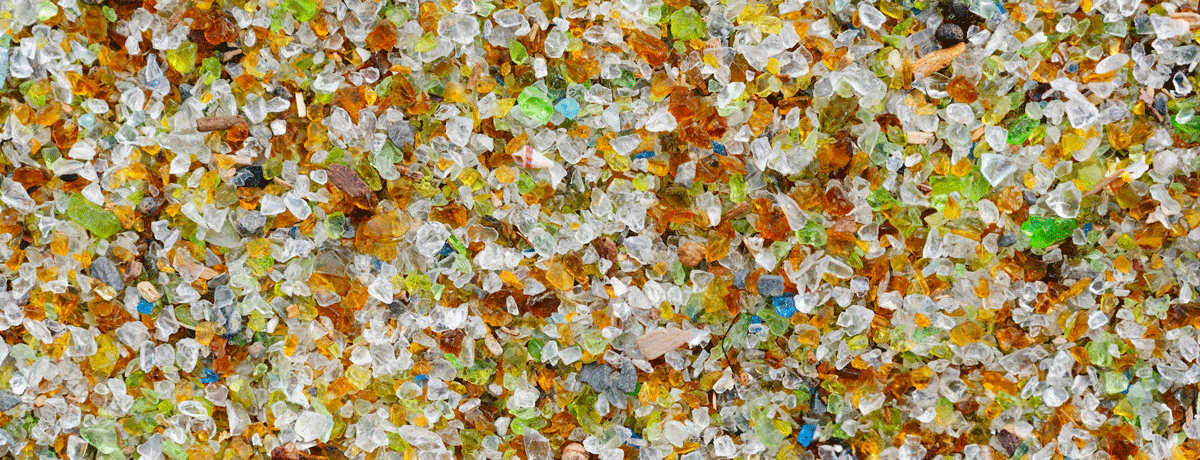
Picturing where microplastics come from
Here’s an image I came across on social media recently that I found useful. Yes really, something useful on social media. That doesn’t happen often anymore, though I should point out that it was LinkedIn, which used to be the most boring and staid of all social media platforms and now feels like the only…
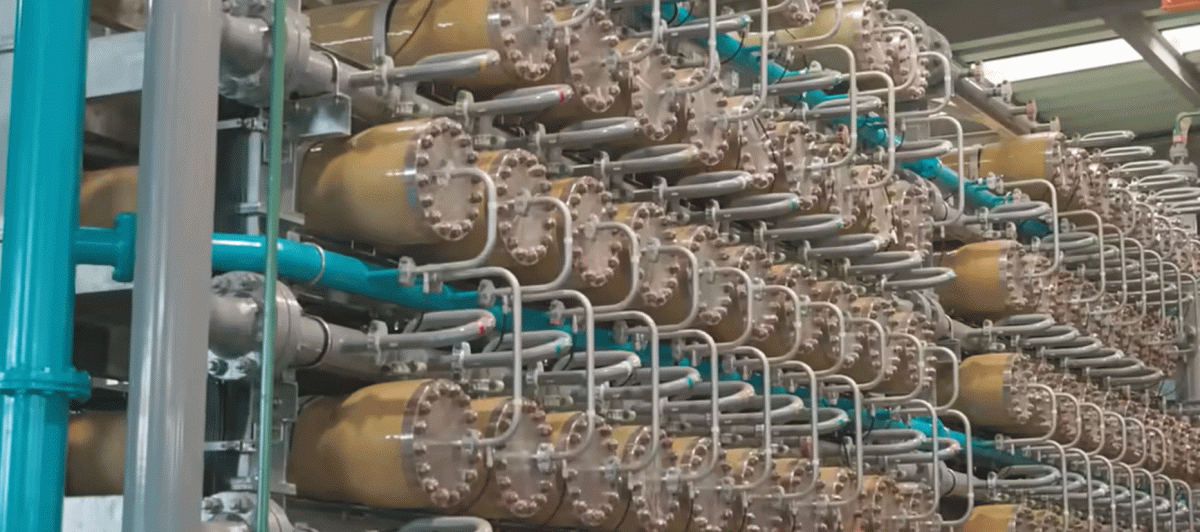
Osmosis, the other other renewable energy
I’ve been writing about renewable energy for twenty years, and just this week discovered that there’s a whole other kind that I didn’t know about. This is the climate nerd equivalent of my daughter finding a new Pokemon. Usually when we’re talking about renewable energy, it’s wind and solar that come to mind. Biomass is…
Easy energy comparisons
Back when the climate movement was young, we got a lot of tips for cutting carbon with very little context around them. My personal favourite was at LiveEarth, where celebrities offered their favourite eco actions. One of them was to switch off your phone charger at the wall when you’re done. This was recommended to…
It’s not solar that competes with farmland
One of the big hesitations around solar farms is that they take up land that could be used for food production. It’s an argument that’s made by climate sceptics who oppose renewable energy, but those on the green side of the equation worry about it too. My response has always been that if you’re displacing…
Something went wrong. Please refresh the page and/or try again.
 The Earthbound Report
Thanks for highlighting the Kenyan coral refuge. I know we need far deeper concern, alarm even, over our corals, but it’s encouraging to know of signs of hope too. I was reminded of the discoveries of resilience in the Red Sea and off Australia, and other measures to protect/restore them:
https://phys.org/news/2020-12-coral-recovery-prolonged-heatwave.html
https://theconversation.com/meet-the-super-corals-that-can-handle-acid-heat-and-suffocation-122637
https://www.theguardian.com/environment/2020/oct/17/why-there-is-hope-that-the-worlds-coral-reefs-can-be-saved
[hoping this comes across as ‘interested interaction/reaction’ stimulated by your post, which is the intention here, not as ‘competitive reportage’]
Interested interaction noted! These stories are important, as it’s felt like the loss of coral reefs is almost inevitable. If that’s the only narrative we have, it risks becomes self-fulfilling.
yes I have a feeling that’s how things should work on other issues too. I feel we need to be conversing on how things will turn out both worse and better than we anticipate, but there’s always a path to hope. I’m glad that sites like yours are bringing this out