Last week I was thinking about how different anti-consumerist movements have waxed and waned in the last few years – things like new materialism, experientialism, collaborative consumption, etc. Out of curiosity I ran a Google trend search on ‘consumerism’, and I found an interesting phenomenon:
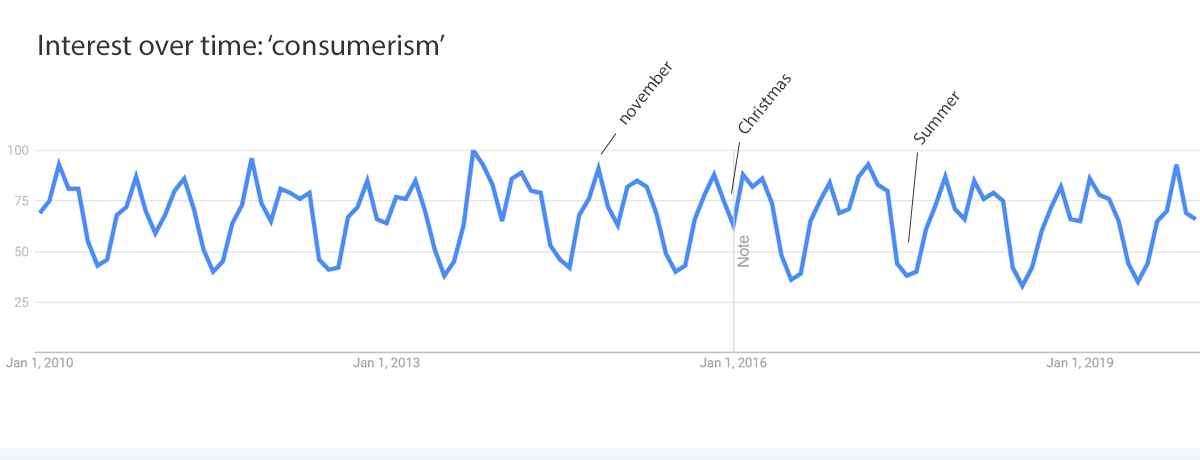
There’s a pattern here, reliably repeating over this ten years of data from Google. The number of people searching for ‘consumerism’ leaps in November. It dips during Christmas and picks up again in the Spring. Interest then falls away during the summer.
I recognise that not everyone has summer at the same time, but this pattern certainly holds for the UK and the US. Join me in some speculation about this – what’s going on here? I’ve got three observations, and I’d be interested to know what you think about it.
First, this pattern presumably reflects the retail cycle. November features Black Friday, and consumerist pressure visibly ramps up both online and in shops. Many retailers also run spring sales right around the time of that second annual spike in interest. It would make sense that more people would be driven to look up ‘consumerism’ at the times when pressure to consume is at its most aggressive.
Secondly, interest in the idea of consumerism falls in the summer and at Christmas. We’re busy with other things I suppose. In the summer we’re also likely to be outside more, whereas in the winter we might be inside and confronted more directly with our piles of stuff. Perhaps we enjoy experiences more during summer and Christmas, and experiences are more rewarding than possessions, as James Wallman wrote about in his book Stuffocation.
I don’t want to assume the reasons that people Google ‘consumerism’, but just to see if there was a correlation, I ran trend searches for ‘depression’ and ‘stress’ too. Interestingly, these follow a similar pattern. Less pronounced, but with the same peaks and troughs – rising interest in the terms in October and November, and a drop-off over Christmas and during the summer.
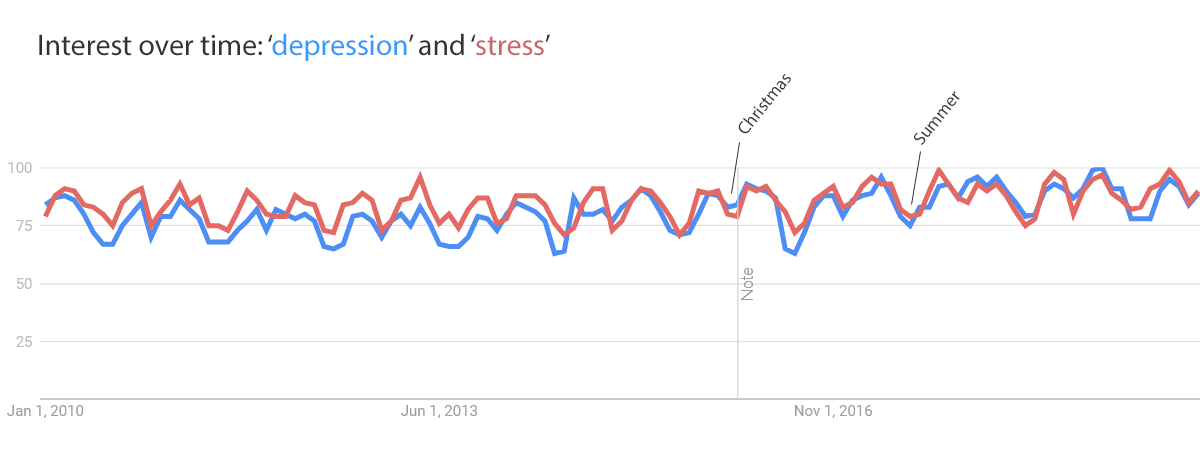
Correlation is not causation as we often reminded, but it’s worth asking some questions about this. Does pressure to consume make us stressed and unhappy? Do people experience more stress and depression at times of retail sales? I don’t know, but I’d be interested to know if anyone has investigated the connection between mental health and consumerism. It would be ironic if there was a negative connection, given the expression ‘retail therapy’.
I’m not sure I have any conclusions from these observations, so I’m writing about it for discussion. What do you make of the recurring pattern in people thinking about consumerism?
 The Earthbound Report
The numbers certainly seem to correlate and as you say could indicate a false impression given by the term, ‘retail therapy.’
When ever I think of consumerism, I am confronted by the image of the Buddhist ‘Hungry Ghost’. Insatiable and impossible to please. The most striking of these are the ‘Early Adopters’, pushing the rest us aside in a bid to be the first with the latest in what ever it happens to be. The Tech industry has this down to a science, releasing the promise of the next model just a couple of weeks before the early delivery of the latest one, to those who signed up early. I almost feel sorry for these individuals, with their drawers full of lasts years models. At least I would if I hadn’t come to the personal conclusion that EAs fuel the system.