
I’m rather late to the party with my end of year book list, but here are a few things I appreciated in 2024:

Not the End of the World, by Hannah Ritchie
Reading the news on a day to day basis, it can feel like everything is moving backwards on climate change. There are certainly plenty of reversals and dangers (see the titles below), but the negative headlines can dominate so much that positive trends often go unnoticed. Hannah Ritchie’s book is a powerful antidote to that negativity, highlighting progress across a whole range of topics and showing how it can be accelerated. Ritchie is a data scientist with Our World in Data and has more information at her fingertips than almost anyone in the field, so this is not naive optimism. The more tempted you are to write it off as such, the more I’d suggest you need to read the book.
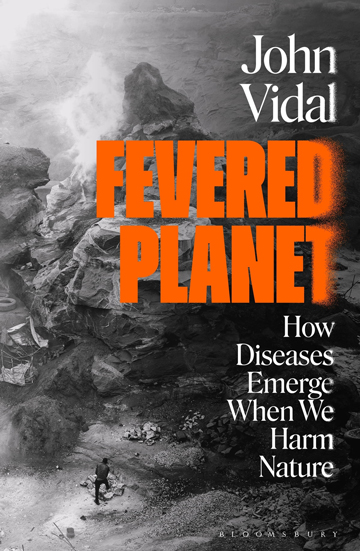
Fevered Planet, by John Vidal
One of those books that makes new connections and illuminates a whole new angle on the environment, and that could only be written by someone who has spent decades closely observing damage to natural systems. After a career as the environment correspondent for the Guardian, Vidal put his energy into explaining the interconnections between environmental harm and disease. He brings a neglected and complex topic into vivid focus, showing how emerging disease risk is a symptom of a broken relationship to the natural world.

Limitarianism, by Ingrid Robeyns
There are many books on inequality and how it damages society. Few dare to seriously entertain a solution that looks intuitively obvious to many: stop people from getting too rich in the first place. That’s understandable, given how it challenges economic norms. It risks sounding draconian, and all the arguments against it come well rehearsed, from communism to the ‘politics of envy’. So this is a courageous undertaking from Robeyns, who patiently sets out why extreme wealth matters and how it could be restrained, without recourse to old arguments from the left/right divide.
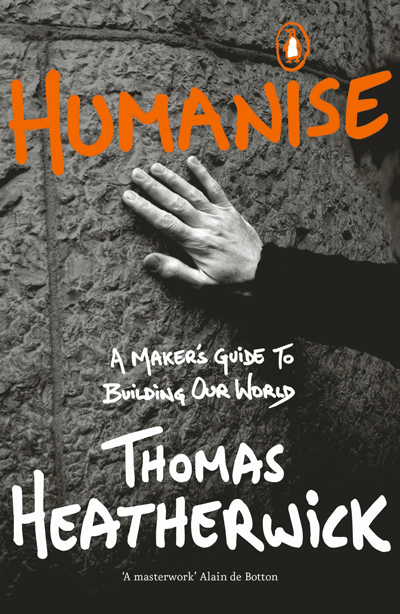
Humanise, by Thomas Heatherwick
A book unlike any other I picked up this year, which presents its arguments through photographs and drawings as much as through text, Humanise is a strikingly presented polemic about architecture and design. Ugly buildings and bad urban design hold humanity back, Heatherwick suggests. They tell us we don’t matter, that community and the environment don’t matter. Beautiful buildings and places, on the other hand, encourage community, wellbeing and sustainability. It’s an intriguing argument, and one that I find rather hopeful: sustainable design is more human centred, more beautiful and interesting. We have nothing to lose from pursuing it.
Of Ants and Dinosaurs, by Cixin Liu
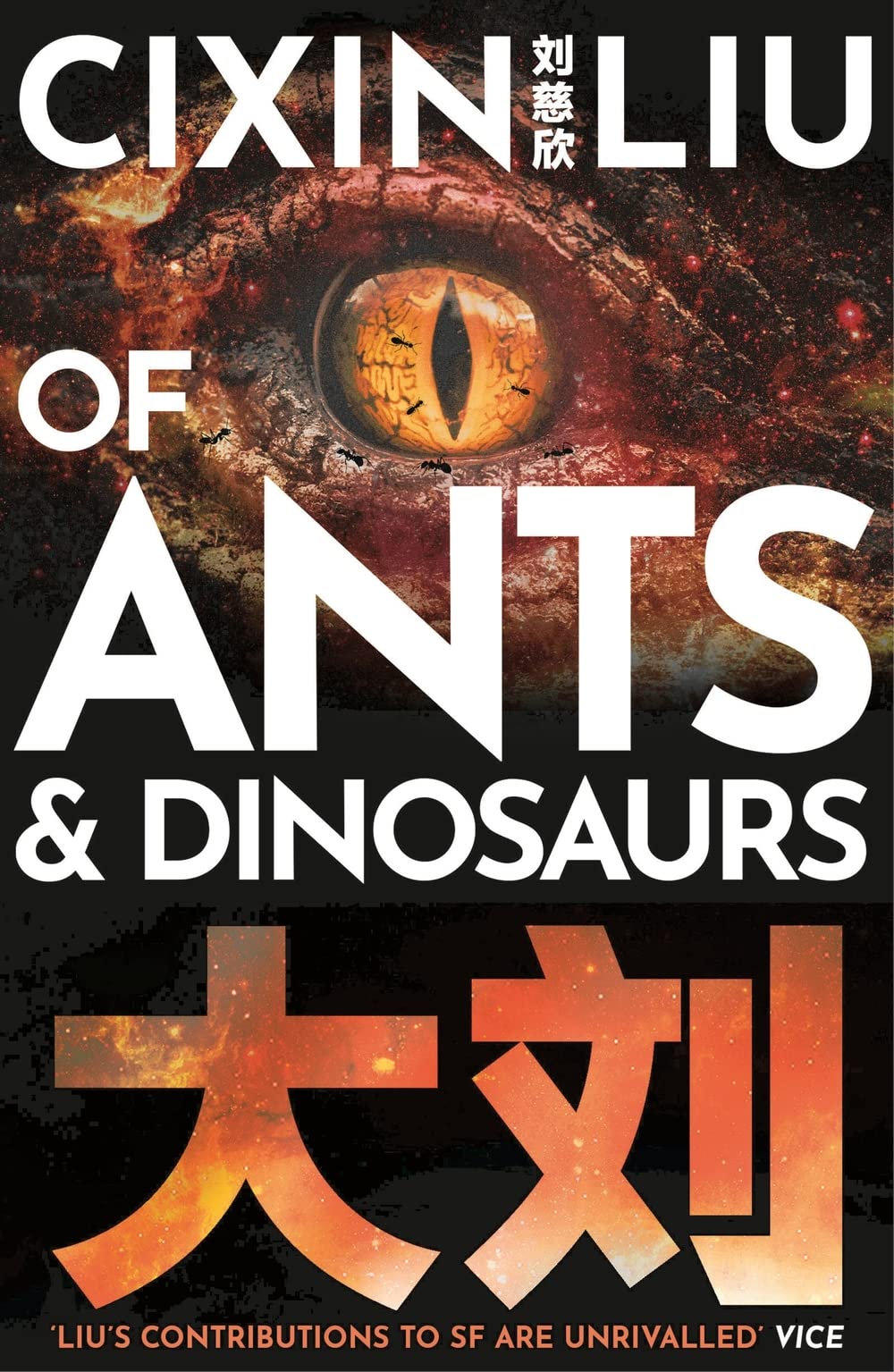
I mention this novel with a little hesitation, given the raising of eyebrows that has accompanied previous efforts to recommend it. But here we go: Of Ants and Dinosaurs imagines an alternative history of the cretaceous period, in which the eponymous creatures jointly develop a thriving and advanced civilisation. The dinosaurs do the heavy lifting, while the ants handle detailed work like electronics or writing. By working together, they see incredible technological progress – provided they can cooperate. Liu commits to the mad premise and attacks it with outlandish and hilarious creativity, imagining what trains for dinosaurs and planes for ants might look like, or their competing religions, or how a war between the two might unfold. As it goes on, it emerges as an intriguing ecological fable, with themes of degrowth, global cooperation, and the role of the medium sized creatures that now dominate the planet. It’s an ambitious, tongue in cheek and fiercely inventive book from China’s foremost sci-fi writer, best known for The Three Body Problem and The Wandering Earth.
That’s five to be getting on with. Other notable things I read last year include Jeff Goodell’s The Heat will Kill you First, a sad but insightful study of the most direct effect of global warming: ie the warming. Fire Weather, by John Vaillant, tells the story of a Canadian wildfire in painstaking and personal detail. A really useful explanation of the science and ecology of wildfire and very topical right now, and it reads like a thriller in places.
Speaking of thrillers, I enjoyed Nana-Kwame Adjei-Brenjah’s novel Chaingang Allstars, which weaves themes of consumerism, race and mass media into his tale of gladiatorial combat. Very different but equally compelling, Barbara Kingsolver cements her place as one of my favourite authors with her epic of Appalachian life and death in Demon Copperhead.
I delivered some creative writing workshops in secondary schools for the first time last year, and in preparation I went looking for the best of young adult fiction that I might have missed from the last 15 years or so. What is standing the test of time? Which ones do today’s English teachers love most? A Monster Calls by Patrick Ness, and How I Live Now by Meg Rosoff are the two I think are destined for classic status.
Any recommendations for me for 2025?
- As always, all of these and a few other favourites from 2024 are available from Earthbound Books.
 The Earthbound Report
Happy New Year, Jeremy. A great list. The one I would add for 2024 would be Disaster Nationalism by Richard Seymour, which is a fascinating analysis of the new far right in a historical context. We often look away from these ‘nutters’, but he takes them seriously and looks at where they come from, which turns out to be a very human place. You can read my review of it and Monbiot’s book on Neoliberalism here. I am currently reading a pre-publication copy of Tim Jackson’s The Care Economy, which I think will be one of the most important books of 2025, due out in February. Tim is an amazing writer and brings a very accessible, personal and deeply wise perspective to the nature of our current crisis and what we need to do to change our fate. He sets out the cure to the illness whose symptoms Richard Seymour delves into.
Thanks, I’ll look out for both of those. And Jackson has appeared on my end of year lists in the past, so that will definitely be on my to-read list.
I would like to hear what your thoughts are on Transformative Adaptation in 2025 https://uk.bookshop.org/p/books/transformative-adaptation-another-world-is-still-just-possible-rupert-read/7765109?ean=9781856232258
Thanks – not sure how I missed that one, given that I generally read both Rupert and Morgan’s books! I’ll look that up.
Great!
Hello Jeremy
Happy new year to you. Thank you for your inspiring and thoughtful posts, it is always a pleasure to read your posts and to discover new things. I recommend a book. Raising Hare by Chloe Dalton. Not in the general run of the theme of climate change, but the underlying perception of how industrialisation has, and is, destroying our wildlife is there. It is lyrical.