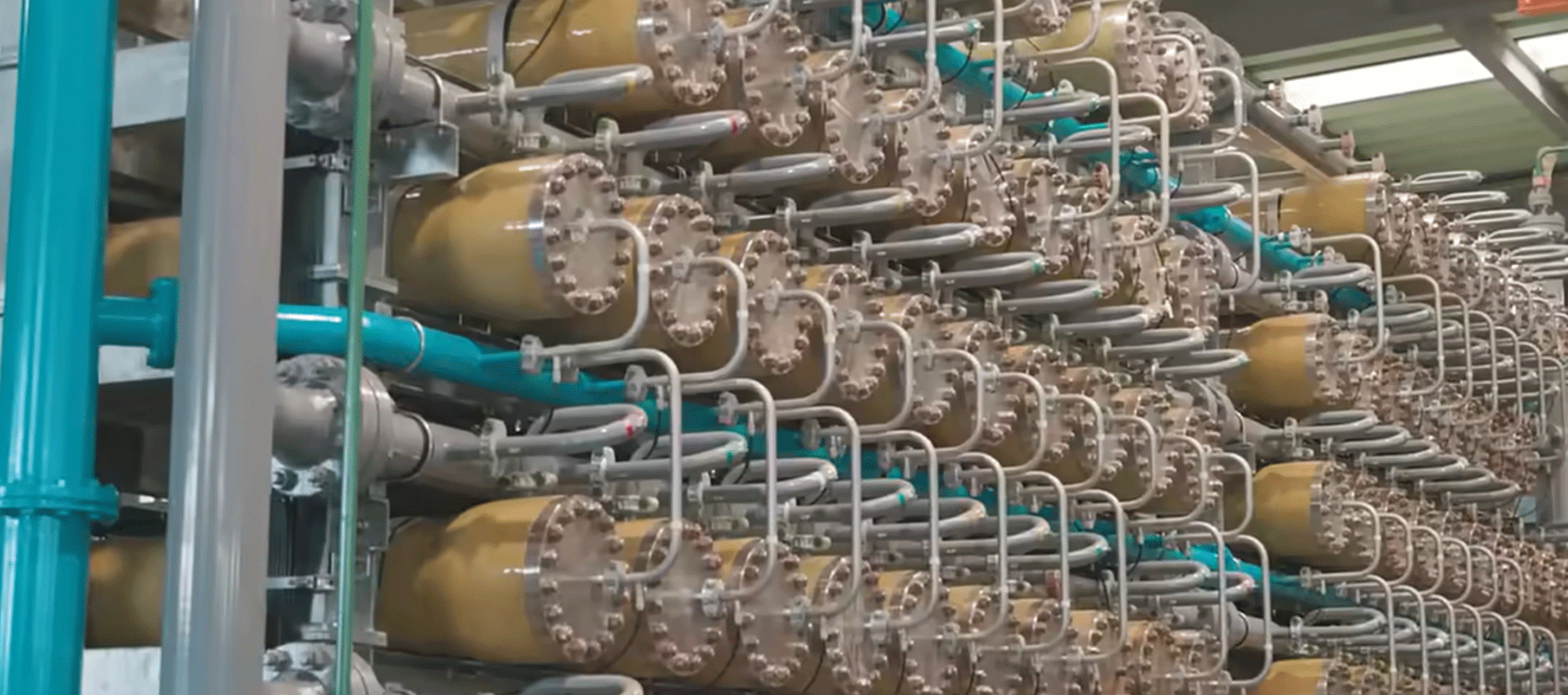
I’ve been writing about renewable energy for twenty years, and just this week discovered that there’s a whole other kind that I didn’t know about. This is the climate nerd equivalent of my daughter finding a new Pokemon.
Usually when we’re talking about renewable energy, it’s wind and solar that come to mind. Biomass is the sullen sibling in the big three, generating more power than solar in the UK right now but rarely mentioned. There are the other forms of renewable energy: hydropower, geothermal, and tidal and wave power from the ocean. It turns out there’s an other, other renewable energy beyond those.
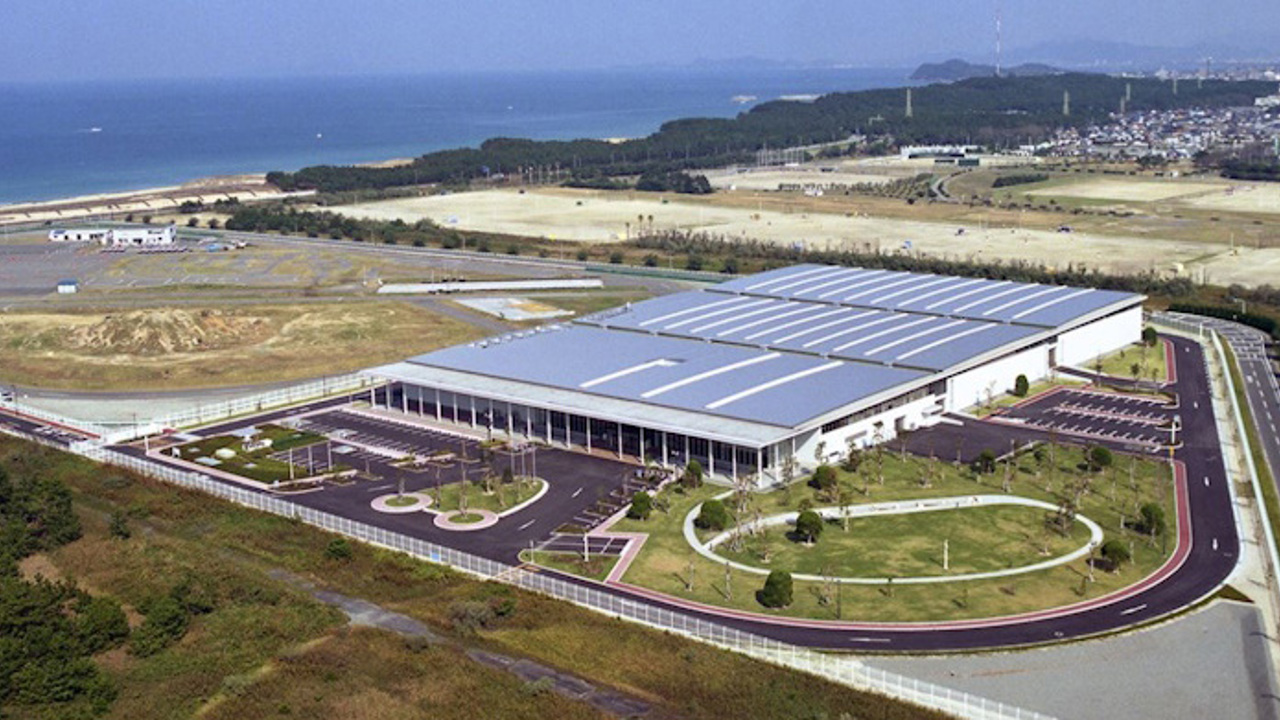
Despite appearances, this unassuming building in Fukuoka, Japan, is not another distribution centre for the online retailer that shall not be named. It’s the world’s largest osmotic power plant.
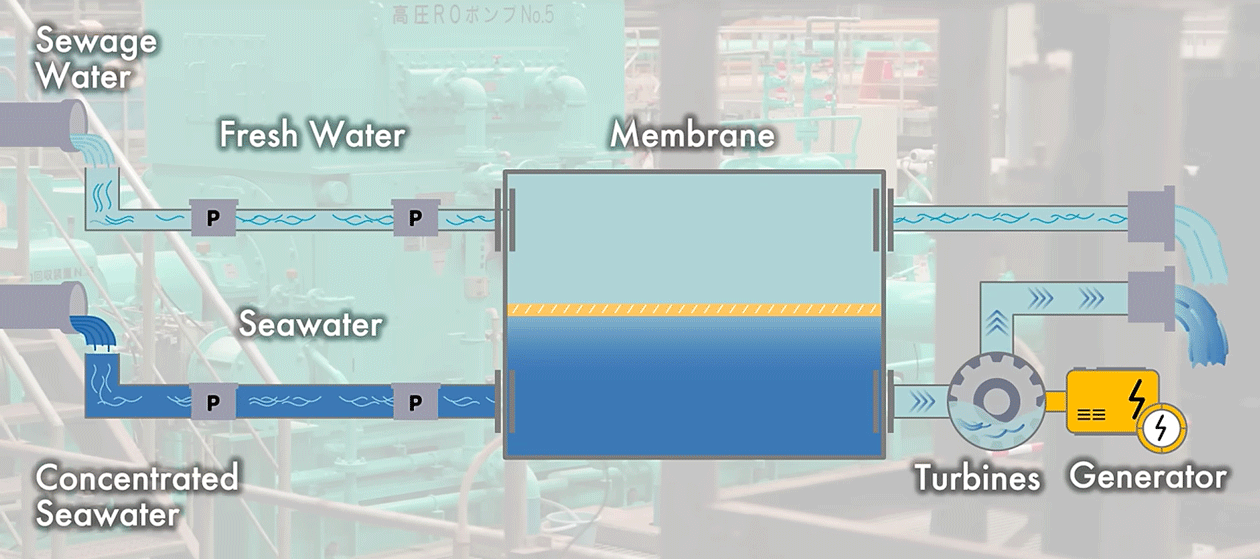
As the name suggests, this uses osmosis, the natural process of water seeping from high concentration to low concentration. It’s going on in living cells all the time, and here it is tapped to generate electricity using the difference between salt water and fresh water.
Salty water and fresh water are piped into a chamber divided by a permeable membrane. Osmosis draws water to the salty side to try and balance the difference in salinity. This increases the pressure, and a turbine captures the movement of the water to generate electricity.
When osmotic power was first proposed, it was located in places where rivers meet the sea. The Fukuoka plant improves on this by combining other infrastructure facilities that serve the city. A wastewater treatment plant provides the fresh water, while a desalination plant supplies highly concentrated seawater. The osmotic power plant then runs the desalination plant.
This is the most advanced osmotic power plant in the world, opening in 2025. There’s only one other one at commercial scale, and that’s in Denmark. There have been pilot projects in South Korea and Norway, but otherwise it’s largely unknown.
There are reasons why it’s not got very far as a technology, despite the research into it dating back to the 1970s. The main reason is the membranes, which are expensive and prone to clogging over time. The electricity generated hasn’t been enough to compensate for this, though co-locating osmotic power alongside desalination increases the power capacity and reduces the costs of desalination. That might be a breakthrough.
There’s an ecological dimension to the Fukuoka plant as well. The waste water from desalination plants is very salty and can disrupt marine ecosystems. Here the water is diluted with the treated municipal waste water, combining the two waste water streams and generating energy in the process.
Are we going to be hearing more about osmotic power in the future? It’s hard to say. On the one hand, it needs specific inputs and is only going to work in certain locations. It can’t currently compete with cheap and widely applicable solar power.
On the other hand, desalination is going to be increasingly important as climate change threatens water supplies. It’s energy intensive and is often done unsustainably – Saudi Arabia burns oil to make fresh water. Osmotic power might become more common in desalination, even if it doesn’t catch on elsewhere.
And you never know. I have dusty books on my shelves, some by high profile authors, that confidently declare that solar power will be a footnote in the energy of the future because it’s just too expensive. Electric cars looked like an overpriced fantasy until really quite recently. It would be wise not to discount it.
 The Earthbound Report
Probably helpful to recognise this as more of an energy *recovery* technology, since energy is used for the desalination (frequently by *reverse* osmosis!), and the techology you describe here is recouping some energy from the highly concentrated saline output.
I suppose so, in this instance – and I notice the plant has extensive solar on the roof to provide more of the initial energy for desalination.
Where osmotic generation was deployed on rivers it would be more traditional renewable energy, but as yet that hasn’t been economically viable.
Nonetheless this looks cool – good to know about, thanks!