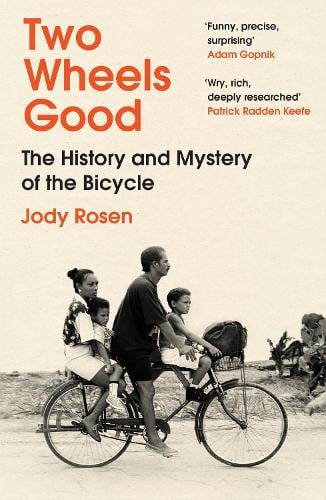
There’s no shortage of histories of the bicycle out there, but this is a fun one. Published in 2023, Two Wheels Good brings the story of the bike right up to the modern day, with elements of travelogue and personal memoir, and a curiosity about the eccentric corners of the cycling world.
The book covers the contested origins of the bicycle – several countries claim various firsts among the handful of central ideas that make up the basic concept of a bike. That’s part of the ‘mystery’ in the title. Another aspect to the mystery is the way that bikes became controversial very quickly, both loved and loathed from the start.
Part of the problem is that bikes became popular before they were entirely practical. Early versions were unsafe for both riders and pedestrians, meaning they were adopted first by reckless young men prepared to risk themselves and others. The slang term ‘Dandy Chargers’ shows that they’ve always been of interest to hipsters, and people found ways to use them antisocially pretty early on.
Cycling was domesticated and democratised as new designs caught on, and they became a standardised and mass produced item. This is where they became truly revolutionary, giving ordinary people access to personalised transport in new ways. Bikes were a genuine force for liberation – though of course some disapproved for exactly that reason. Rosen includes a range of grumbling quotes from men saying their wives don’t do as they’re told since getting a bike.
Bikes continue to be very accessible technology across the world, and here Rosen makes an important observation about bike culture. While we all know how fantastic cycling infrastructure is in certain Northern European cities, “the vast majority of bikes and cyclists are nowhere near Denmark. Statistically speaking, a twenty-first century cyclist is far likelier to be a migrant worker in an Asian, African or Latin American megacity than a white European exemplar of ‘cycle chic’.” Most of the world’s bikes are not used for leisure. They aren’t a lifestyle choice or virtue signalling greenery. They’re tools for working people. Rosen explores this through a chapter based in Dhaka, Bangladesh, where he observes the daily routines of a cycle rickshaw driver.
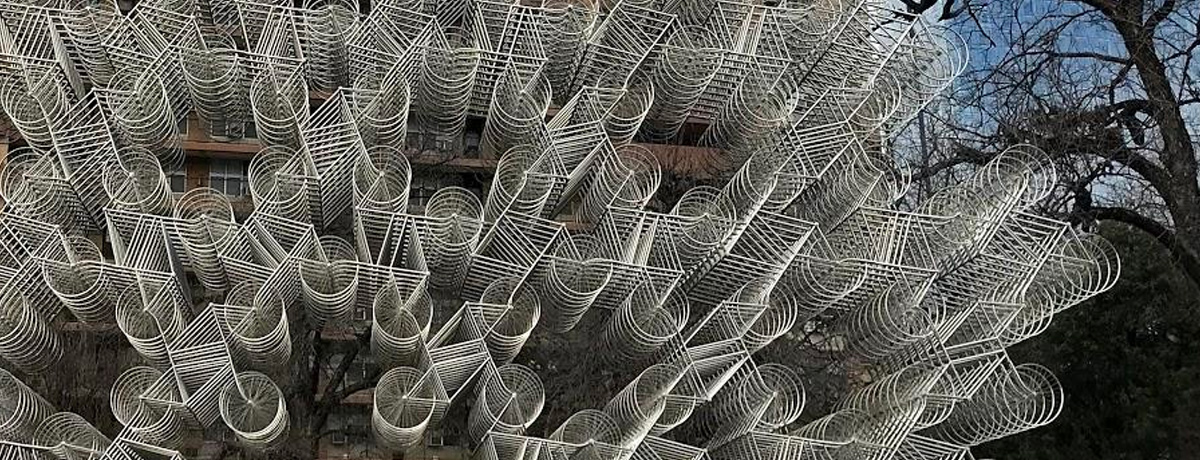
There are elements of travel throughout the book, with each chapter based around a particular place. A chapter based in Scotland covers the legacy of stunt riding, and includes the author’s ill-fated attempt to keep up with Danny MacAskill on a mountain bike trail. There’s a chapter on racing in which the author visits Bhutan, home to a bike-obsessed royal family and the world’s hardest bike race. A visit to Beijing covers the extraordinary story of how Chinese cycling culture inspired Western cycling advocacy and the first Critical Mass rides, before being completely overturned by a rising China that saw the bike as old fashioned and embarrassing. The artist Ai Weiwei challenges this loss in his sculpture series Forever Bicycles, pictured above.
This isn’t a comprehensive history and doesn’t claim to be. There’s nothing about the Netherlands and their reclaiming of the streets. The Tour de France gets about two sentences. But you know about those already. Did you know about the brief fad for bike-based sci-fi from the 1890s? Have you ever weighed up the pros and cons of a bike vis-a-vis a horse, as the early adopters did? (“A horse doesn’t fall over when it stands still” was an early jibe.) Have you heard about the cycling prospectors who slogged a thousand miles through the trackless Alaskan wilderness to join the Klondike Gold Rush? Did you know that Amsterdam pulls 15,000 bikes out of its canals every year, or that bikes played an important role in the Black Lives Matter protests?
Rosen’s book is full of lesser-known stories from the history of the bike, and it has an eye on the future too. E-bikes, urban bike schemes, the rediscovery of the bike’s potential in Chinese cities. We’re not done yet, and with over two billion bikes in the world today – considerably more than the number of cars – the bike remains one of humanity’s most important technologies.
- Two Wheels Good is available from Earthbound Books.
 The Earthbound Report
Looks like an interesting read